THE NEW YEAR MIGHT BEGIN WITH GEOMAGNETIC STORMS: At least one CME will hit Earth during the opening days of 2026. NOAA forecasters believe that one or two CMEs might deliver glancing blows on Jan. 1st, followed by an almost-direct-hit CME on Jan. 2nd or 3rd. If all of them hit, the combined effect of the CMEs could add up to a G3-class geomagnetic storm. Aurora visibility will be mitigated by the glare from this week's full Wolf Moon. CME impact alerts: SMS Text

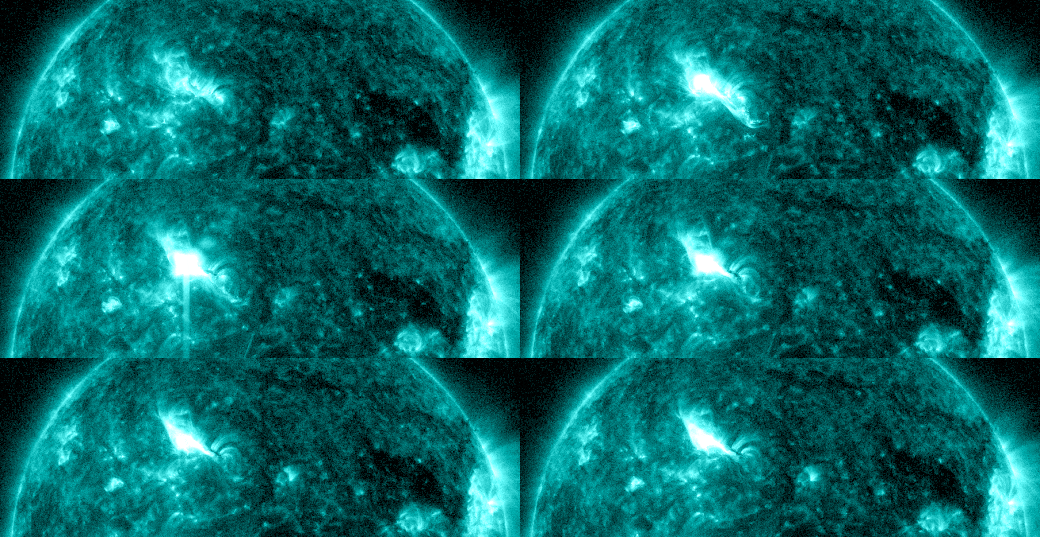
STRONG SOLAR FLARE AND CME: A CME is heading for Earth following today's M7-class solar flare from sunspot 4324. NASA's Solar Dynamics Observatory captured the explosion's extreme ultraviolet flash at 13:50 UTC:
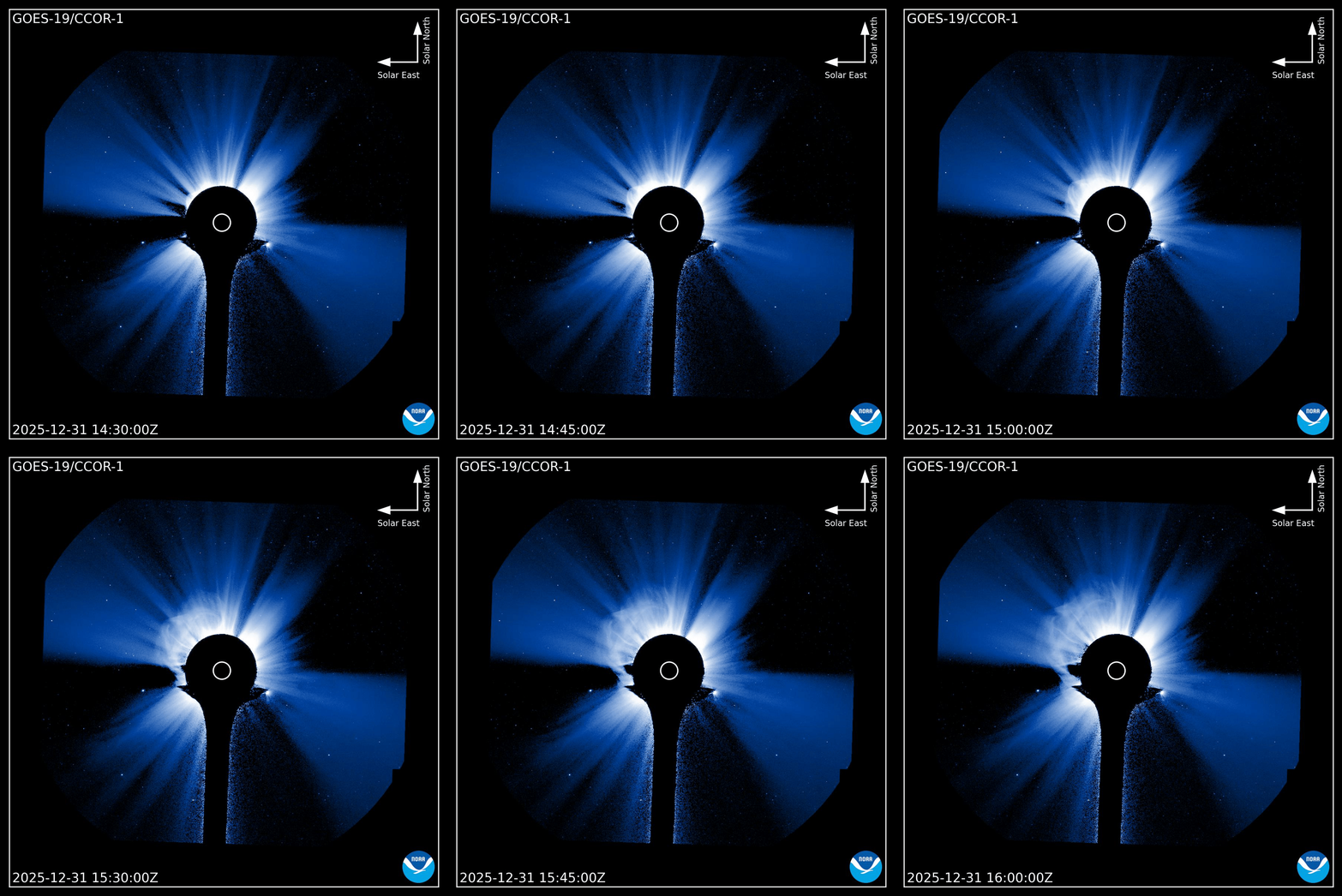
First-look images from NOAA's CCOR-1 coronagraph show a halo CME heading roughly toward Earth. G2 to G3-class geomagnetic storms are possible when the CME arrives on Jan. 2nd. Stay tuned for an improved forecast as more coronagraph data become available to improve the models. CME impact alerts: SMS Text

WHY HASN'T THE NOVA EXPLODED? In the summer of 2024, NASA announced that a star named "T Coronae Borealis" (T CrB) was about to explode. "It’ll fuel the next generation of scientists," the space agency declared. Almost two years later, "our wait continues," says amateur astronomer Eric G David, who photographed the star's location on Dec. 30th:
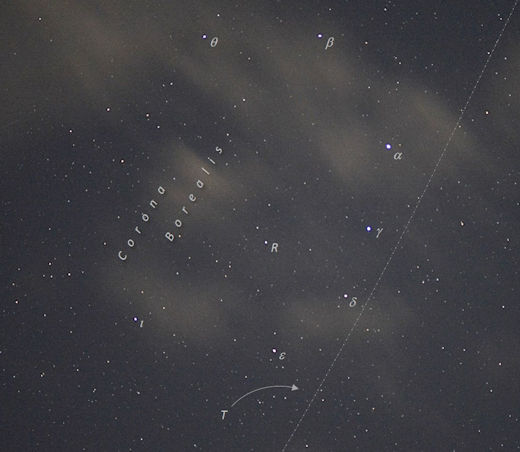
"T CrB is still near minimum brightness, estimated to be between +9.5 and +10.0 on the morning of Dec 30th," says David. "It remains invisible to the naked eye."
T CrB is a "recurrent nova." That means it erupts not just once, but over and over again. Its explosion in 1866 was the first nova astronomers had ever seen in detail. No one knew what caused it. Another blast in 1946 established its period (79 or 80 years) and led researchers to the modern interpretation.
T CrB is a binary star system consisting of an ancient red giant circled by a hot white dwarf. Hydrogen from the red giant spills onto the surface of the white dwarf. It takes about 80 years to accumulate a critical mass, then–BOOM–a thermonuclear explosion occurs.
So, why hasn't the nova exploded? It might be as simple as this: NASA's announcement was a little premature. 80 years after the last explosion would be 2026, which means the New Year could bring an exploding star, after all.
Realtime Space Weather Photo Gallery
Free: Spaceweather.com Newsletter
COFFEE TASTES BETTER IN A CUP FROM SPACE: Are you looking for a far-out gift? Shop the Earth to Sky Store! It's filled with items that have visited the edge of space onboard cosmic ray research balloons:
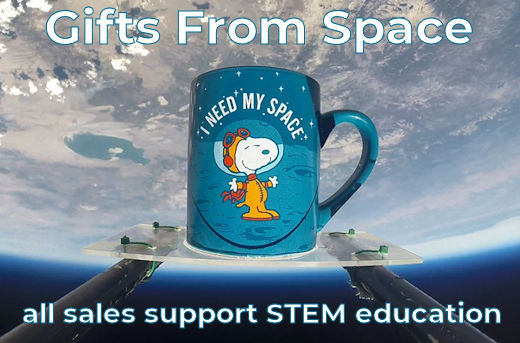
Earth to Sky gifts have flown above 99.7% of Earth's atmosphere, experiencing space-like blasts of cosmic rays, extreme cold, and a wild ride parachuting back to Earth after the balloon explodes. Even Amazon doesn't carry items this far out. And, best of all, all sales support student science projects and STEM education.
Far Out Gifts: Earth to Sky Store
All sales support hands-on STEM education
Realtime Comet Photo Gallery
Free: Spaceweather.com Newsletter
Realtime Aurora Photo Gallery
Free: Spaceweather.com Newsletter