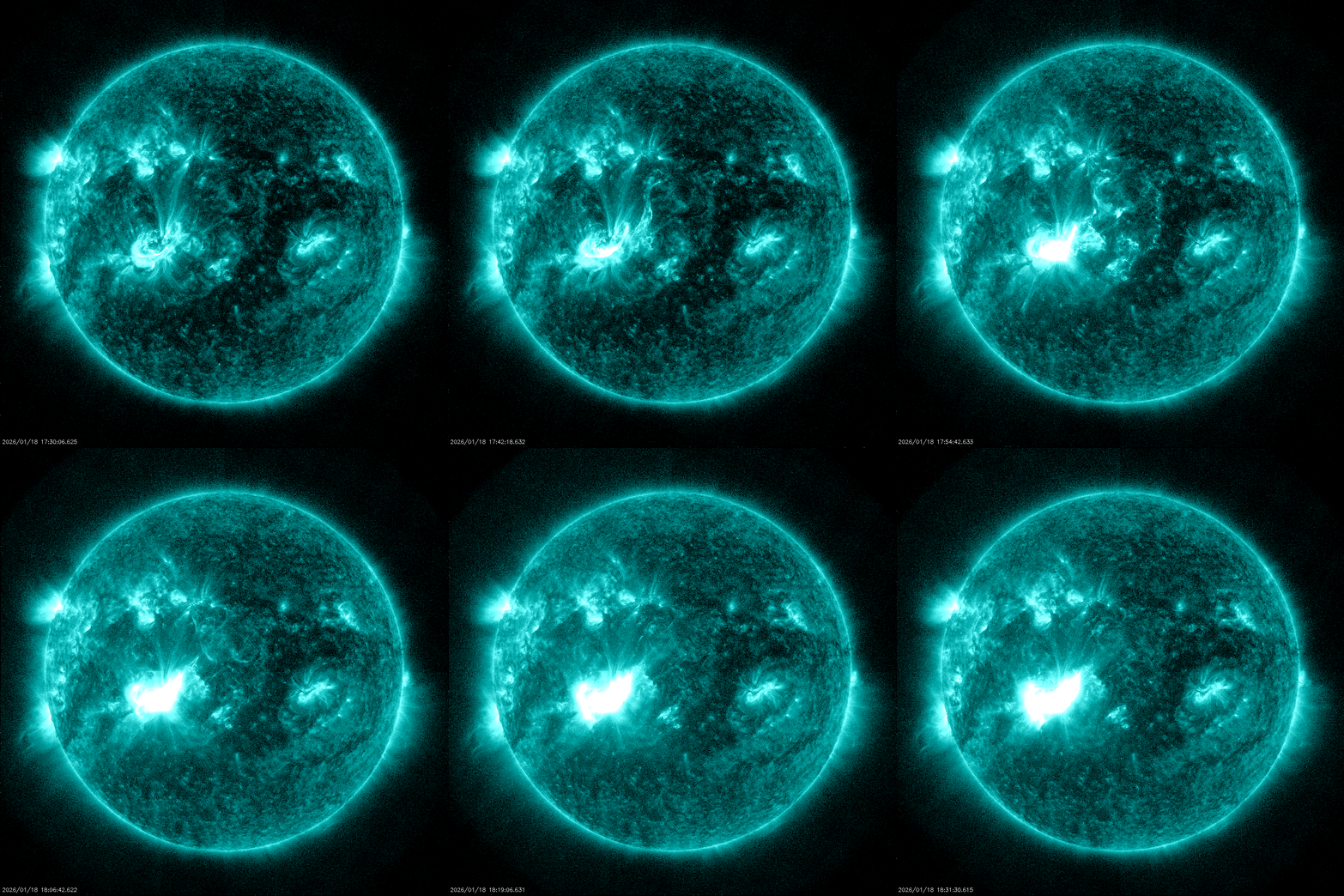
SIGNIFICANT X-CLASS SOLAR FLARE: Sunspot 4341 erupted today (Jan. 18 @ 1809 UTC), producing an X1.9-class solar flare. The explosion lasted for hours, which makes this flare even more powerful than than its "X1.9" rating would suggest. This video from NASA's Solar Dynamics Observatory says it all:
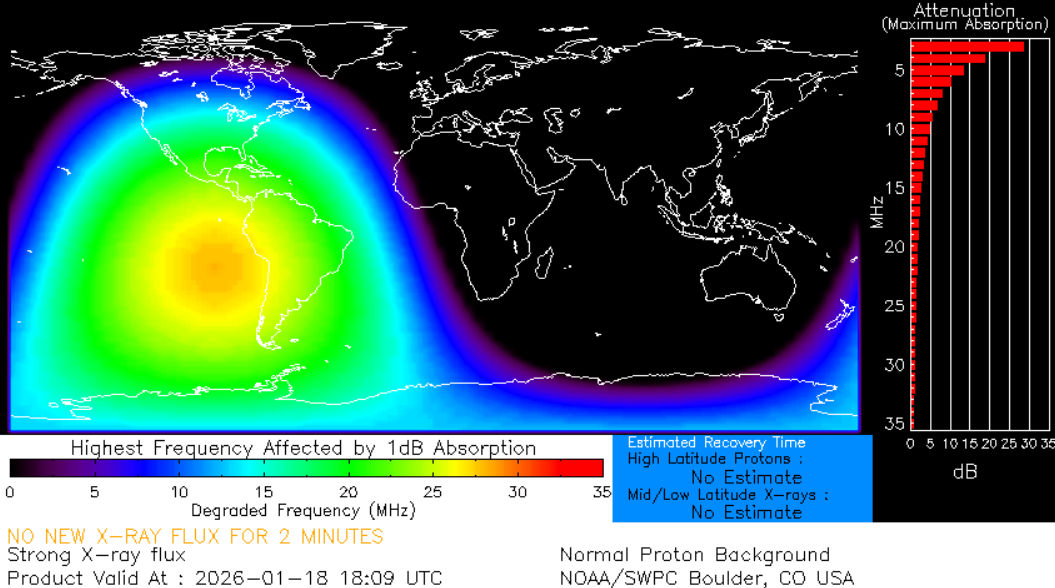
Radiation from the flare ionized Earth's atmosphere over the Americas, especially South America. This caused a shortwave radio blackout that may have lasted more than an hour at frequencies below 10 MHz.
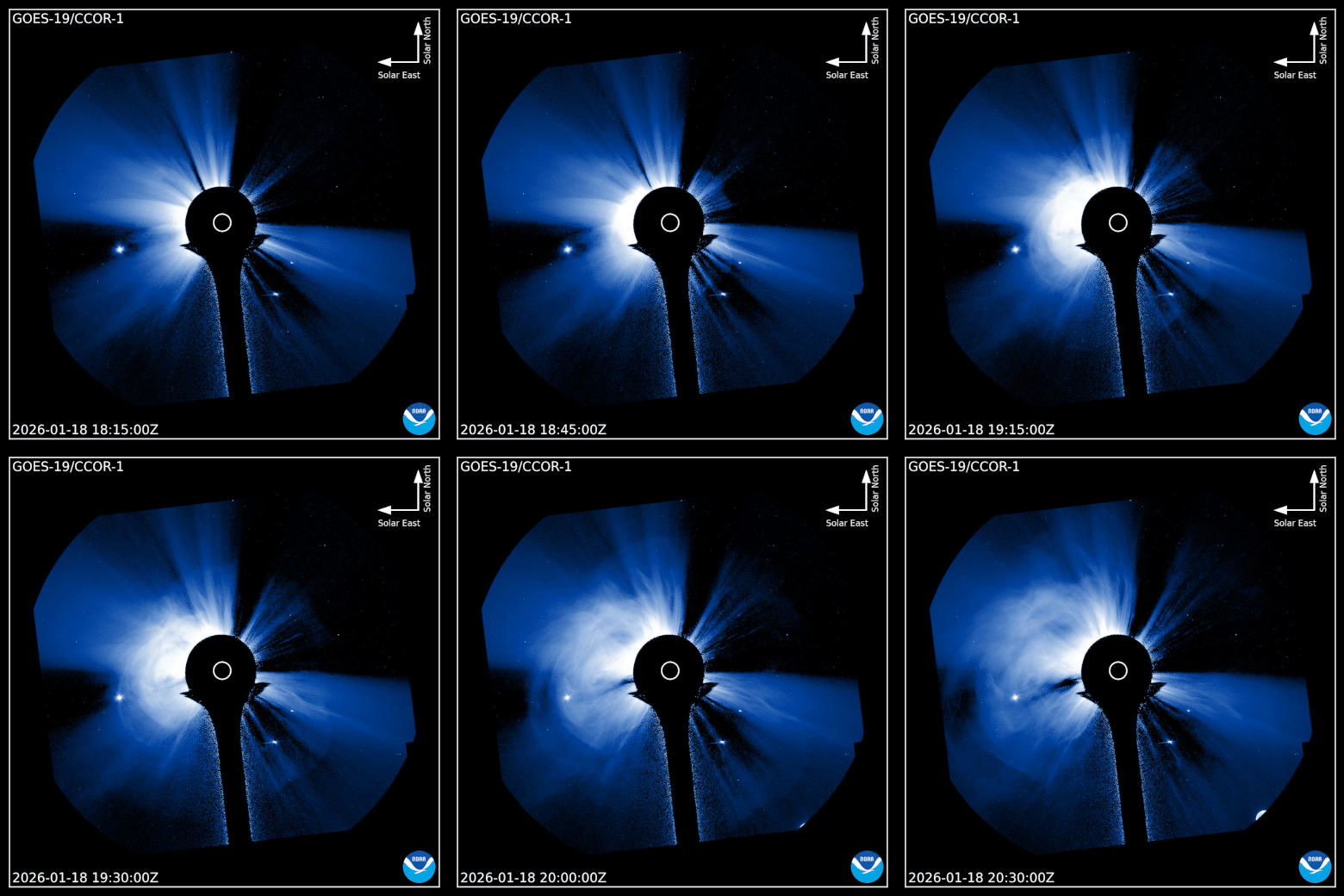
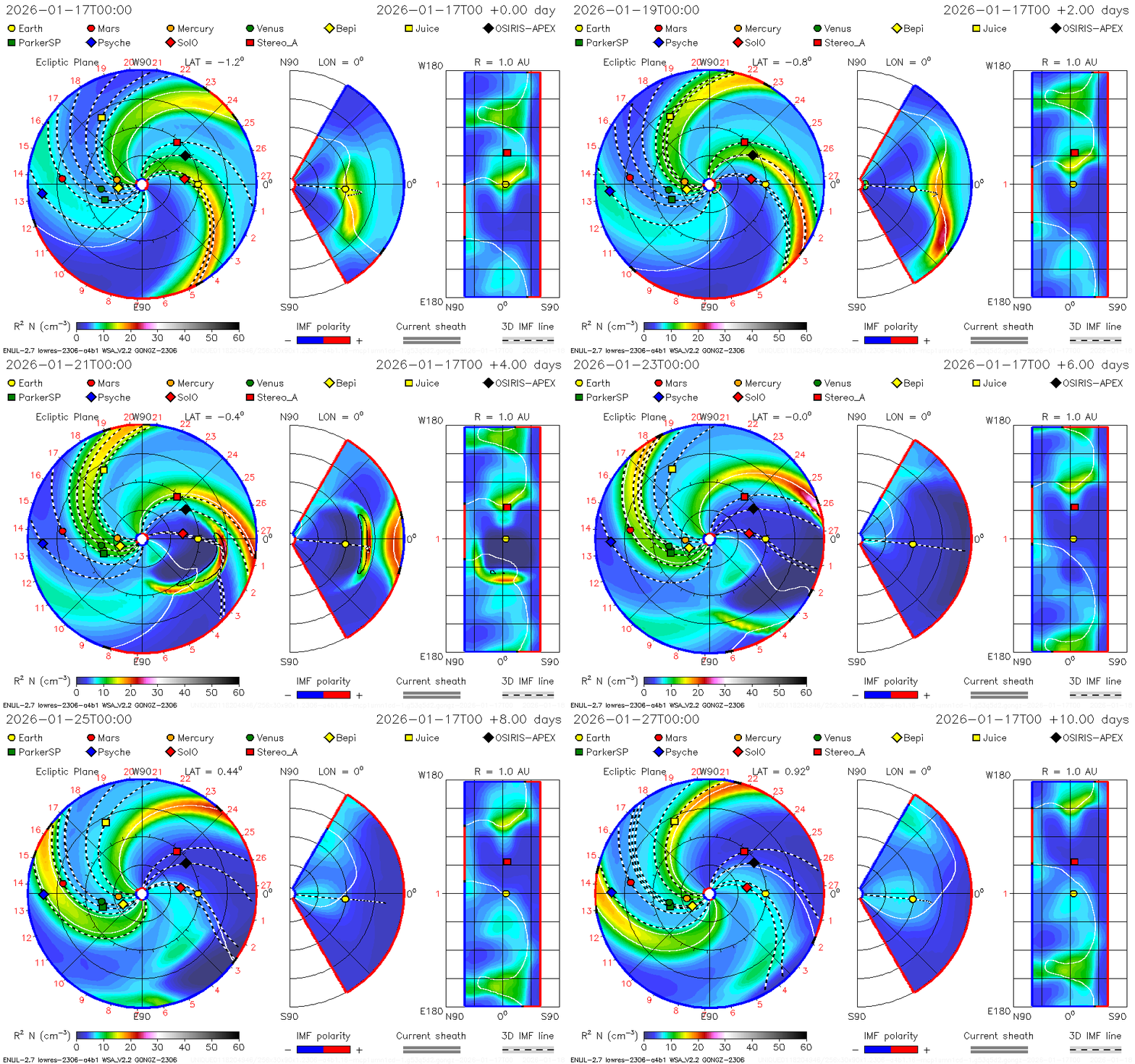
Of greater interest is the CME. The explosion launched a full halo CME with a significant Earth-directed component. NASA models predict that it will reach Earth during the early hours of Jan. 20th. The impact could cause a strong G3-class geomagnetic storm with mid-latitude auroras. Stay tuned for updated forecast models. CME impact alerts: SMS Text

Realtime Space Weather Photo Gallery
Free: Spaceweather.com Newsletter
VALENTINE'S DAY IS COMING SOON: Does your sweetheart love space? Shop the Earth to Sky Store for their perfect Valentine's gift. All items have flown to the stratosphere on board cosmic ray research balloons:

Earth to Sky Valentine's gifts have flown above 99.7% of Earth's atmosphere, experiencing space-like blasts of cosmic rays, extreme cold, and a wild ride parachuting back to Earth after the balloon explodes. Each one comes with a greeting card showing the item in space, and telling the story of its launch.
Far Out Gifts: Earth to Sky Store
All sales support hands-on STEM education
WINTER POLLEN CORONAS: Most trees disperse their pollen in springtime. The Ashe Juniper trees of Texas, however, are strange and different. "Here in the Texas Hill Country, Ashe Junipers give off their pollen clouds in winter," reports Andrew Hulse of Bandera County. "They produce a rainbow around the sun." Hulse photographed the phenomenon on Jan. 15th:
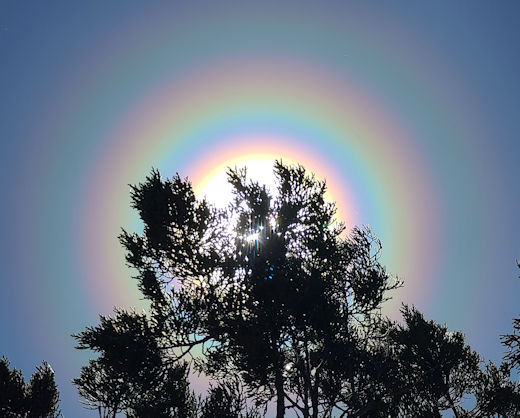
This is called a "pollen corona." Coronas are luminous rings that surround the sun when light is scattered from small particles like pollen. The most commonly seen coronas are created by water droplets in clouds. Pollen grains do better than water; they make intensely colored rings.
These colorful coronas will appear in Texas skies for the next month or two. The Ashe juniper releases significant amounts of pollen from roughly December through February or sometimes even March. Locals call the tree "mountain cedar," and it is responsible for a lot of "cedar fever" allergies at this time of year.
more images: from Levi Riggins of Leander, Texas
Realtime Pollen Corona Photo Gallery
Free: Spaceweather.com Newsletter
Realtime Aurora Photo Gallery
Free: Spaceweather.com Newsletter