PLASMA BUBBLE FORECAST BREAKTHROUGH: Scientists may have found a way to predict equatorial plasma bubbles--giant voids in the ionosphere that disrupt GPS and radio signals. A new study shows that small ripples in total electron content (TEC) are reliable warning signs. When satellites detect these ripples near sunset, bubbles form within the hour about 96% of the time. This could lead to real-time forecasts of one of space weather’s most persistent navigation hazards. Read the original research.
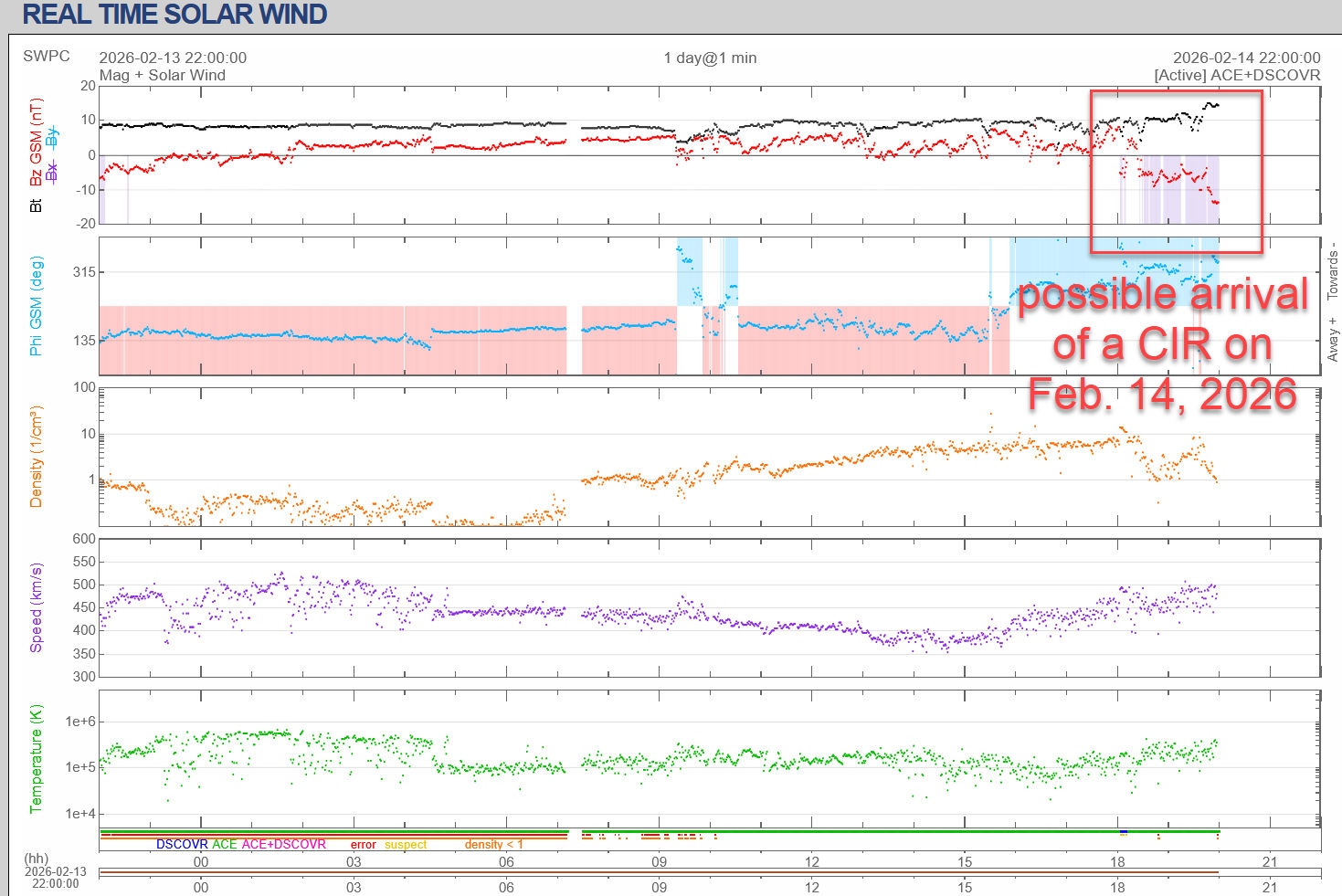
CIR HITS EARTH, SPARKS AURORAS: A co-rotating interaction region (CIR) hit Earth on Valentine's Day, sparking a G1-class geomagnetic storm and high-latitude auroras. Thomas Spence photographed the display from Schroeder, Minnesota:

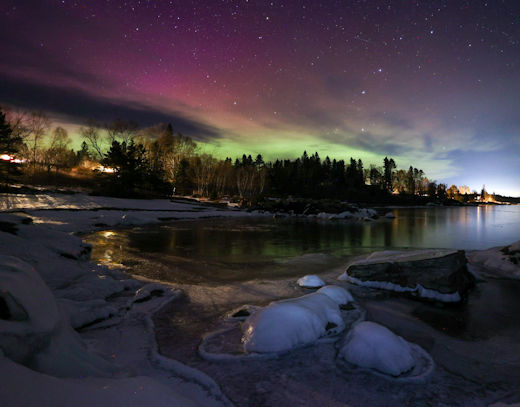
"This beautiful Valentine's night display of aurora borealis appeared over Lake Superior," says Spence. "The ice on the lake was moving and shifting, creating a symphony of sound to go along with the visual display."
CIRs are a way for the sun to spark auroras without explosive solar activity. All that's required is a fast solar wind stream brushing up against a slower one. In the transition zone, shock-like structures form similar to shocks found in CMEs. Indeed, some forecasters refer to co-rotating interaction regions as "mini-CMEs." Aurora alerts: SMS Text
more images: from Elmar Junker of Äkäslompolo, Finland; from David Glaser of Gooseberry Falls, MN; from P-M Hedén of Nothamn Norrtälje, Sweden; from Geir T Birkeland Øye of Ørsta, Norway; from Jessica Fridrich of Binghamton, NY
Realtime Aurora Photo Gallery
Free: Spaceweather.com Newsletter
SPACEX CORKSCREW: At the end of Valentine's Day, SpaceX conducted its 600th launch of a Falcon 9 rocket. Bill Golisch video recorded the milestone from Oceanside, CA:
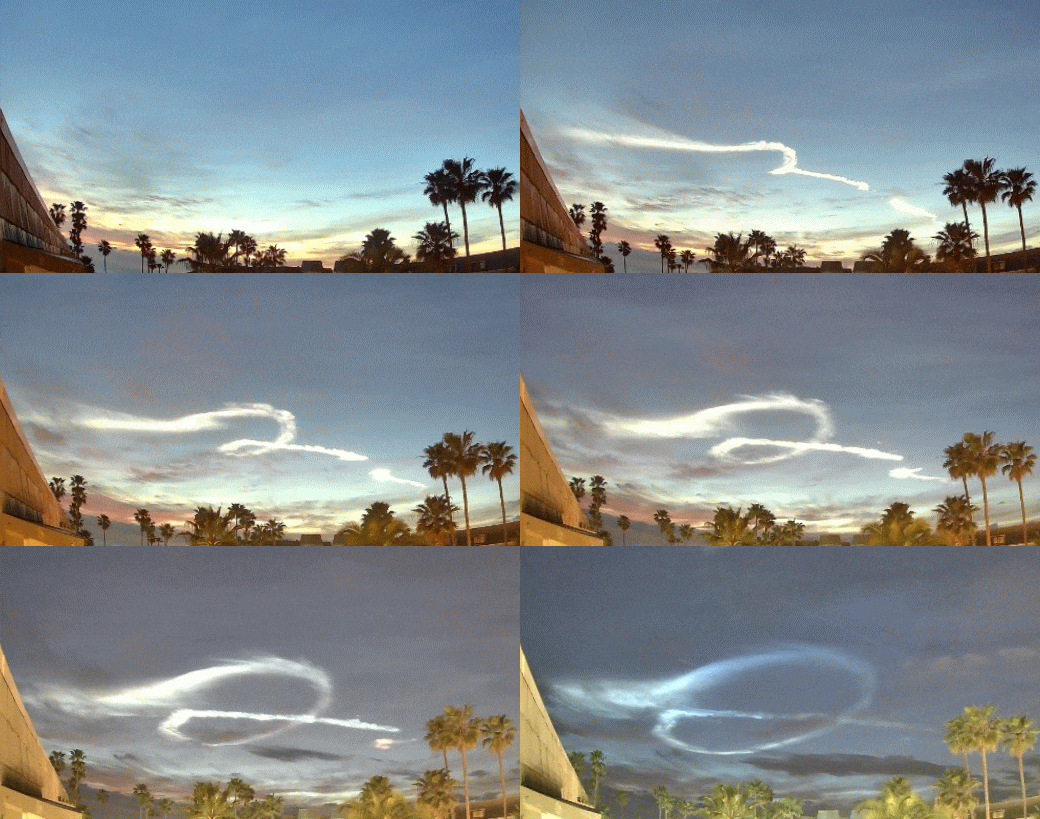
"Twilight lit the exhaust as high altitude winds bend the trail into a loop," says Golisch. "I assembled webcam images taken every 30 seconds into this animation, which covers 20 minutes."
The rocket, launched from Vandenberg Space Force Base, carried 24 new Starlink Satellites into low Earth orbit. This brings the total number of in-orbit Starlinks (working + dead) to 9,694. Here's what that looks like.
Realtime Space Weather Photo Gallery
Free: Spaceweather.com Newsletter
THE FLOATING SPACE HAMMER: No toolkit is complete without one: The Floating Space Hammer. This one drifted through the stratosphere for more than three hours during a cosmic ray research balloon flight:
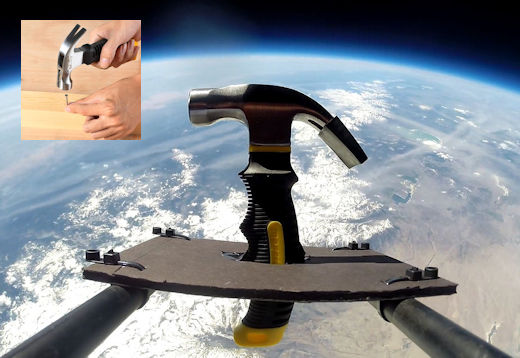
You can have it for $97.95. This compact 8 oz. hammer is light enough to fly on a balloon yet dense enough to deliver a powerful blow. The magnetic head holds a nail for one-handed starting, and the stubby 6 in. length is perfect for tight work areas.
The space hammer comes with a card showing the tool floating at the top of Earth's atmosphere. The interior of the card tells the story of the flight and confirms that this gift has been to the edge of space and back again.
Far Out Gifts: Earth to Sky Store
All sales support hands-on STEM education
Realtime Space Weather Photo Gallery
Free: Spaceweather.com Newsletter