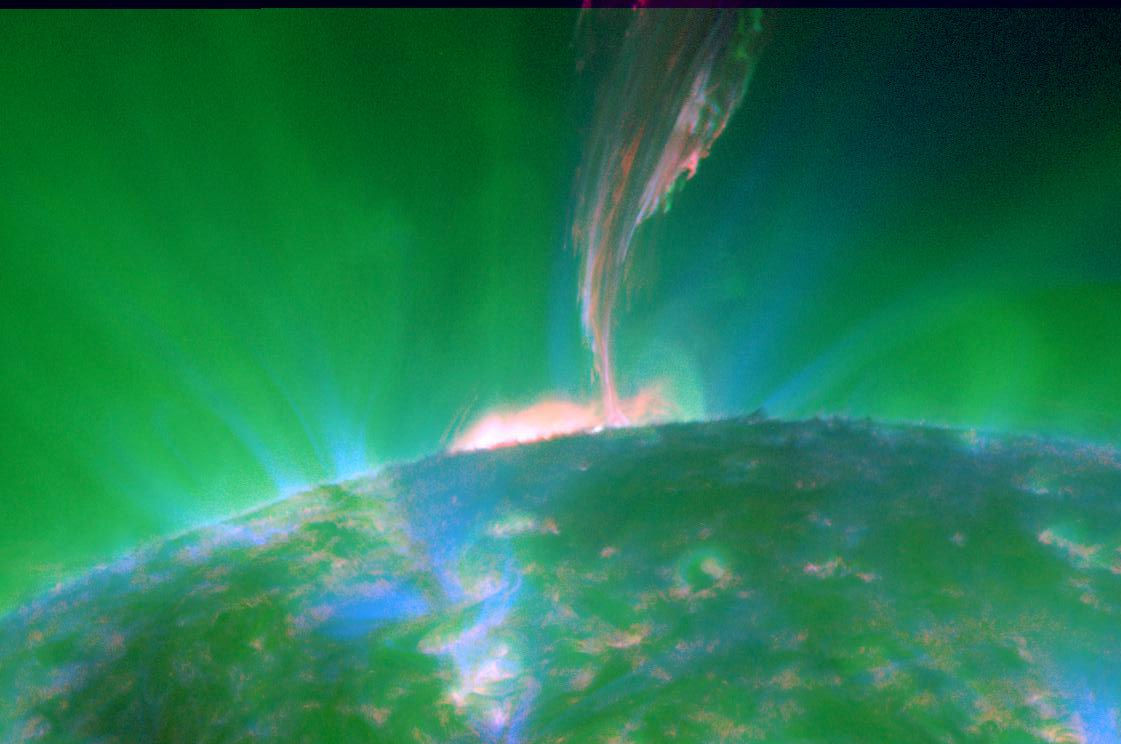
SOMETHING FLARE-Y THIS WAY COMES: A sunspot located behind the sun's southeastern limb erupted on Feb. 16th (0435 UTC), producing an M2.5-class solar flare. Almost certainly, the flare was stronger than its nominal classification because it was partially eclipsed by the edge of the sun. This beautiful blast may herald the appearance of a new geoeffective active region later this week. Solar flare alerts: SMS Text
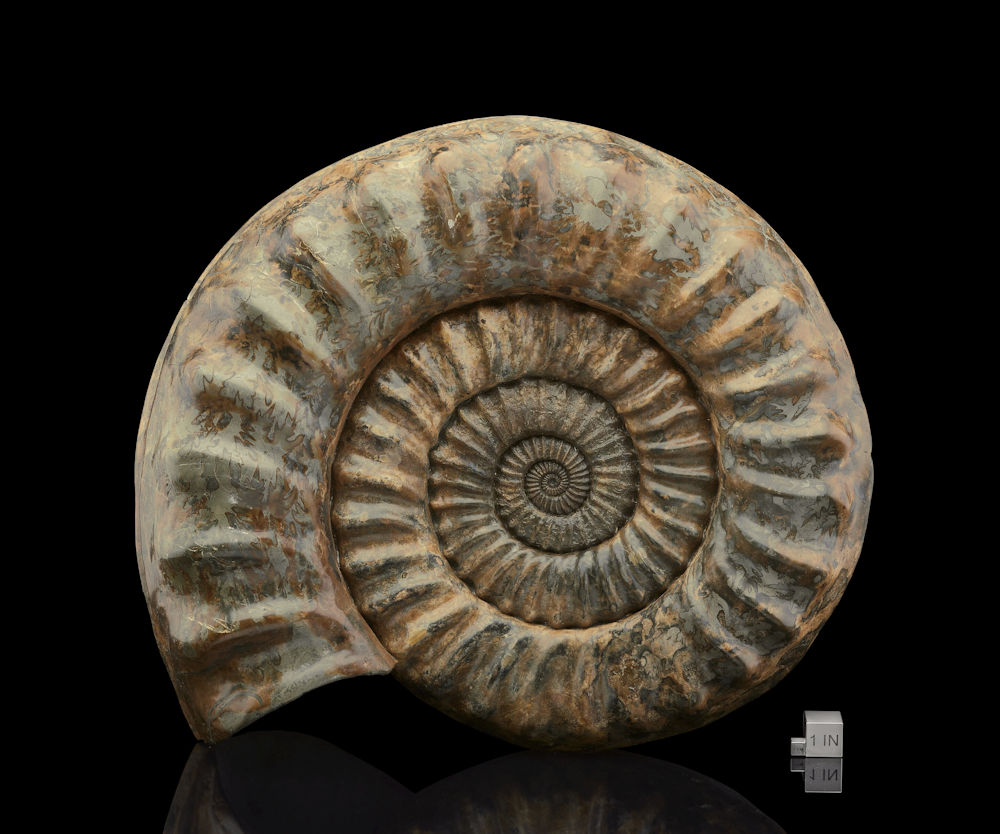
THE SPIRAL SHAPE OF COMET 29P: Last week (Feb. 10th), cryovolcanic Comet 29P/Schwassmann-Wachmann experienced its biggest eruption since 2022. The comet abruptly brightened 100-fold with debris that strangely resembled an ammonoid fossil. Anthony Kroes photographed the growing spiral on Feb. 14th:
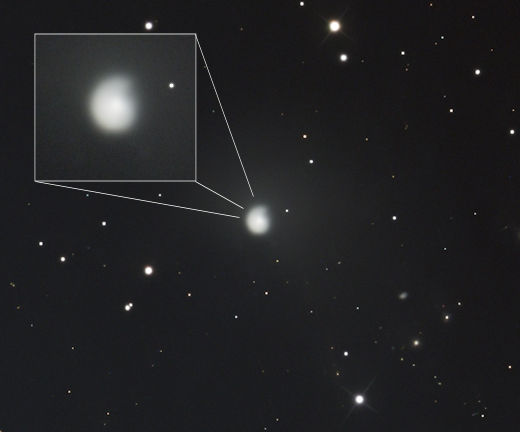
"Inspired by the recent article on Spaceweather.com, I tried imaging Comet 29P to see if I could capture the same spiral structure," says Kroes. "Sure enough, there it was! The snail-shell appearance was detectable in a single 3-minute exposure."
The spiral is probably caused by a localized vent spewing a plume of magma, which is then twisted by the underlying rotation of the comet's core. "Magma" on Comet 29P is not hot lava. Instead, it is thought to be a cold brew of liquid hydrocarbons (CH4, C2H4, C2H6 and C3H8) mixed with dissolved CO2. The comet is like a can of soda, shaken and poised to pop whenever a vent opens.
Major eruptions like this one are often followed by more outbursts--a type of cryovolcanic aftershock. Indeed, another outburst was detected on Feb. 15th. "This one was smaller, only +1 magnitude vs. +5 magnitudes on Feb. 10th," notes astronomer Eliot Herman. "Nevertheless, we can already see a bright new shell of debris forming around the comet's core."
Will it be a spiral, too? Stay tuned!
Realtime Space Weather Photo Gallery
Free: Spaceweather.com Newsletter
SPACEX CORKSCREW: At the end of Valentine's Day, SpaceX conducted its 600th launch of a Falcon 9 rocket. Bill Golisch video recorded the milestone from Oceanside, CA:
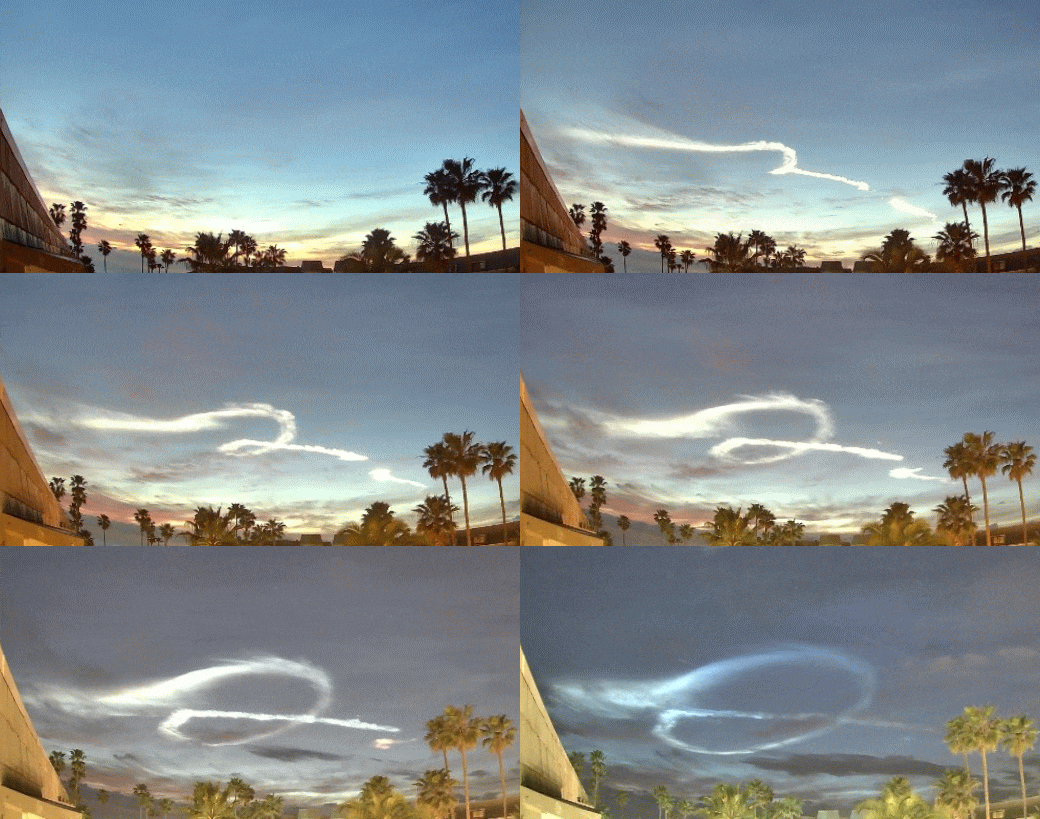
"Twilight lit the exhaust as high altitude winds bend the trail into a loop," says Golisch. "I assembled webcam images taken every 30 seconds into this animation, which covers 20 minutes."
The rocket, launched from Vandenberg Space Force Base, carried 24 new Starlink Satellites into low Earth orbit. This brings the total number of in-orbit Starlinks (working + dead) to 9,694. Here's what that looks like.
more images: from David Blanchard of Flagstaff, AZ
Realtime Space Weather Photo Gallery
Free: Spaceweather.com Newsletter
THE FLOATING SPACE HAMMER: No toolkit is complete without one: The Floating Space Hammer. This one drifted through the stratosphere for more than three hours during a cosmic ray research balloon flight:
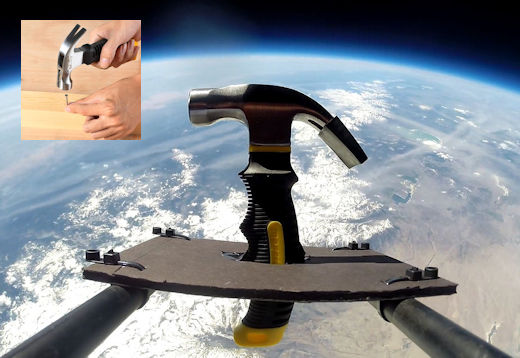
You can have it for $97.95. This compact 8 oz. hammer is light enough to fly on a balloon yet dense enough to deliver a powerful blow. The magnetic head holds a nail for one-handed starting, and the stubby 6 in. length is perfect for tight work areas.
The space hammer comes with a card showing the tool floating at the top of Earth's atmosphere. The interior of the card tells the story of the flight and confirms that this gift has been to the edge of space and back again.
Far Out Gifts: Earth to Sky Store
All sales support hands-on STEM education
Realtime Aurora Photo Gallery
Free: Spaceweather.com Newsletter