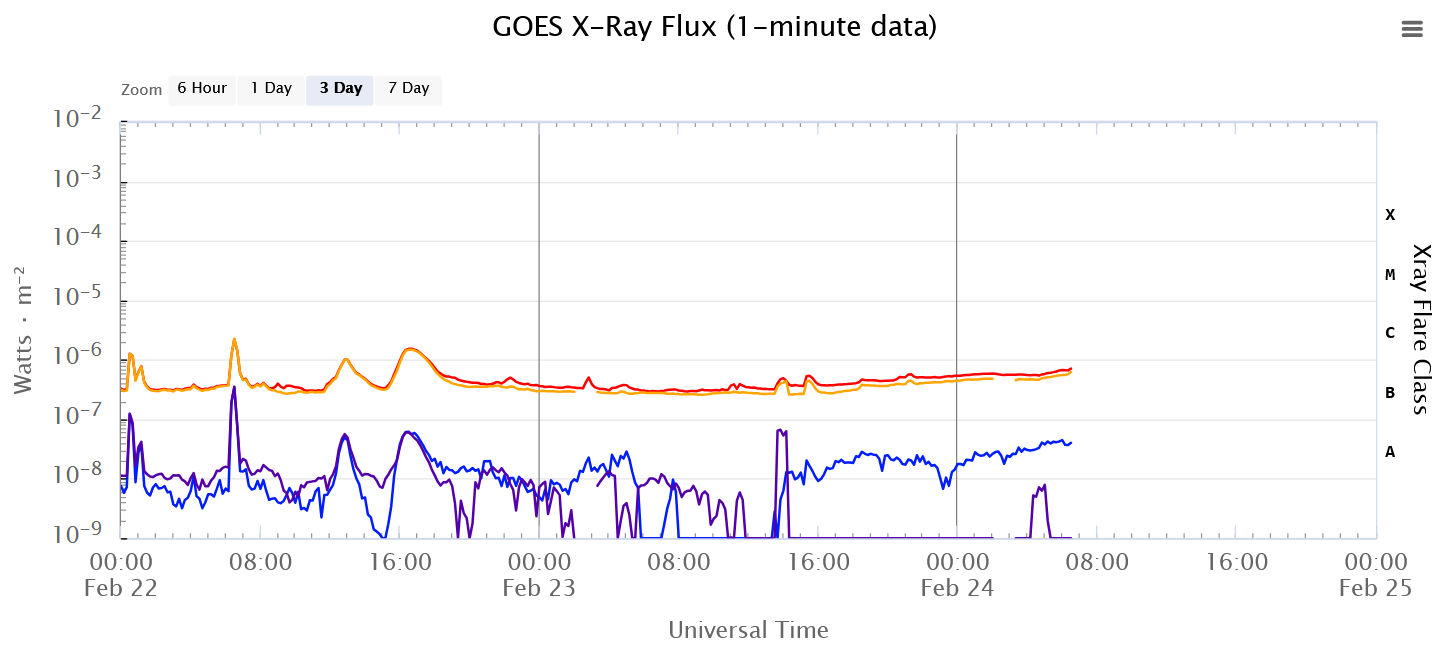
THE SUN IS FLATLINING: With no sunspots actively flaring, the sun's X-ray output has flatlined. The quiet is likely to continue for at least another 24 hours. NOAA forecasters say there is no more than a 1% chance of M- or X-class solar flares on Feb. 24th. Aurora alerts: SMS Text
WHERE HAVE ALL THE SUNSPOTS GONE? Click on this image and take a careful look around the solar disk. Can you find any sunspots? We can't either:
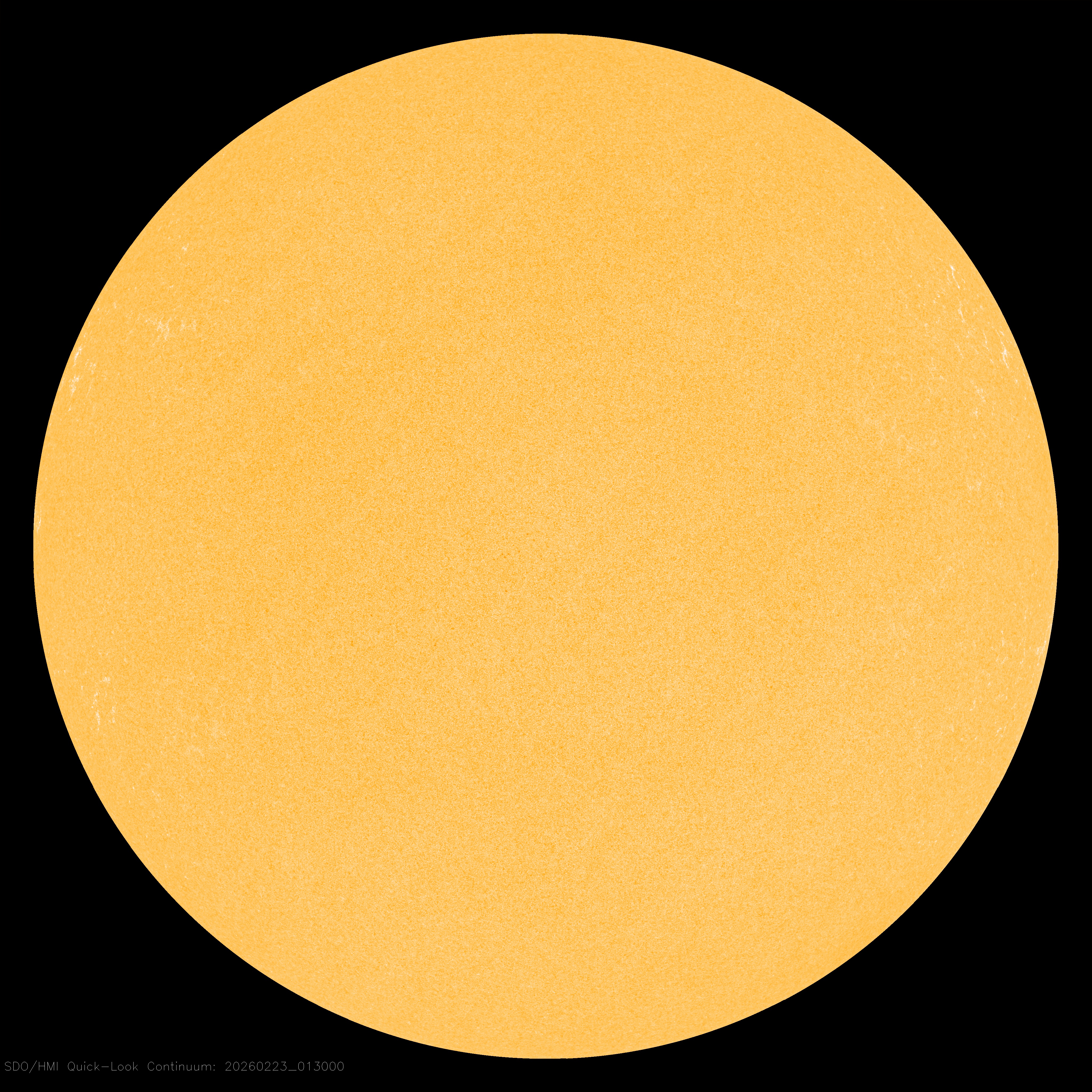
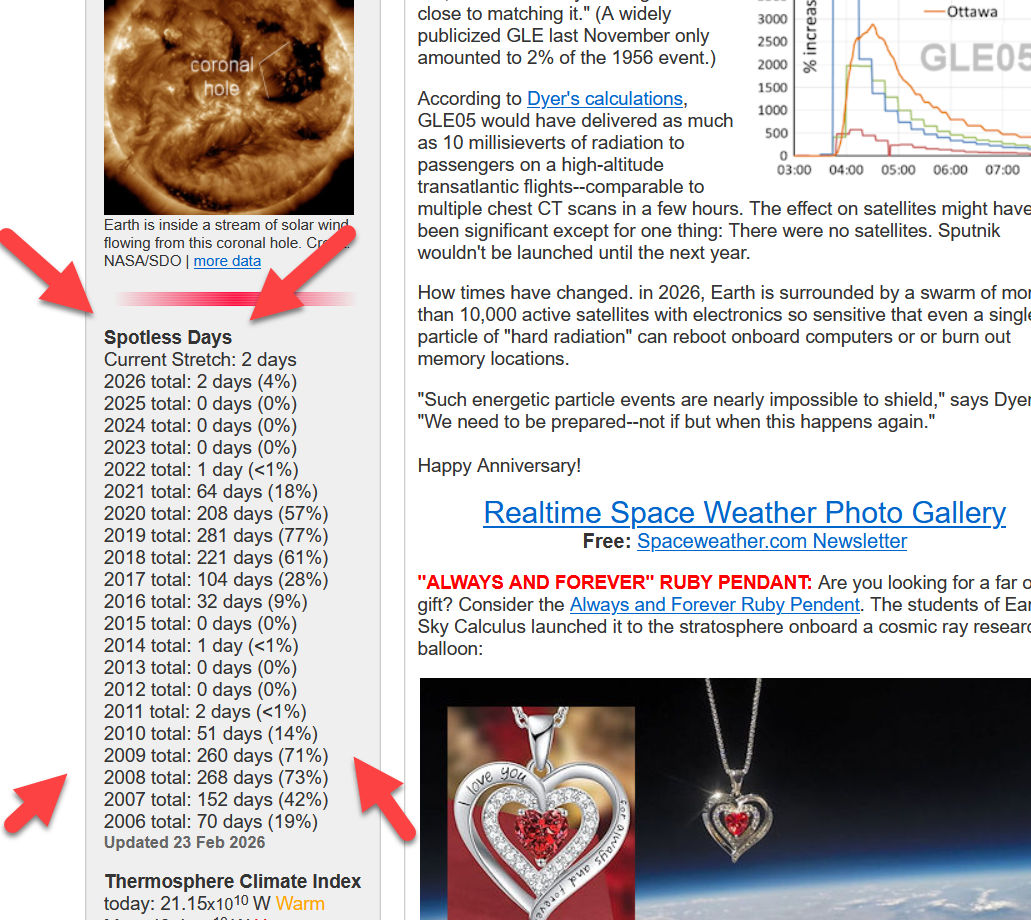
This week has brought the first "spotless days" since 2022. So far, Feb. 22nd and Feb. 23rd have had completely blank suns. There have been no sunspots on the solar disk, breaking an uninterrupted 4 years of non-stop sunspot activity.
What does this mean? It's an early warning of Solar Minimum, the low point of the 11-year solar cycle. During years around Solar Minimum, whole months can go by without a single sunspot, racking up dozens of spotless days in a row. Between 2018 and 2020 (the last Solar Minimum) there were more than 700 spotless days in total. You can find the daily counts right here on Spaceweather.com.
Solar Cycle 25 still has years of life left in it. However, these spotless days tell us that the current cycle is waning. Sunspots will be back--probably tomorrow--but today is a preview of things to come.
Realtime Space Weather Photo Gallery
Free: Spaceweather.com Newsletter
"ALWAYS AND FOREVER" RUBY PENDANT: Are you looking for a far out gift? Consider the Always and Forever Ruby Pendent. The students of Earth to Sky Calculus launched it to the stratosphere onboard a cosmic ray research balloon:
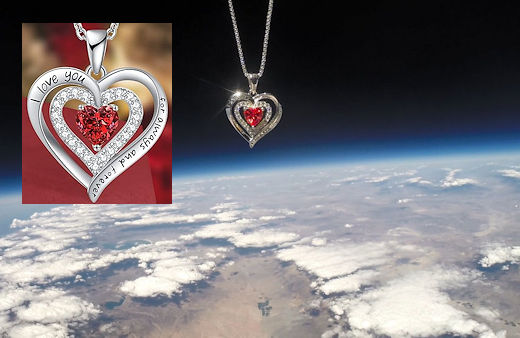
You can have it for $219.95. Engraved with the words "I love you always and forever", this sterling silver pendant has a heart-shaped ruby crystal in the middle surrouunded by a ring of glittering 5A cubic zirconia nuggets. It is a visually striking necklace perfect for anniversaries and romantic birthdays.
The students are selling space pendants to pay the helium bill for their cosmic ray ballooning program. Each one comes with a greeting card showing the jewelry in flight and telling the story of its trip to the stratosphere and back again.
Far Out Gifts: Earth to Sky Store
All sales support hands-on STEM education
70TH ANNIVERSARY OF THE 1956 GROUND LEVEL EVENT: It doesn't have a catchy name, and most people have never heard of it. Yet space scientist Clive Dyer of the Surrey Space Centre can't stop worrying about 'GLE05'--a major solar radiation storm in 1956.
"This week is the 70th anniversary of that extreme space weather event," says Dyer. "If it happened again today, it would have a significant impact on air travel and modern technology."
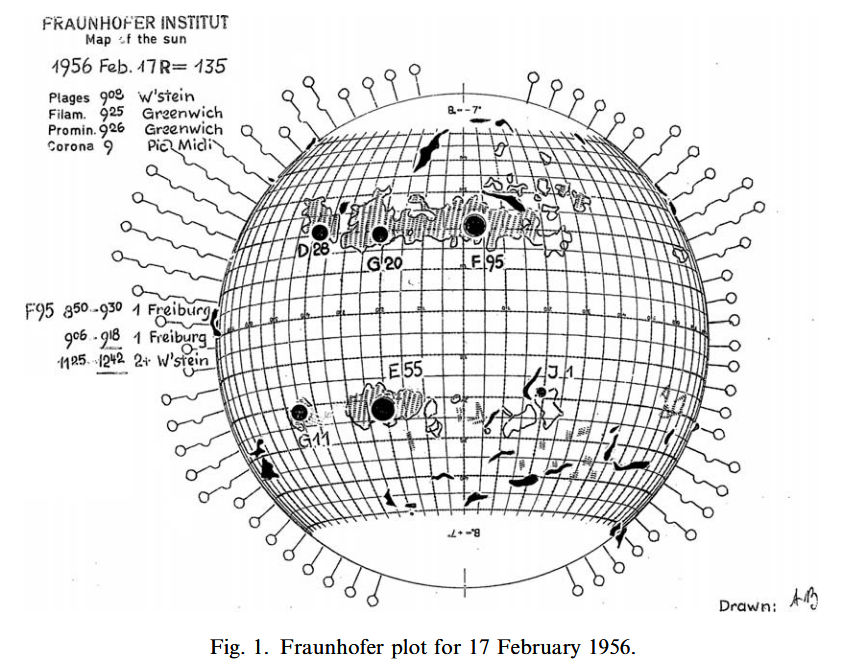
Above: A drawing of the giant sunspot that caused the Feb. 23, 1956, GLE. [Source]
On Feb. 23, 1956, radiation sensors around the world suddenly went haywire as radiation levels spiked to values as much as 50 times normal. No one had ever seen anything like it. "The increase was so dramatic that some observers switched-off their monitors believing them to be malfunctioning," says Dyer.
The radiation came from "McMath Region 3400"--an enormous sunspot spanning 60° in solar longitude, which flared shortly before the particles arrived. Normally, our atmosphere would harmlessly absorb the radiation, but not this time. Solar particles penetrated all the way to the ground.
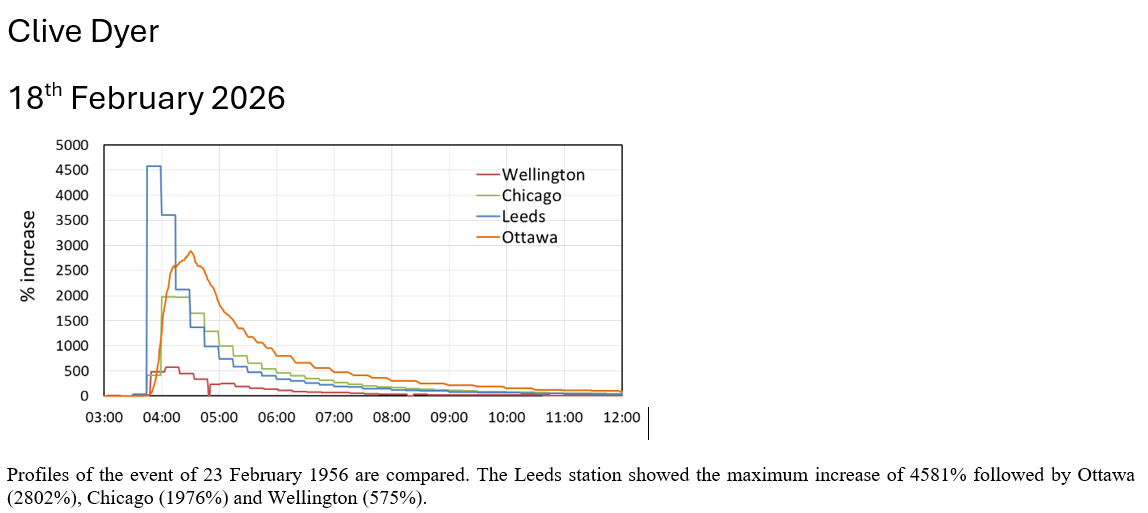 "We call this a Ground Level Enhancement (GLE)," explains Dyer, "This was the biggest of the modern era, and even today nothing has come close to matching it." (A widely publicized GLE last November only amounted to 2% of the 1956 event.)
According to Dyer's calculations, GLE05 would have delivered as much as 10 millisieverts of radiation to passengers on a high-altitude transatlantic flights--comparable to multiple chest CT scans in a few hours. The effect on satellites might have been significant except for one thing: There were no satellites. Sputnik wouldn't be launched until the next year.
How times have changed. in 2026, Earth is surrounded by a swarm of more than 10,000 active satellites with electronics so sensitive that even a single particle of "hard radiation" can reboot onboard computers or or burn out memory locations.
"Such energetic particle events are nearly impossible to shield," says Dyer. "We need to be prepared--not if but when this happens again."
Happy Anniversary!
Realtime Space Weather Photo Gallery
Free: Spaceweather.com Newsletter
Realtime Aurora Photo Gallery
Free: Spaceweather.com Newsletter