THE DROUGHT IS OVER: After three consecutive days of blank suns (described below), sunspots are back again. Dark cores are emerging over the sun's eastern limb--one in the north and another in the south. The southern active region has already produced an M2-class solar flare. We told you so: Solar Cycle 25 is not over yet. Solar flare alerts: SMS Text

WHERE HAVE ALL THE SUNSPOTS GONE? Click on this image and take a careful look around the solar disk. Can you find any sunspots? We can't either:
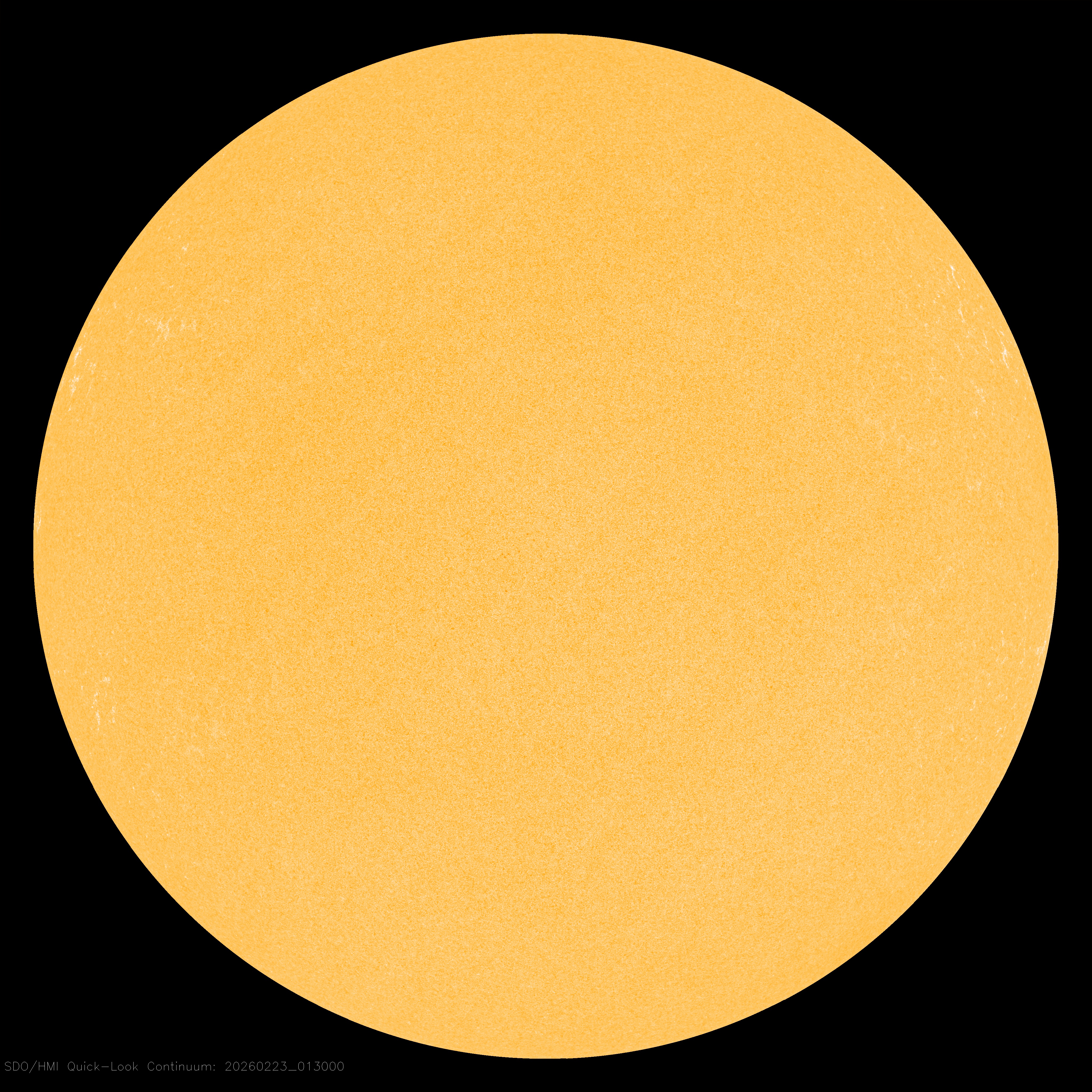
This week has brought the first "spotless days" since 2022. So far, Feb. 22nd, Feb. 23rd, and Feb 24th have had completely blank suns. This breaks an uninterrupted 4 years of non-stop sunspot activity.
What does this mean? It's an early warning of Solar Minimum, the low point of the 11-year solar cycle. During years around Solar Minimum, whole months can go by without a single sunspot, racking up dozens of spotless days in a row. Between 2018 and 2020 (the last Solar Minimum) there were more than 700 spotless days in total. You can find the daily counts right here on Spaceweather.com.
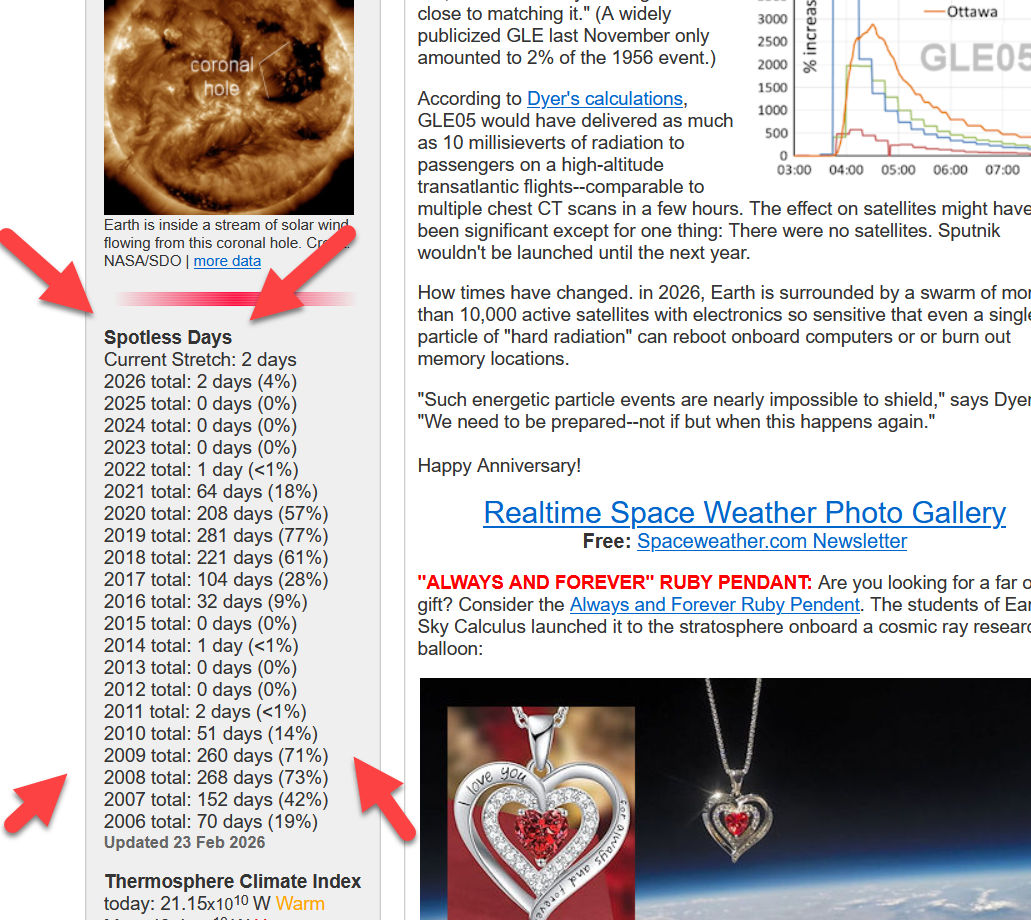
Solar Cycle 25 still has years of life left in it. However, these spotless days tell us that the current cycle is waning. Sunspots will be back--probably tomorrow--but this week is a preview of things to come.
Realtime Space Weather Photo Gallery
Free: Spaceweather.com Newsletter
"18K GOLD "ALWAYS AND FOREVER" PENDANT: Are you looking for an unforgettable gift? Consider the Always and Forever Space Pendent. On Aug. 29, 2023, the students of Earth to Sky Calculus launched it to the stratosphere onboard a cosmic ray research balloon:
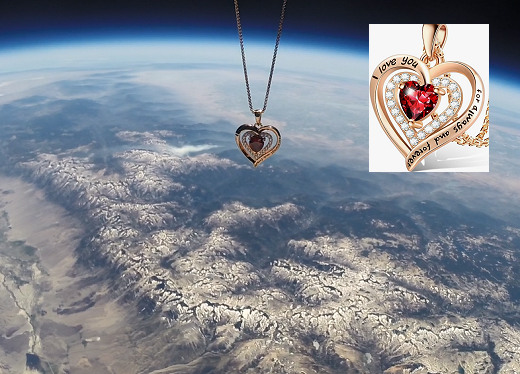
You can have it for $229.95. Engraved with the words "I love you always and forever", this 18K gold-plated sterling silver pendant has a heart-shaped ruby crystal in the middle surrounded by a ring of glittering 5A cubic zirconia nuggets. It is a visually striking premium pendant that makes a once-in-a-lifetime anniversary or birthday gift.
The students are selling space pendants to pay the helium bill for their cosmic ray ballooning program. Each one comes with a greeting card showing the jewelry in flight and telling the story of its trip to the stratosphere and back again.
Far Out Gifts: Earth to Sky Store
All sales support hands-on STEM education
Realtime Aurora Photo Gallery
Free: Spaceweather.com Newsletter