A MINOR CME IS COMING: A magnetic filament on the sun erupted Feb. 25th, hurling a minor CME toward Earth. NOAA models suggest it will arrive late on Feb. 28th, sparking, at most, G1-class geomagnetic storms. Arctic sky watchers should be alert for auroras mixed with moonlight. CME impact alerts: SMS Text

A COMET IS PLUNGING TOWARD THE SUN: Remember Comet Lovejoy (C/2011 W3)? On Dec.16, 2011, that comet skimmed the surface of the sun and survived, becoming a spectacular sight in the southern sky. The same thing could happen just weeks from now. This time the sungrazer is Comet MAPS (C/2026 A1), shown here in a photo from Farm Tivoli, Namibia:
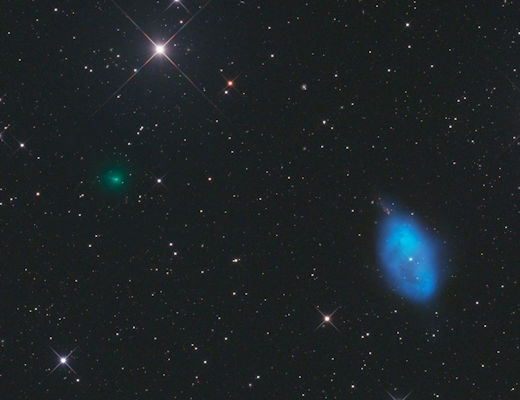
"How bright will sungrazing Comet MAPS become?" wonders photographer Gerald Rhemann. "Since it was discovered on Jan. 13th, the comet has increased in brightness by 5 magnitudes (100-fold). Speculation that it could develop into a comet visible during the daylight around its perihelion (closest approach to the sun) on April 4th is entirely justified."
Rhemann's photo, which he took in collaboration with astrophotographer Michael Jäger, shows Comet MAPS passing by the "Robin's Egg Nebula" (NGC 1360) in the southern constellation Fornax. The comet has a 6 arcminute-wide green atmosphere and a jet-like tail 3 arcminutes long.
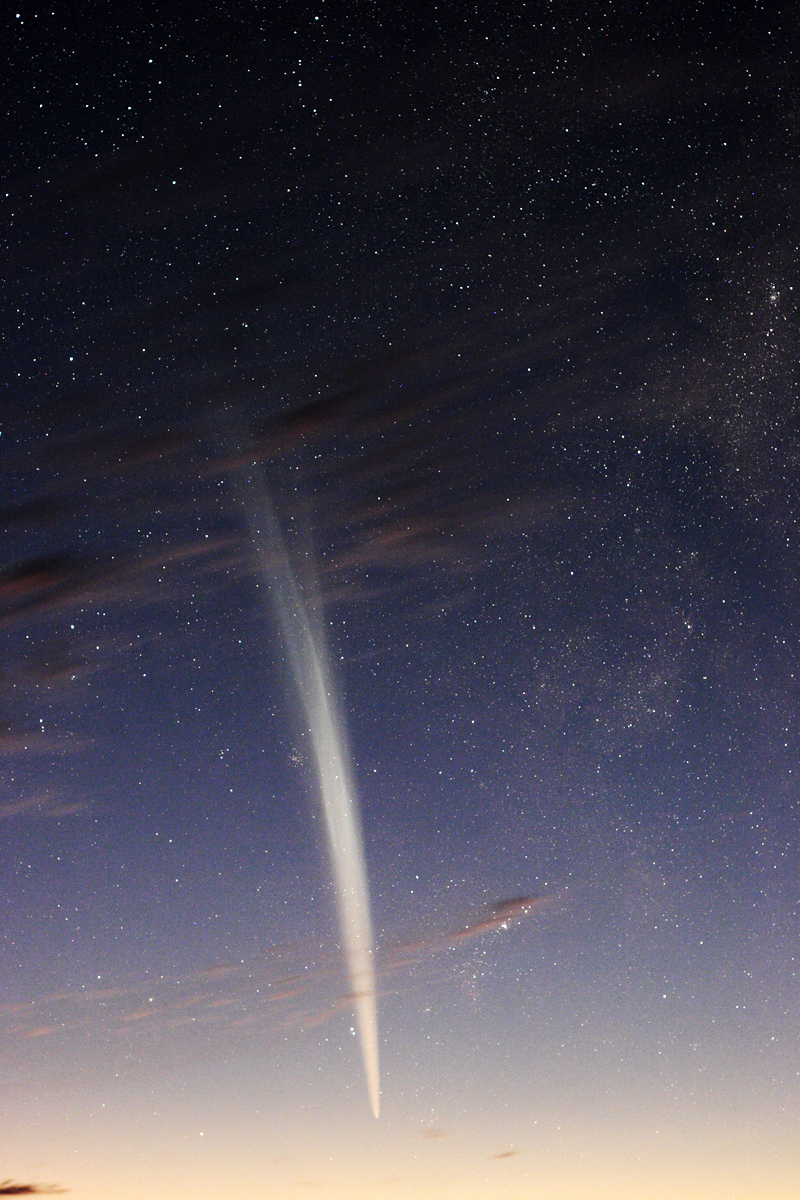 The comet's encounter with the sun will be extremely close. "The latest orbit indicates a perihelion of only ~160,000 km above the photosphere," says Qicheng Zhang of the Lowell Observatory in Flagstaff, Arizona. The corresponding distance for Comet Lovejoy was 140,000 km, about the same. Like Lovejoy, MAPS will pass well inside the sun's corona.
You can re-visit Comet Lovejoy's near-death dive in the Space Weather Archive: Dec. 16, 17, 18, 19, 20, 21, 22, 2011.
Whether or not Comet MAPS survives depends on the size and cohesion of its nucleus. "This remains highly uncertain for the time being," says Zhang. "We don't yet know if it is a typical small Kreutz sungrazer that will disintegrate before it gets to the sun--or something more substantial like Comet Lovejoy."
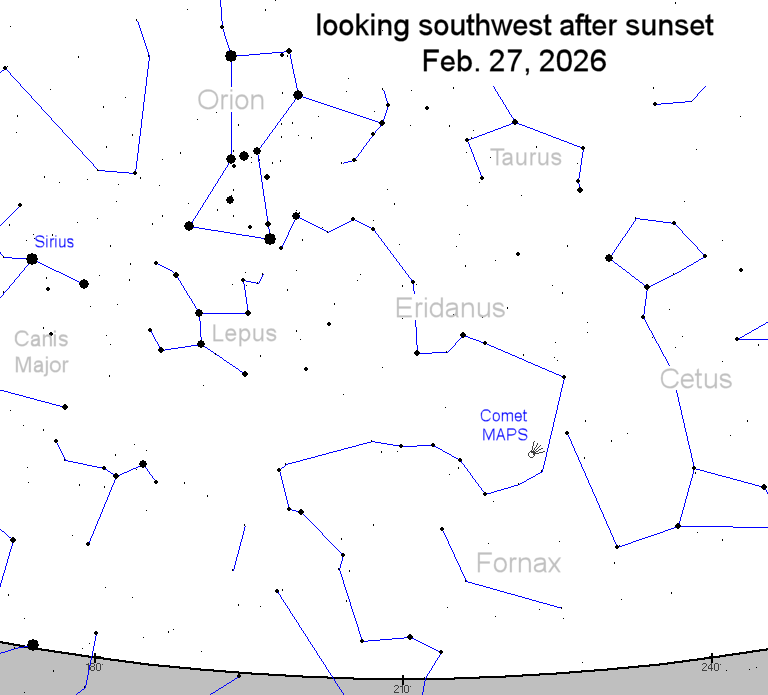
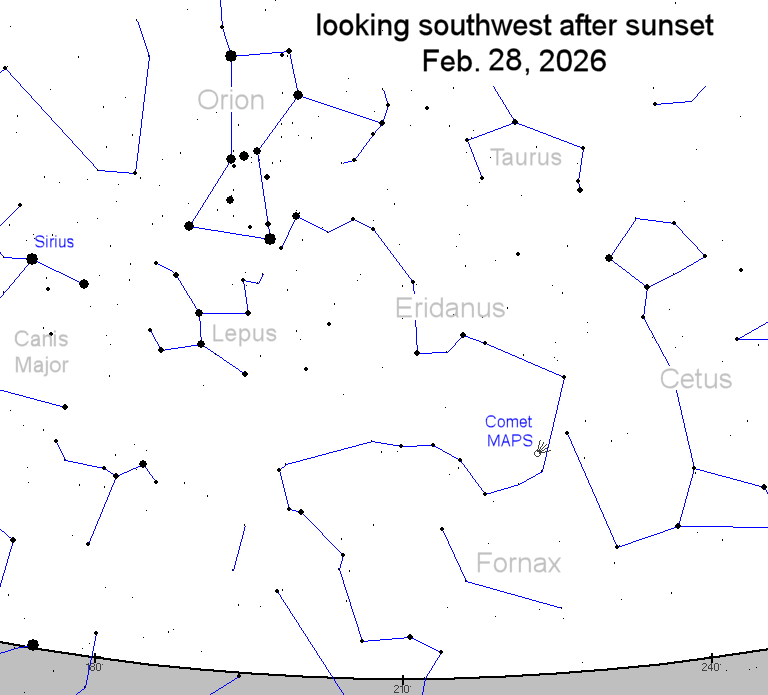
Monitoring is encouraged. The comet is currently 13th magnitude, putting it within range of mid-sized backyard telescopes under dark skies. Southern observers are favored, but some northerners can see it, too. Point your optics here. Sky maps: Feb. 27, 28, March 1.
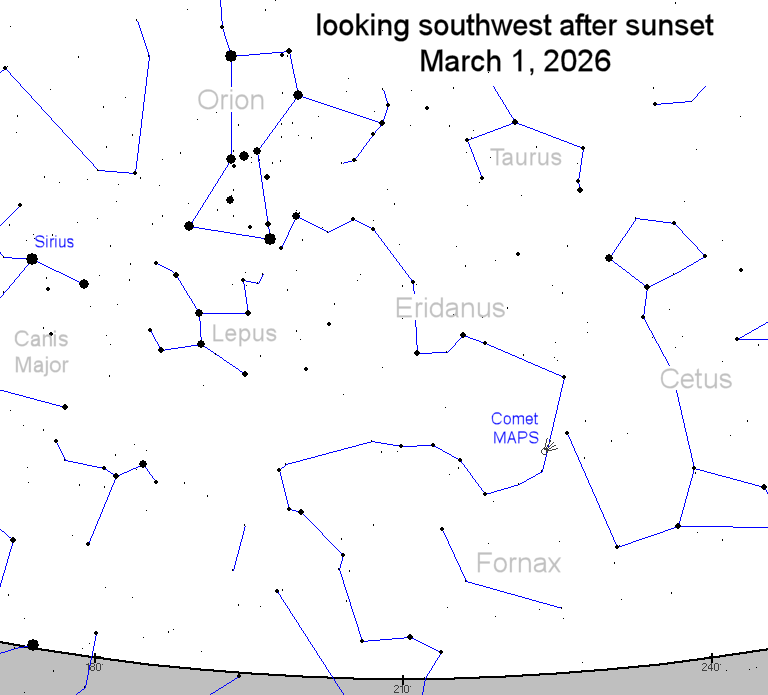
more images: from Dan Bartlett of June Lake, California; from Michael Jaeger and Gerald Rhemann of Stixendorf, Austria
Realtime Space Weather Photo Gallery
Free: Spaceweather.com Newsletter
18K GOLD "ALWAYS AND FOREVER" PENDANT: Are you looking for an unforgettable gift? Consider the Always and Forever Space Pendent. On Aug. 29, 2023, the students of Earth to Sky Calculus launched it to the stratosphere onboard a cosmic ray research balloon:
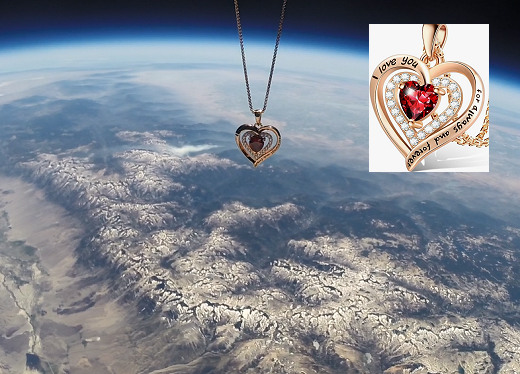
You can have it for $229.95. Engraved with the words "I love you always and forever", this 18K gold-plated sterling silver pendant has a heart-shaped ruby crystal in the middle surrounded by a ring of glittering 5A cubic zirconia nuggets. It is a visually striking premium pendant that makes a once-in-a-lifetime anniversary or birthday gift.
The students are selling space pendants to pay the helium bill for their cosmic ray ballooning program. Each one comes with a greeting card showing the jewelry in flight and telling the story of its trip to the stratosphere and back again.
Far Out Gifts: Earth to Sky Store
All sales support hands-on STEM education
Realtime Aurora Photo Gallery
Free: Spaceweather.com Newsletter