CHANCE OF WEEKEND STORMS: Minor G1-class geomagnetic storms are possible this weekend when a high-speed stream of solar wind is expected to hit Earth's magnetic field. NOAA forecasters believe that Saturday, March 7th, is the most likely date for high-latitude auroras. Aurora alerts: SMS Text

RIPPLES IN THE CENTER OF A SUNSPOT: Quiet sunspot 4378 has not flared since it appeared a week ago. But is it really quiet? A new video of the sunspot reveals nonstop activity. Stare into the core and, behold, the ripples:
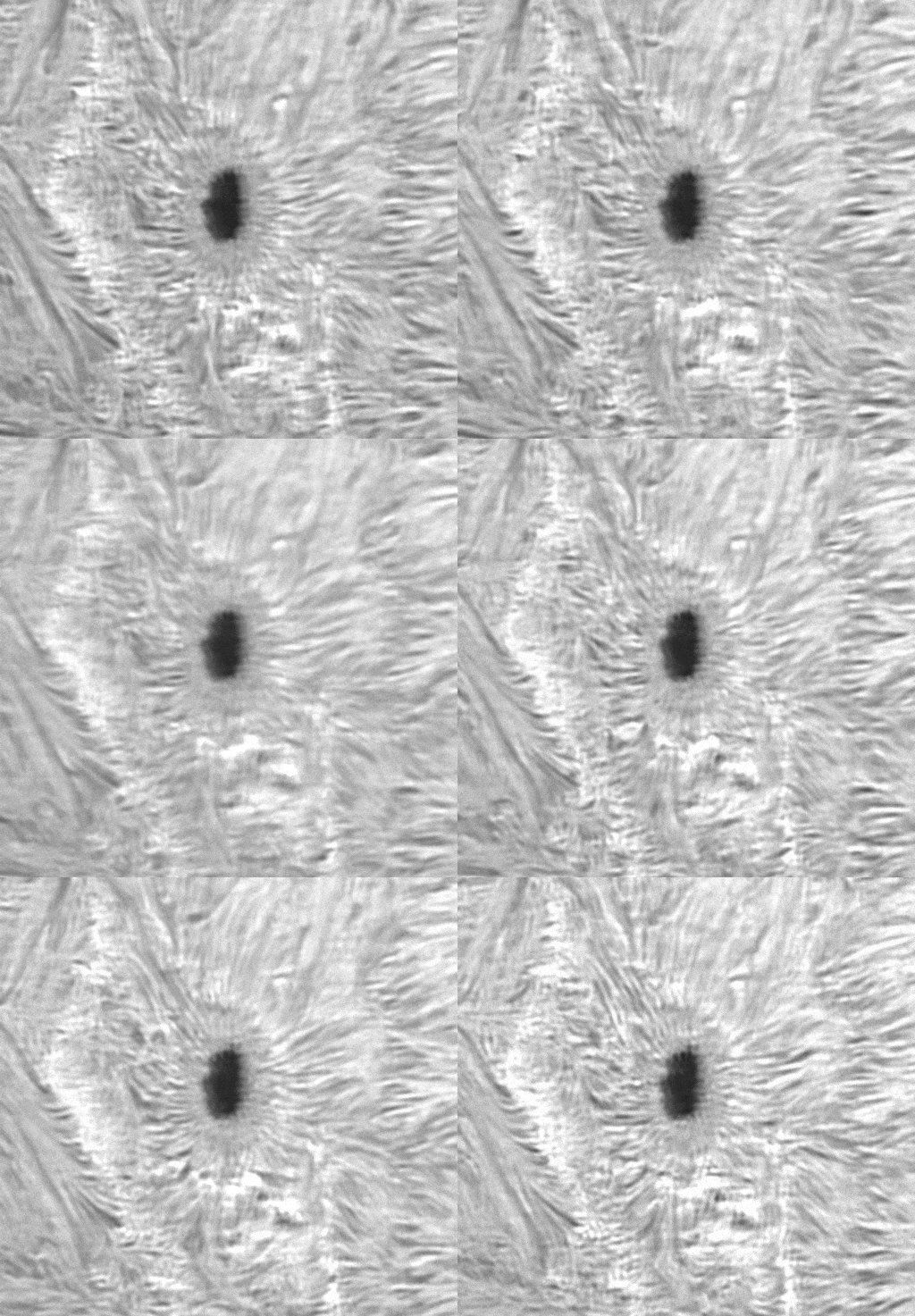
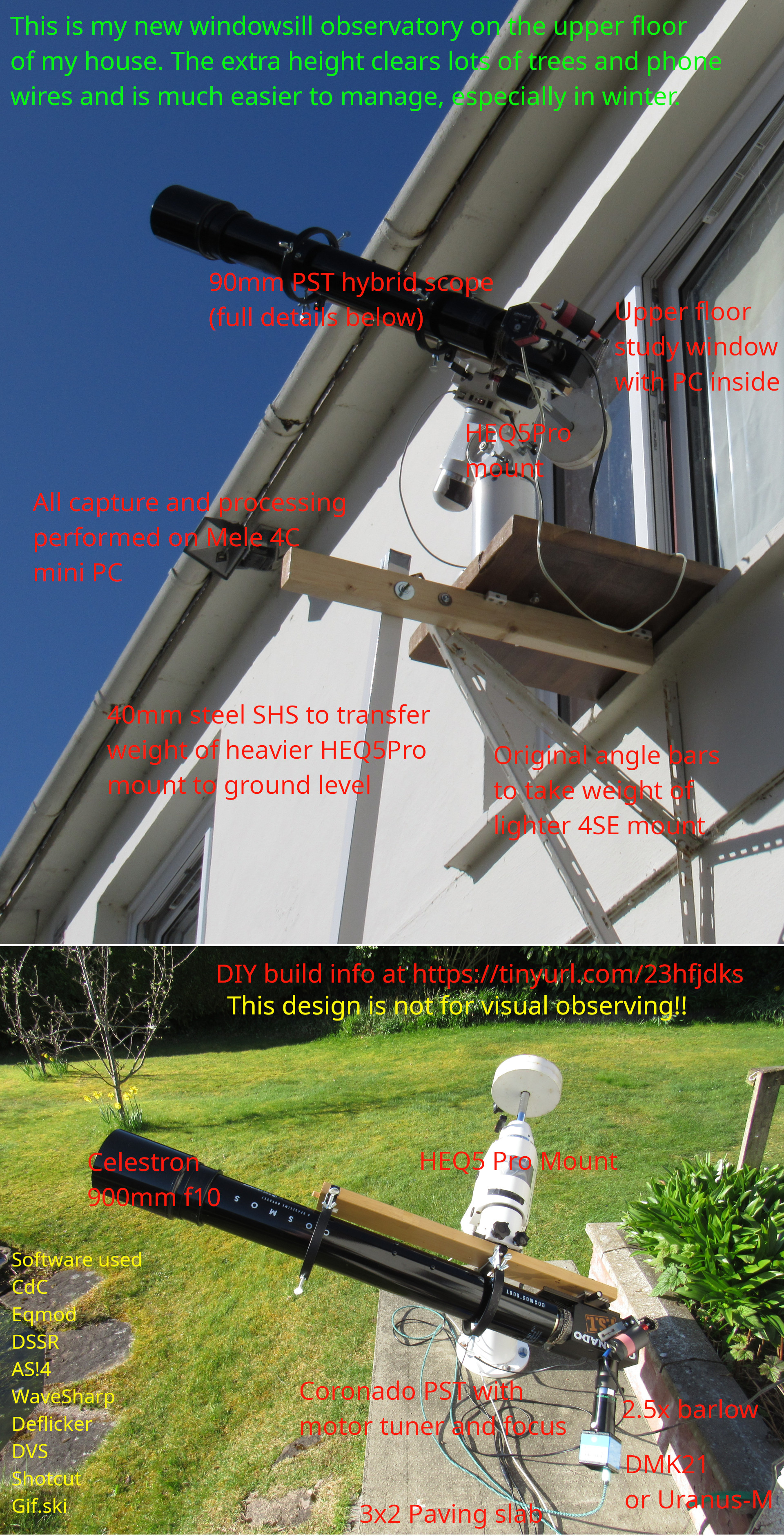
"Look closely and you can see the waves washing out over the sunspot's penumbra," says Dave Wilson, who recorded this video from his backyard solar observatory in Inverness, Scotland, on March 6th.
This is a phenomenon called 'umbral flashes' -- and researchers do not understand what causes it.
The umbra of a sunspot is its dark central core. It is where magnetic fields are so intense, incandescent heat from the underlying sun is blocked from view. One theory holds that gas from the sun's atmosphere falls into the umbra. When it reaches the "floor" of the sunspot, the gas rebounds, forming luminous shockwaves that ripple outwards from the center.

Realtime Space Weather Photo Gallery
Free: Spaceweather.com Newsletter
THE RAINBOW ROSE FROM SPACE: This is no ordinary rose. It shimmers with all the colors of the rainbow, and it has been to the edge of space:
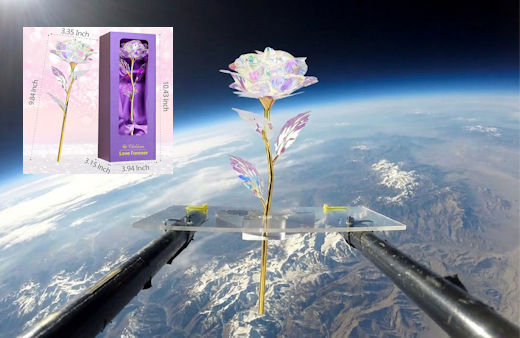
You can have it for $127.95. The rainbow rose flew through the stratosphere on Jan. 24th carried by an Earth to Sky Calculus cosmic ray research balloon. The artificial bloom comes with a greeting card showing the rose in flight, and telling the story of its journey to the top of Earth's atmosphere. It makes a great birthday, anniversary, or (coming soon!) Mother's Day gift.
Far Out Gifts: Earth to Sky Store
All sales support hands-on STEM education
Realtime Aurora Photo Gallery
Free: Spaceweather.com Newsletter