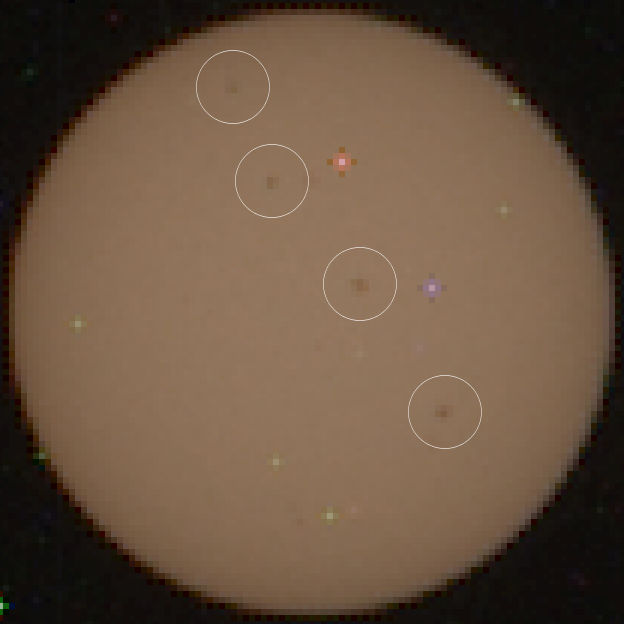
THE SUNSPOT REPORT FROM MARS: NASA's Perseverance rover photographed the sun through Martian dust yesterday. The resulting image shows four relatively large sunspots strung across the solar disk. These are farside sunpots not currently visible from Earth. Martian observations show that the entire surface of the sun remains active despite some early symptoms of decline in Solar Cycle 25. Aurora alerts: SMS Text
EARTH-DIRECTED SOLAR FLARE AND CME: Surprising forecasters, sunspot 4394 produced an M2.7-class solar flare on March 16th (1215 UTC). NASA's Solar Dynamics Observatory captured the extreme ultraviolet flash:
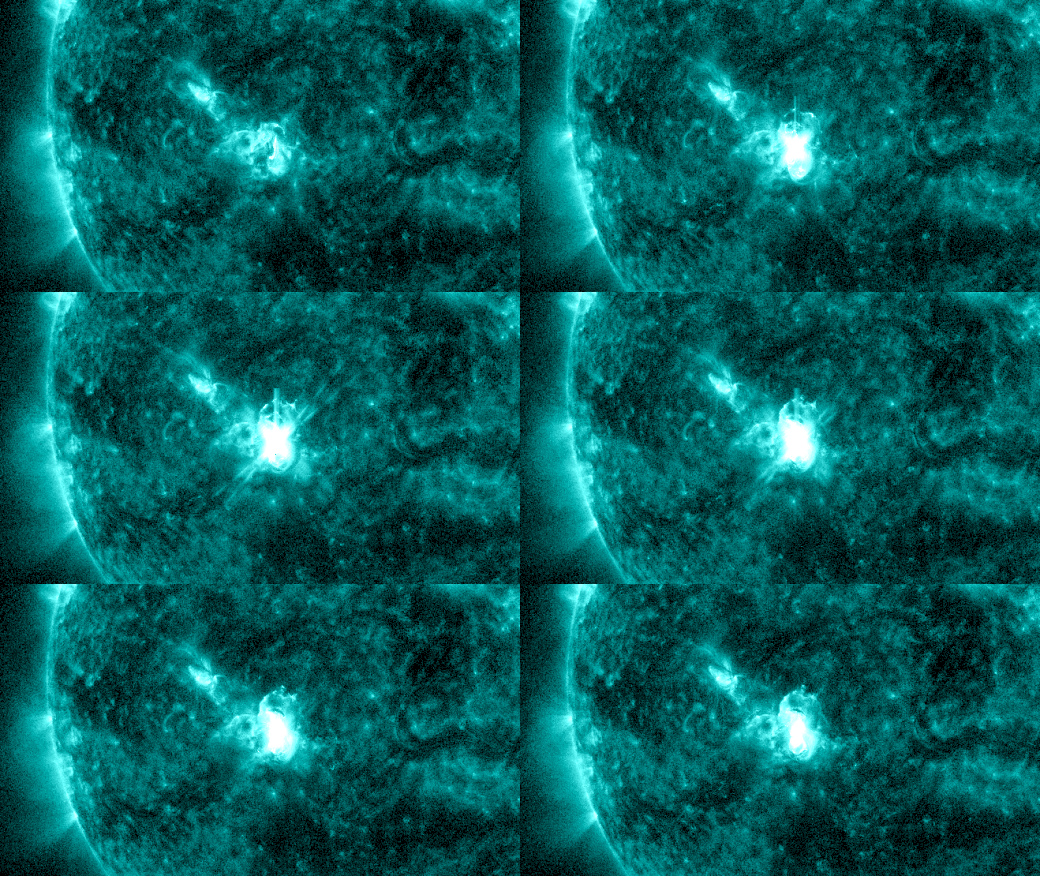
On the Richter Scale of solar flares, "M2.7" is not very strong. However, this one hurled a CME almost directly toward Earth. A NASA model predicts the CME will arrive on March 19th, mere hours before the northern vernal equinox.

This is perfect timing because auroras love equinoxes. It's called the "Russell-McPherron effect." At this time of year, the magnetic field of Earth can link to the magnetic field of the sun, providing a superhighway for solar wind to enter our planet's magnetosphere. Even a weak CME can can penetrate to spark mid-latitude auroras. NOAA is currently predicting a G2-class geomagnetic storm.

There's more: A New Moon on March 19th will provide dark skies for long exposures. Even if you can't see the auroras, you might be able to photograph them. Point your smart phone at the sky and take a nighttime exposure. You could be surprised by what appears on the screen. Aurora alerts: SMS Text
Realtime Space Weather Photo Gallery
Free: Spaceweather.com Newsletter
SNOOPY'S EASTER CANDY BOWL: This is the perfect gift for someone who loves Snoopy. And candy. And space! Snoopy's Easter Candy Bowl. It flew to the stratosphere on Jan. 30, 2026, onboard an Earth to Sky Calculus cosmic ray research balloon:
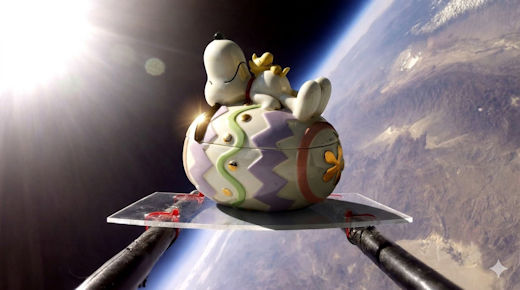
You can have it for $138.95. The hand-painted porcelain bowl comes with a greeting card showing the candy container in flight and telling the story of its journey to the edge of space. It makes an out-of-this-world Easter, birthday, or anniversary gift!
Do you love science? Shop the Shop the Earth to Sky Store. Every item in the store has been to the edge of space--floating above 99.7% of Earth's atmosphere, experiencing cosmic rays, extreme cold, and a wild ride parachuting back to Earth. All sales support student science projects and STEM education.
Far Out Gifts: Earth to Sky Store
All sales support hands-on STEM education
POTENTIAL 'BLACK AURORAS' OVER ICELAND: On March 15th, a bright display of auroras exploded over Iceland. Near the shore of lake Pingvallavatn, photographer Ian McCaskill witnessed expanses of pink and green ... and black:
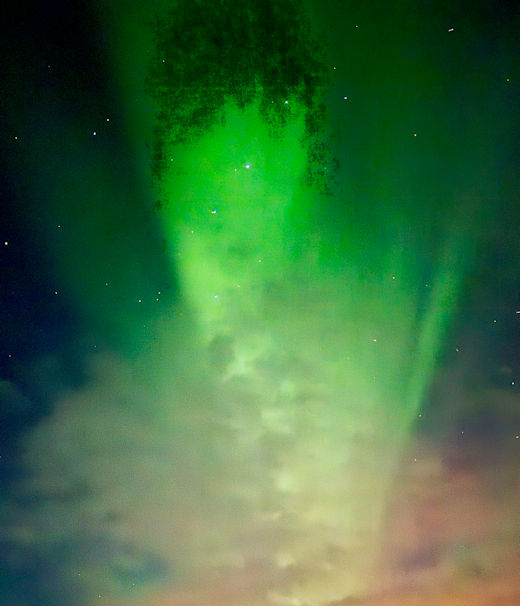
McCaskill may have captured a rare episode of 'black auroras.' They are dark swirls or black blobs that sometimes appear in an otherwise ordinary expanse of auroral light. For example, look at Figure 1 in this research paper on the topic. Some researchers call them "anti-auroras."
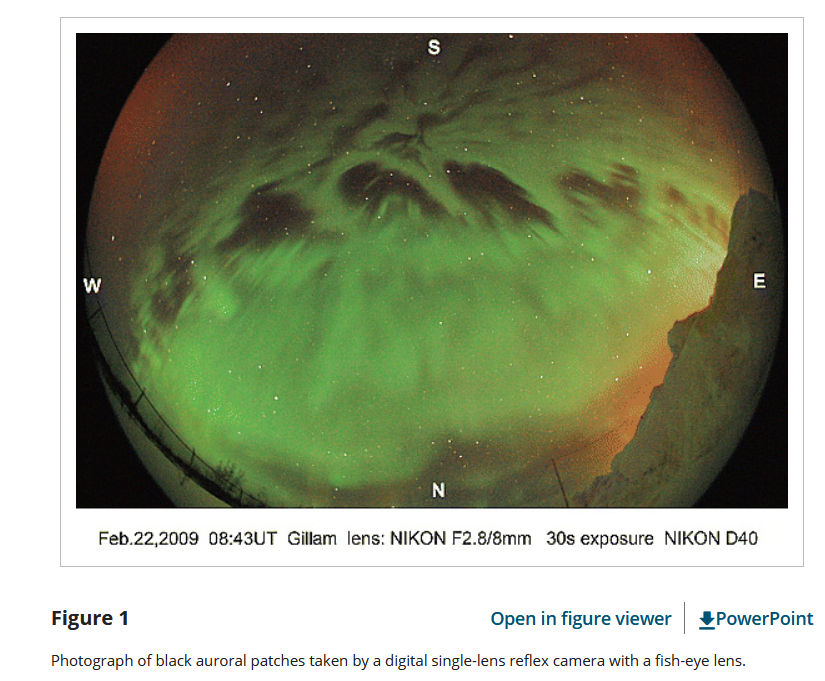
Ordinary auroras are caused by electrons raining down from space. Black auroras are the opposite. Instead of electrons raining down, electrons are propelled upwards back into space. Europe's fleet of Cluster spacecraft flew over a black aurora on Jan. 14, 2001, and saw the process in action:
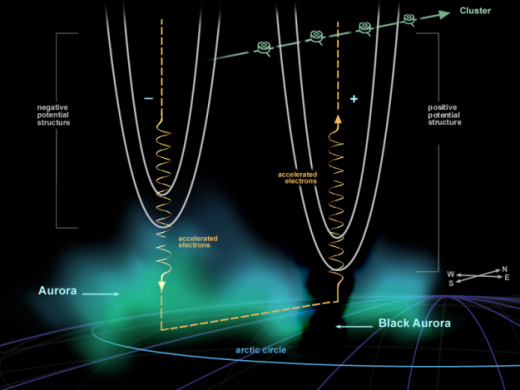
Sensors onboard the spaceraft detected strong positive electric fields in the black aurora zone. These fields reversed the normal downward rain of aurora-causing electrons.
The study of black auroras is still in its infancy, and forecasters cannot yet predict when or where they might appear. Aurora watchers, the next time a geomagnetic storm erupts, be alert for black. Aurora alerts: SMS Text
Realtime Aurora Photo Gallery
Free: Spaceweather.com Newsletter
Realtime Space Weather Photo Gallery
Free: Spaceweather.com Newsletter