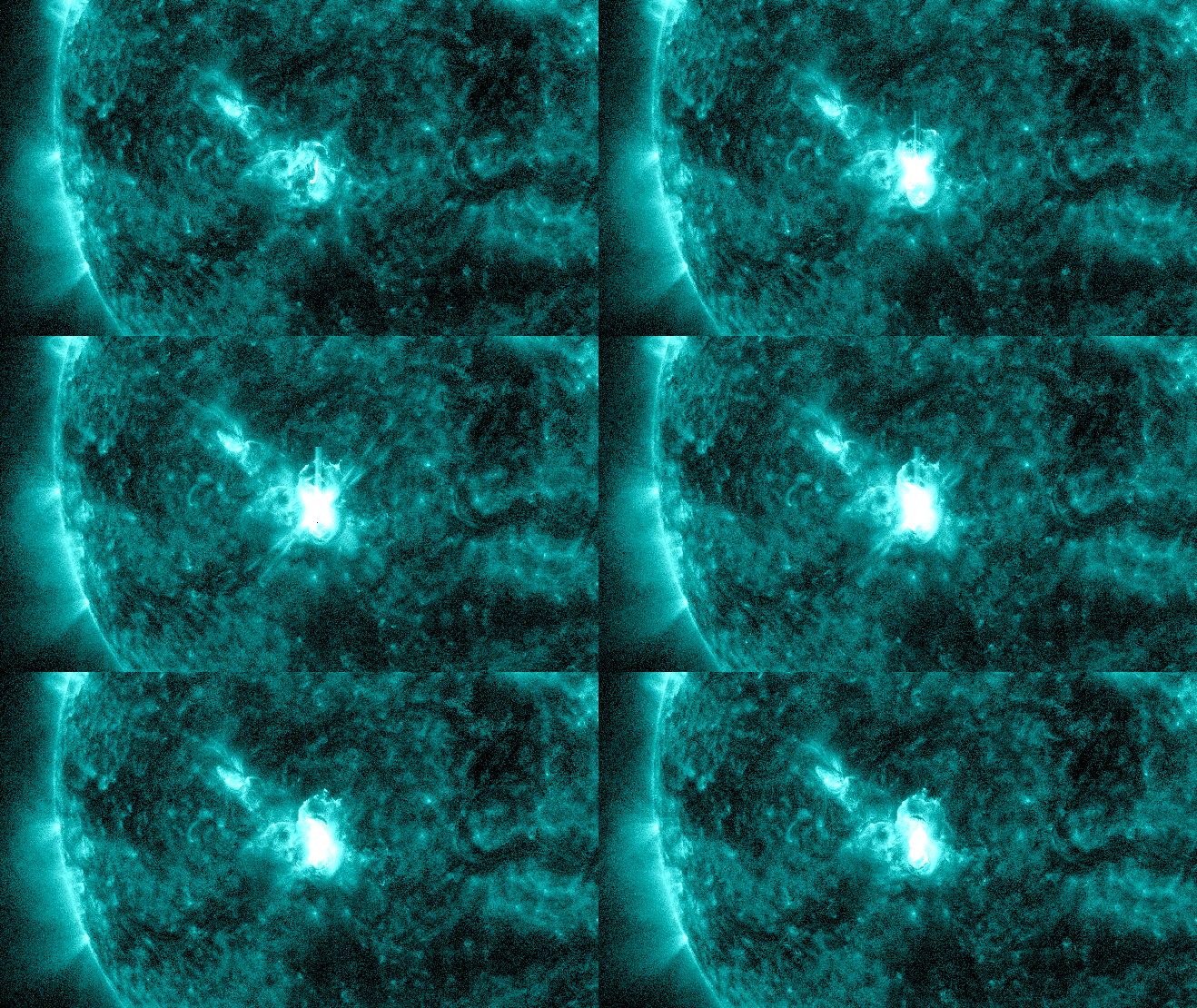
EQUINOX AURORA WATCH: The first auroras of northern spring are only days away. A CME launched by yesterday's solar flare (M2.7) is expected to hit Earth on March 19th just hours before the vernal equinox. The timing is perfect for amplification by the "Russell-McPherron effect." NOAA is predicting a G2-class geomagnetic storm with possible mid-latitude auroras. Would you like an instant text message when the CME arrives? Sign up for CME Impact Alerts.

TEN THOUSAND STARLINKS: On March 16th, a Falcon 9 rocket lifted off from Vandenberg Space Force Base carrying 25 Starlink satellites. It was a routine launch for SpaceX, the 33rd of 2026. But those 25 Starlinks crossed a milestone. For the first time in history, more than 10,000 Starlink satellites were simultaneously circling Earth.
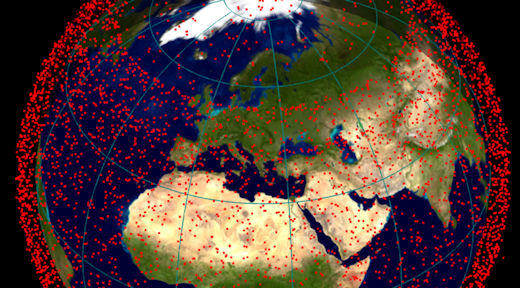
Click to view of dynamic plot of Low-Earth Orbit from Heavens Above
Consider where we started: When SpaceX launched its first operational Starlinks in May 2019, there were roughly 2,000 active satellites of all kinds orbiting Earth. Starlink alone now outnumbers the entire pre-2019 fleet five to one. The constellation has utterly transformed the orbital environment.
The numbers are sobering. Since 2019, more than 11,596 Starlinks have been launched. Of those, more than 1,500 have already reentered the atmosphere as SpaceX retires older satellites to make room for newer models. Each re-entry deposits about 30 kg of aluminum oxide into the upper atmosphere--an uncontrolled chemistry experiment on a planetary scale.
In case you're wondering how this might affect astronomy, consider this recent video of Comet Wierzchoś (C/2024 E1) from Gerald Rhemann:

Starlinks outnumbered the comet 10:1. "Satellite interference is a growing challenge--especially near dusk and dawn," he says.
With so many Starlinks circling Earth, the orbital environment is increasingly unstable. It's "an orbital house of cards," according to a study led by Sarah Thiele of Princeton University, which finds that a severe solar storm could kickstart widespread catastrophic collisions in as little as 2-3 days. SpaceX itself reported to the FCC that Starlink satellites performed roughly 300,000 collision-avoidance maneuvers in 2025 alone.
Meanwhile, Starlink internet is awesome. Enjoy it while you can.
Extra: Because satellite megaconstellations are an increasingly important aspect of space weather and amateur astronomy, we've decided to track them. Look here. Every day we will update Starlink Statistics, eventually adding other megaconstellations when they become important.

Realtime Space Weather Photo Gallery
Free: Spaceweather.com Newsletter
THE METEOR CRATER PENDANT: Have you heard of Moissanite? It's a very rare mineral discovered by 19th-century chemist Henri Moissan in Arizona's Meteor Crater. At first, he thought it was diamond, but later realized it was even more rare. It's a diamond lookalike that, until the 1950s, was found naturally only in meteorites.
On Aug. 2, 2025, the students of Earth to Sky Calculus launched this Moissanite pendant to the stratosphere onboard a cosmic ray research balloon:
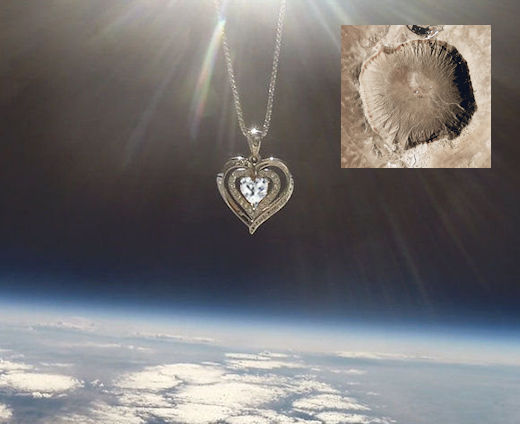
You can have it for $169.95. Engraved with the words "I love you always and forever," the sterling silver frame bends around the Moissanite in a heart-shaped curve--all highlighted by glittering 5A cubic zirconia nuggets.
The students are selling space pendants to pay the helium bill for their cosmic ray ballooning program. Each one comes with a greeting card showing the jewelry in flight and telling the story of its trip to the stratosphere and back again.
Far Out Gifts: Earth to Sky Store
All sales support hands-on STEM education
Realtime Aurora Photo Gallery
Free: Spaceweather.com Newsletter