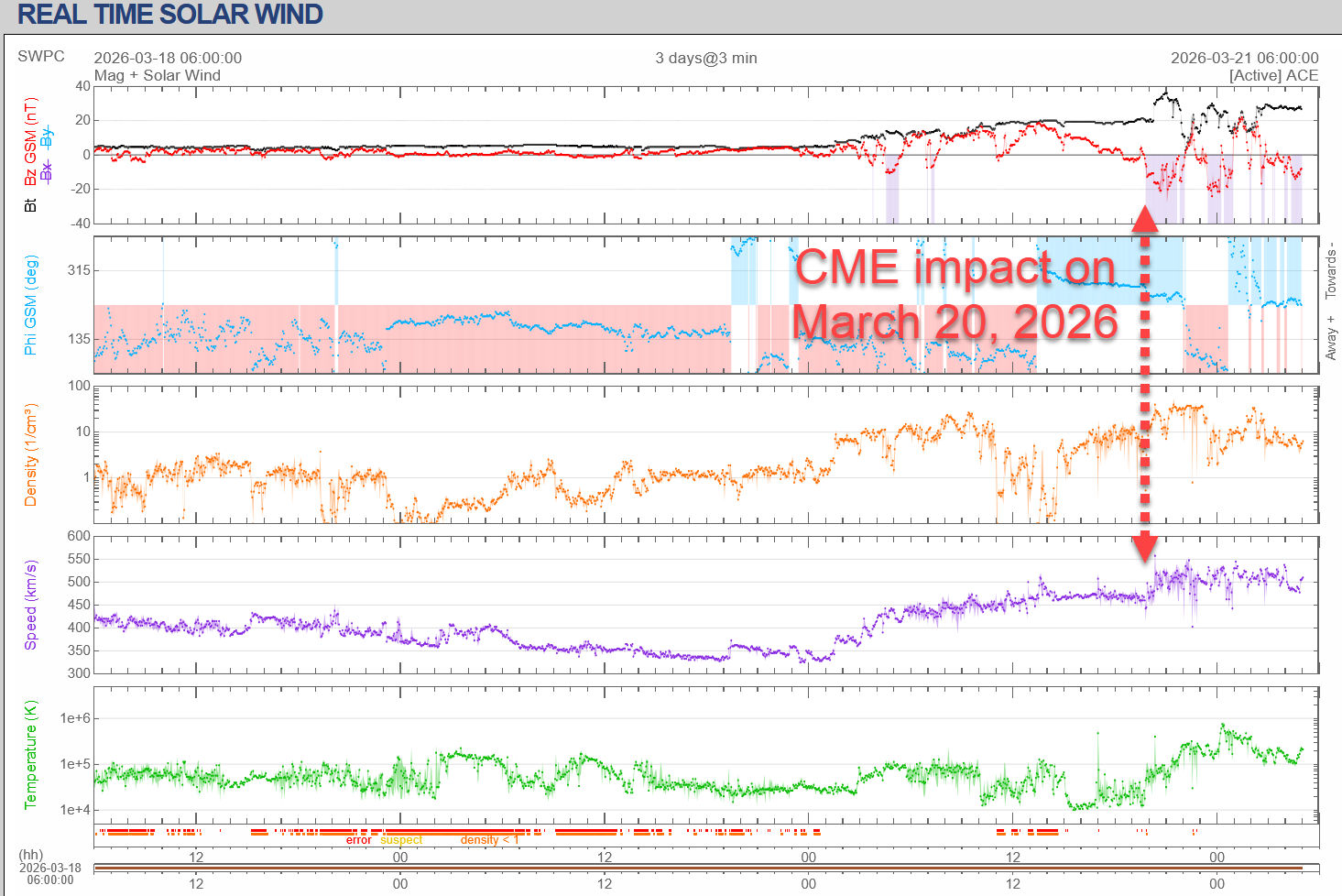
CME IMPACT SPARKS GEOMAGNETIC STORM: A CME hit Earth's magnetic field on March 20th (2053 UTC). The impact deflected a USGS magnetometer in Boulder, Colorado, by 56 nT--a significant jolt. Soon after the CME arrived, a strong G3-class geomagnetic storm ensued with auroras across northern Europe and Canada.

Matti Helin photographed the display from southwest Finland:
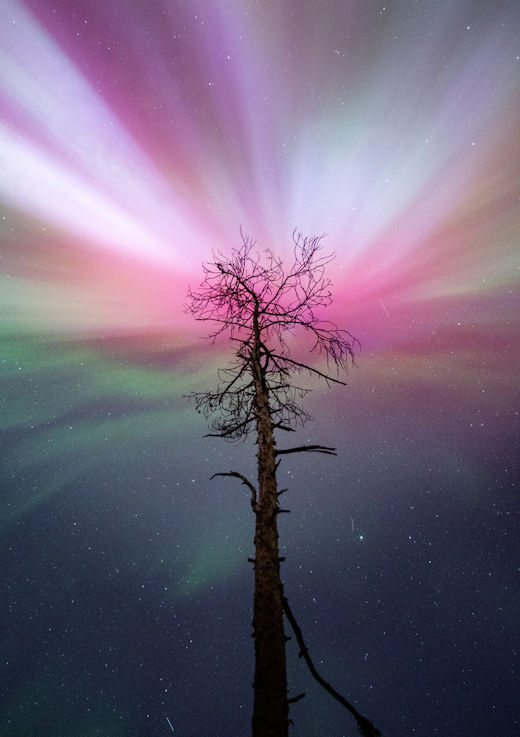
"A beautiful display!" says Helin. "The best moment was around 3am local time, when this very bright corona formed."
At the apex of the storm, auroras were observed in Europe as far south as France, and in the USA as far south as Arizona. In boith places, the display was only a faint red glow--but still exciting to photograph.
The storm is subsiding, but it might not be over. Minor (G1) storms are expected to continue on March 21st as Earth passes through the CME's wake. Aurora alerts: SMS Text.

Realtime Aurora Photo Gallery
Free: Spaceweather.com Newsletter
THE METEOR CRATER PENDANT: Have you heard of Moissanite? It's a very rare mineral discovered by 19th-century chemist Henri Moissan in Arizona's Meteor Crater. At first, he thought it was diamond, but later realized it was even more rare. It's a diamond lookalike that, until the 1950s, was found naturally only in meteorites.
On Aug. 2, 2025, the students of Earth to Sky Calculus launched this Moissanite pendant to the stratosphere onboard a cosmic ray research balloon:
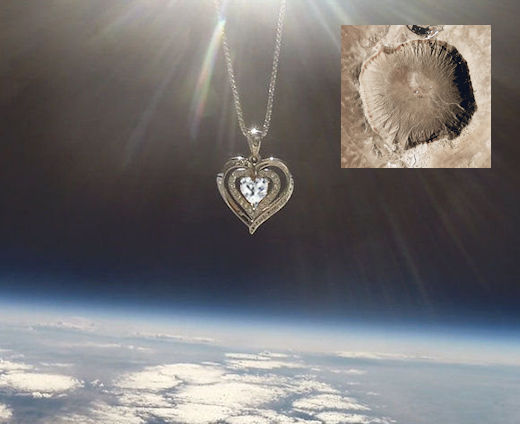
You can have it for $169.95. Engraved with the words "I love you always and forever," the sterling silver frame bends around the Moissanite in a heart-shaped curve--all highlighted by glittering 5A cubic zirconia nuggets.
The students are selling space pendants to pay the helium bill for their cosmic ray ballooning program. Each one comes with a greeting card showing the jewelry in flight and telling the story of its trip to the stratosphere and back again.
Far Out Gifts: Earth to Sky Store
All sales support hands-on STEM education
Realtime Space Weather Photo Gallery
Free: Spaceweather.com Newsletter