CME IMPACT SPARKS STRONG GEOMAGNETIC STORM: A CME struck Earth on April 3rd (1529 UTC), sparking a strong geomagnetic storm. Since then, storm levels have fluctuated from minor (G1) to strong (G3), most often hovering around moderate (G2). Some observers are seeing auroras despite the full Moon. This storm is happening as the crew of Artemis II move through Earth's magnetotail, an unusual space weather environment that human explorers have rarely experienced. Aurora alerts: SMS Text
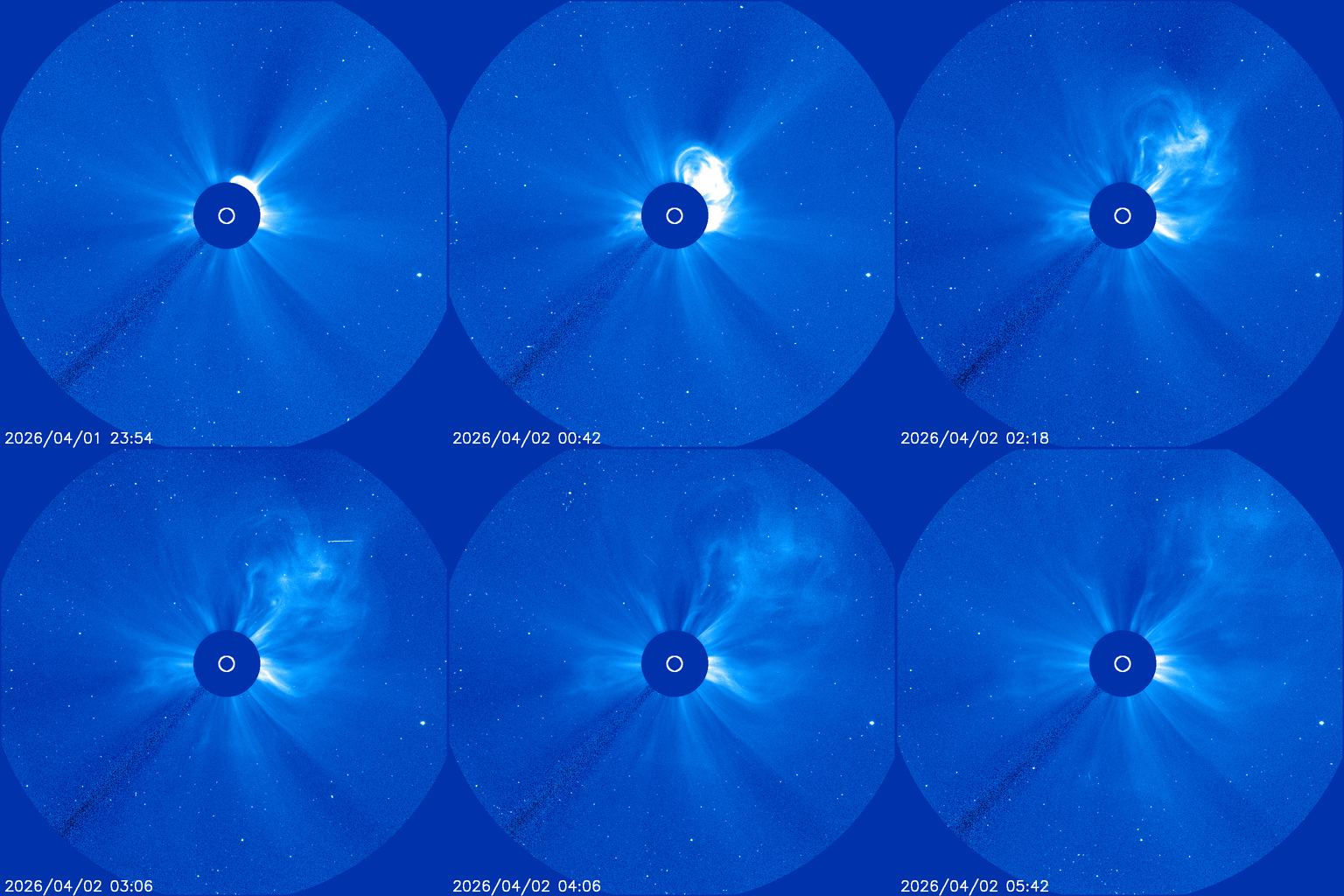
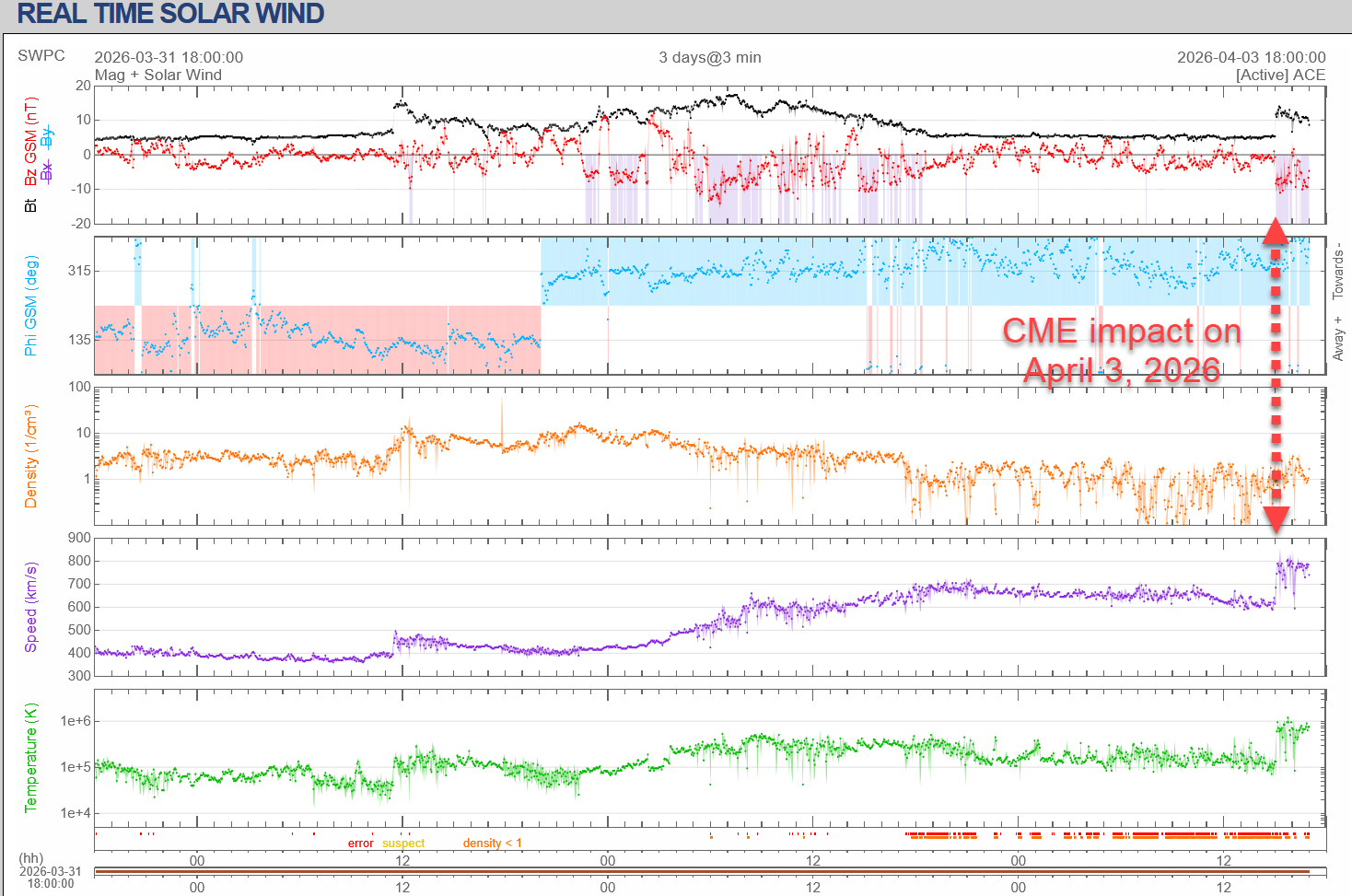



ASTRONAUTS ARE INSIDE THE MAGNETOTAIL: Artemis II is on its way to the Moon. The crew capsule broke orbit on April 2nd, propelled by a 6-minute-long translunar injection burn. This means the crew has officially left the protection of Earth's inner magnetic field, prompting NASA to keep a very close eye on solar activity.
The crew is now inside a part of Earth's magnetosphere that humans have not visited before: the magnetotail--a comet-like extension of the our planet's magnetic field that stretches millions of kilometers:
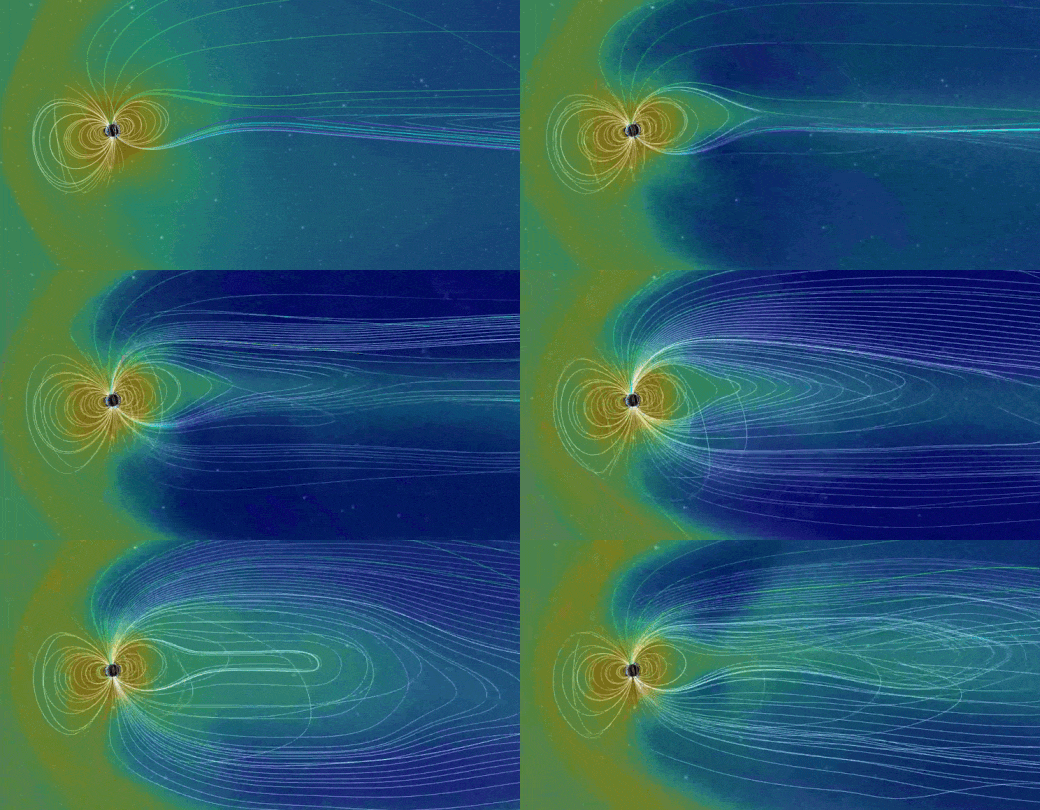
Think of it as a windsock. The solar wind compresses and elongates our planet's magnetic field, creating a downwind tail as shown in the NASA model above.
The magnetotail is extremely dynamic. It whips back and forth in response to solar storms, providing some protection while astronauts are inside and no protection outside. During extreme storms, the magnetotail itself becomes dangerous. Magnetic fields within it can tangle and explode--a process called "magnetic reconnection." (Note: The current storm is *not* extreme. The crew is still safe.)
Every month, the Moon crosses the magnetotail for 5 or 6 days. During the crossing, which is centered on the full Moon, moondust becomes electrified and may leap off the lunar surface. There could even be a "moondust wind" near the terminator between night and day.
Artemis is heading for the Moon at exactly this time. Several Apollo missions passed close to the magnetotail, but Artemis II could be the first to spend significant time inside it. In this respect, at least, Artemis is going where no one has gone before.
Realtime Space Weather Photo Gallery
Free: Spaceweather.com Newsletter
THE STERLING SILVER ARTEMIS PENDANT: On March 31st, 2026, the students of Earth to Sky Calculus launched a cosmic ray research balloon to the stratosphere. They also launched The Artemis Pendant. Here it is floating 113,209 feet above California's White Mountains with the nearly full Moon in the background:
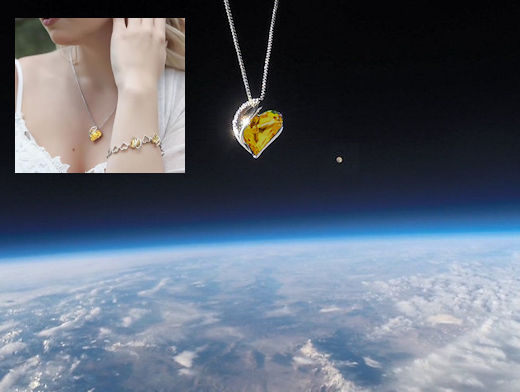
You can have it for $179.95. At the time of the flight, NASA's Artemis II Moon rocket was poised for its own successful launch from Florida the very next day. The Artemis Pendant celebrates their success. Wrapped in a sterling silver infinity-shaped frame, the authentic Swarovski citrine crystal spent 3 hours in the stratosphere in the same space-black frame as the beckoning Moon.
Far Out Gifts: Earth to Sky Store
All sales support hands-on STEM education
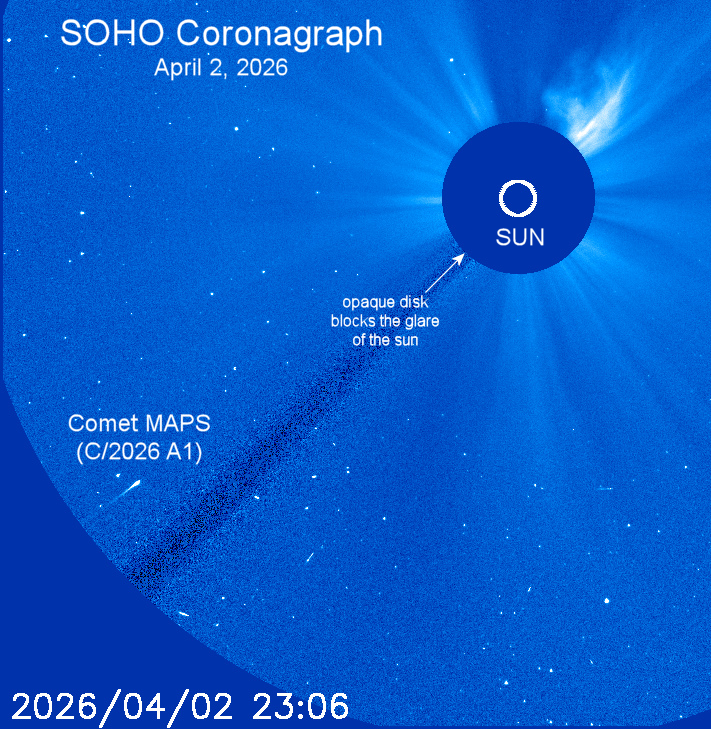
SUNDIVING COMET ALERT: Comet MAPS (C/2026 A1) is falling toward the sun for a *very* close encounter. On April 4th, it will swoop through the sun's atmosphere only 160,000 km from the sun's surface. Will it survive? The odds favor "no." The comet's core is only 400 meters wide, which is probably too small to handle the heat. We'll soon find out. The comet's death dive is visible in SOHO coronagraphs; it's the tadpole in the lower left of this image. Stay tuned for updates.
Realtime Comet Photo Gallery
Free: Spaceweather.com Newsletter
Realtime Aurora Photo Gallery
Free: Spaceweather.com Newsletter