ARTEMIS IS ABOUT TO OBSERVE A SOLAR ECLIPSE: Artemis II is making a historic pass over the Moon’s farside today, April 6th. The crew will see something no Apollo astronauts ever did--a solar eclipse from the farside. It might even be possible for them to photograph the solar corona and see planets in the inky-black sky. The eclipse begins at 8:35 pm Eastern Time. Stay tuned!
COMET MAPS WAS OBLITERATED (UPDATED): The solar system has one less comet. On April 4th, Comet MAPS (C/2026 A1) flew through the sun's atmosphere only 160,000 km above the sun's surface. The comet went in, but only a cloud of debris came out:
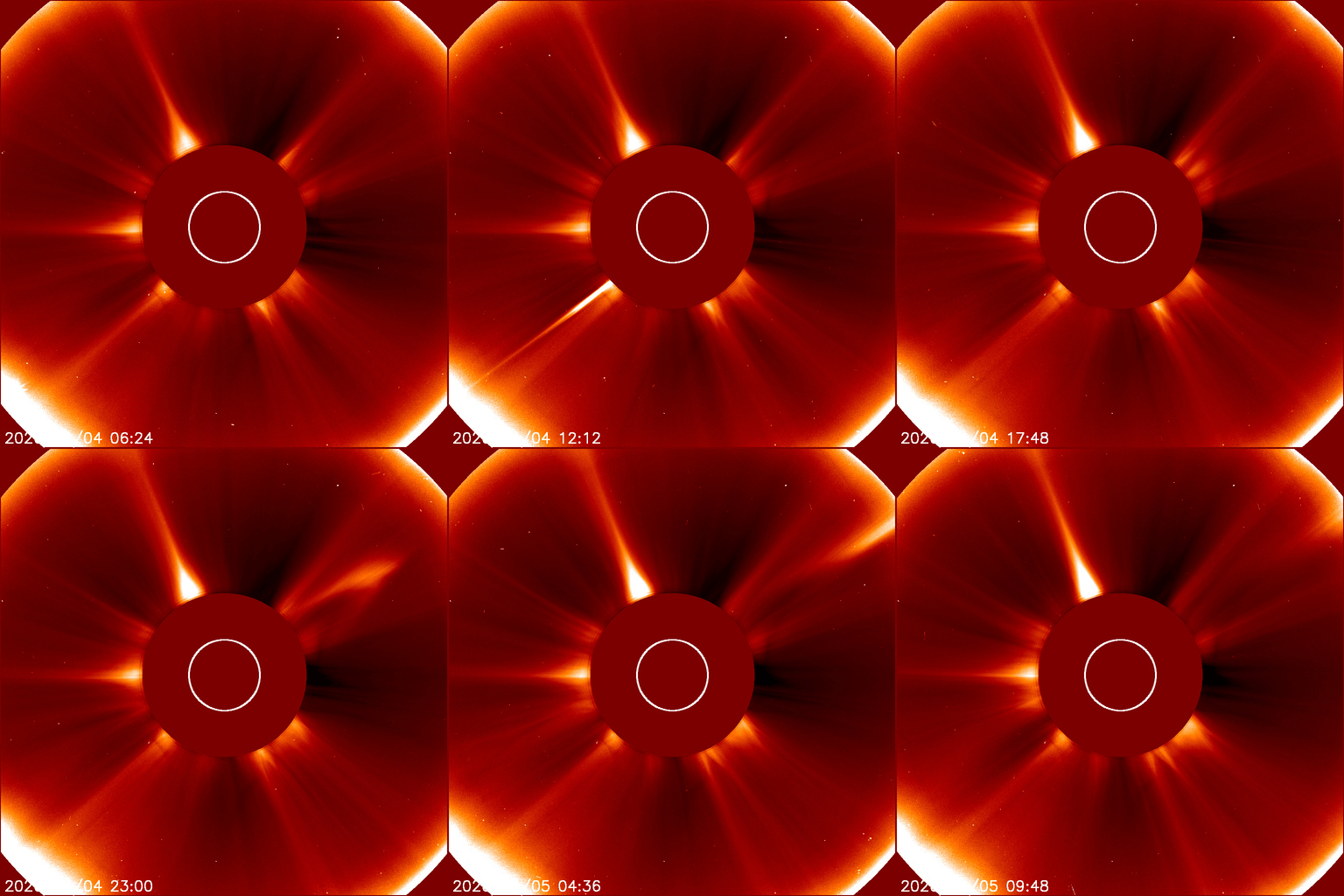
This is SOHO's C2 coronagraph. See also C3.
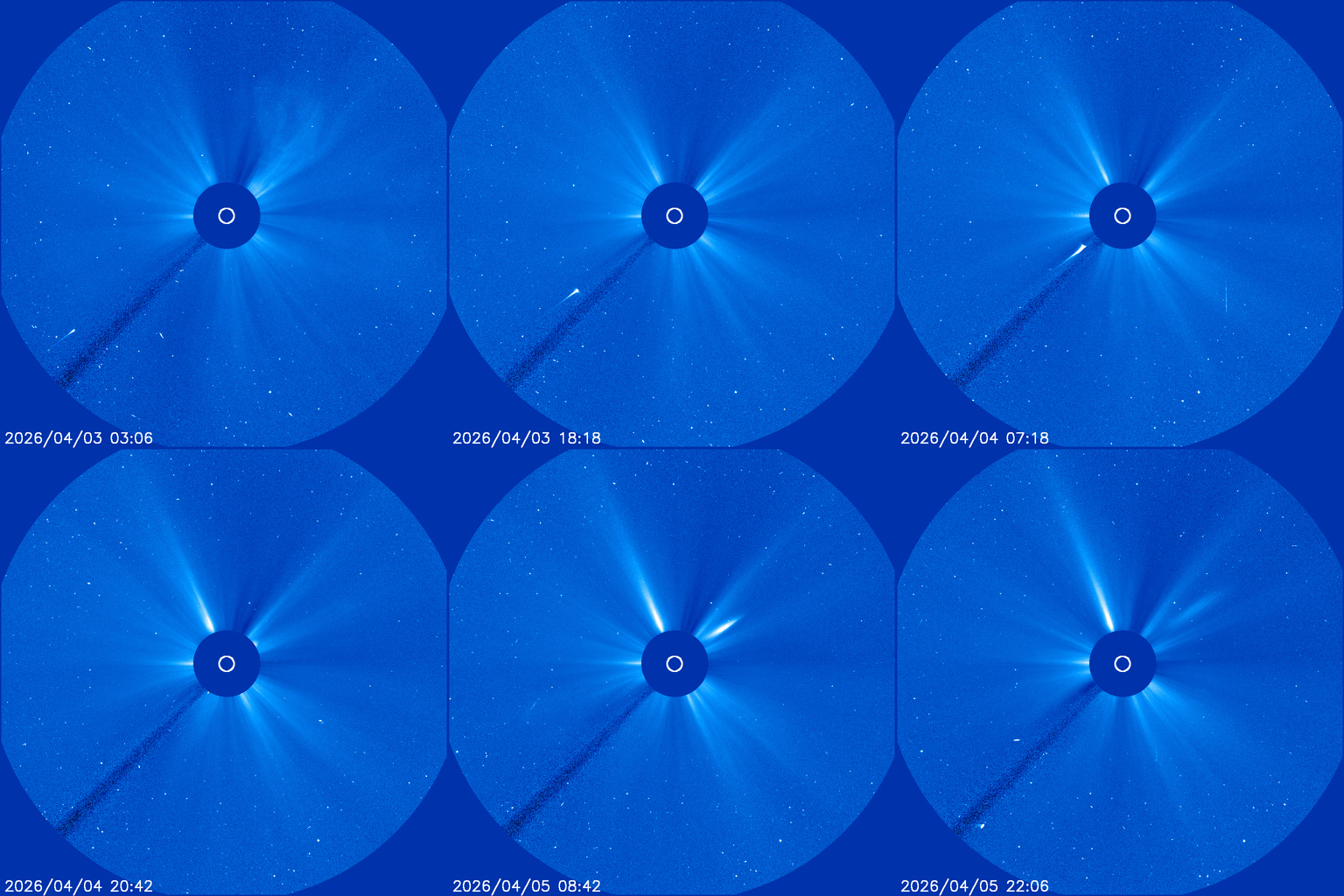
SOHO coronagraphs captured the death dive, which was invisible from Earth. In the movie, above, there's a sudden brightening around 0300 UTC, That was probably the comet's nucleus exploding due to thermal stress.
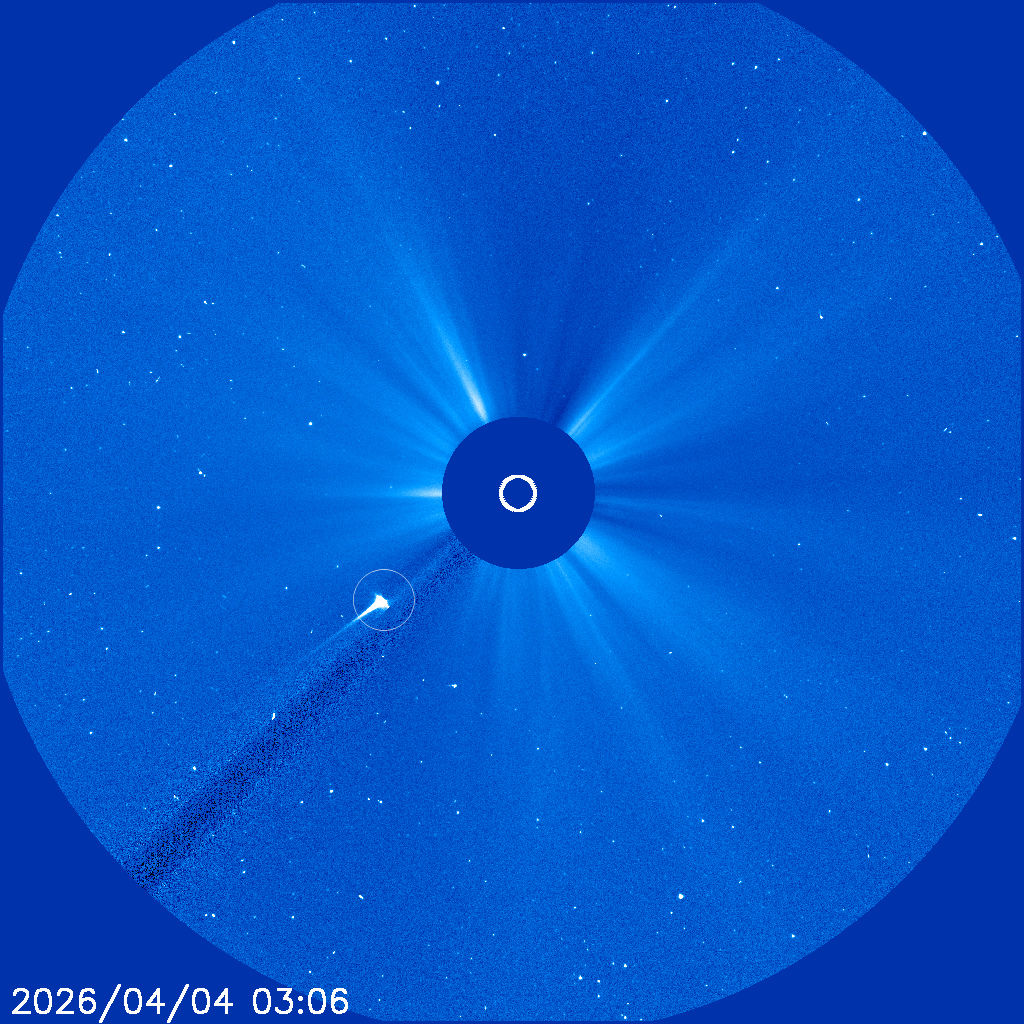
While the comet was behind the coronagraph's occulting disk, the fragmented nucleus was vaporized, leaving only a stream of dusty debris to exit on the other side.
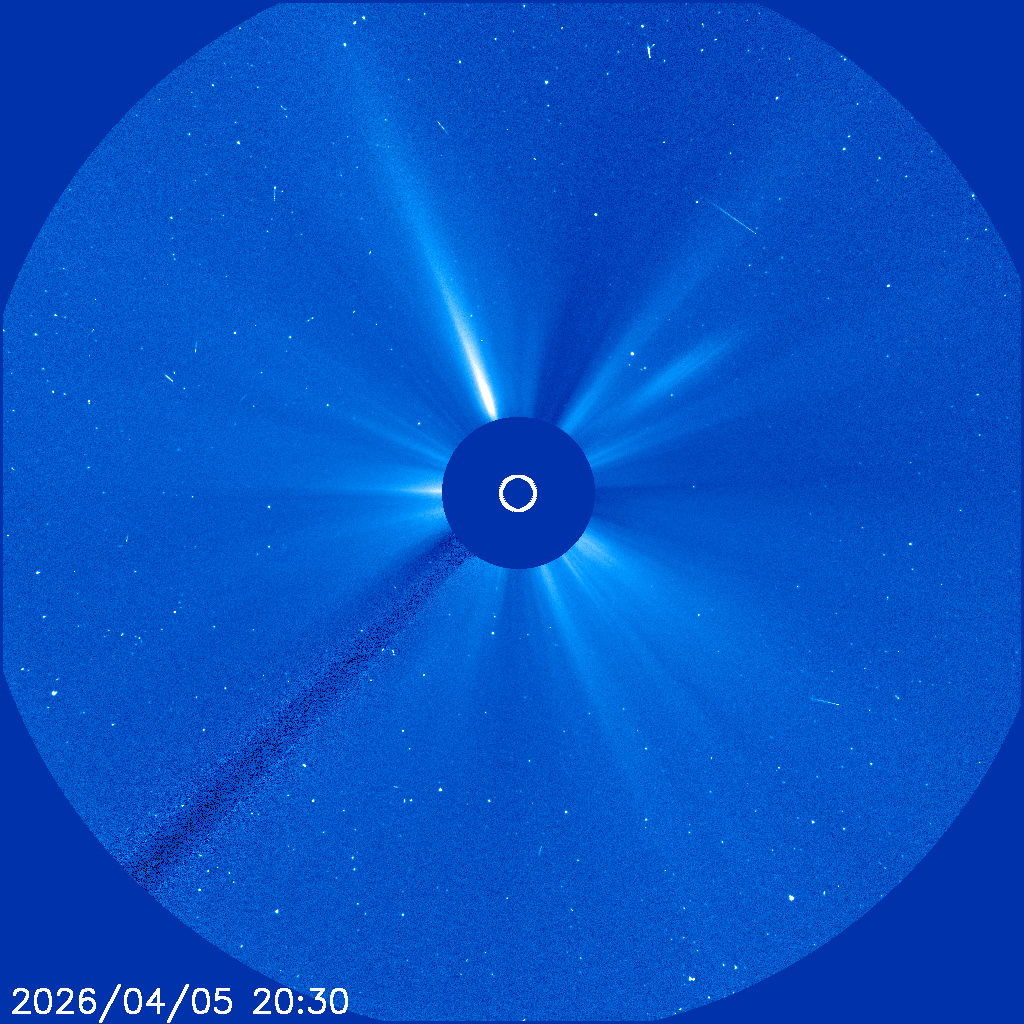 The emerging dust cloud is not amorphous. On the contrary, it is organized into a spray of narrow structures called "striae." These are rare narrow bands of light dust observed in the tails of certain high-production-rate comets. (Exploding is a good way to turn a comet into a "high producer.")
Right: A short SOHO coronagraph movie centered on the emerging striae.
Astronomers had hoped for a different ending. Comet MAPS was discovered last January farther from the sun than any sungrazer in history. It looked like it might be unusually big--perhaps big enough to survive and even become visible in broad daylight. Instead, RIP, Comet MAPS.
Realtime Space Weather Photo Gallery
Free: Spaceweather.com Newsletter
NATURAL MOONSTONE CELTIC LOVE KNOT PENDANT: Nothing says "I love you" like a natural moonstone from the edge of space. On June 12th, the students of Earth to Sky Calculus flew this one 111,877 feet above Earth's surface onboard a cosmic ray research balloon:
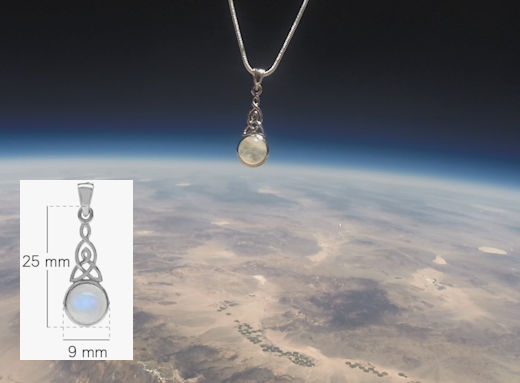
You can have it for $159.95. The moonstone is wrapped in a sterling silver Celtic love knot and suspended from a matching 18-inch sterling silver chain. It spend more than two hours at the top of Earth's atmosphere before parachuting to a landing site in Death Valley National Park.
The students are selling space pendants to support their cosmic ray ballooning program. Each one comes with a greeting card showing the item in flight and telling the story of its journey to the edge of space.
Far Out Gifts: Earth to Sky Store
All sales support hands-on STEM education
Realtime Comet Photo Gallery
Free: Spaceweather.com Newsletter
Realtime Aurora Photo Gallery
Free: Spaceweather.com Newsletter