A METEOR SHOWER ON THE MOON: If you're looking for our story about Artemis astronauts seeing a meteor shower on the Moon, it's right here. In short: While flying behind the Moon, the crew watched 6 meteoroids slam into the lunar surface and explode--an unexpected display that surprised the astronauts and delighted scientists on Earth. Right now, NASA is checking to see if Lunar Reconnaissance Orbiter (LRO) detected any of the impacts. Even if it missed the explosions, LRO may be able to photograph the craters. We will continue to cover this story as new developments warrant. Free: Spaceweather.com Newsletter
A NAKED-EYE COMET IS COMING: Astronomers were disappointed on April 4th when sungrazing Comet MAPS (C/2026 A1) disintegrated in the sun's atmosphere. Forget about it. Comet PANSTARRS (C/2025 R3) is even better:
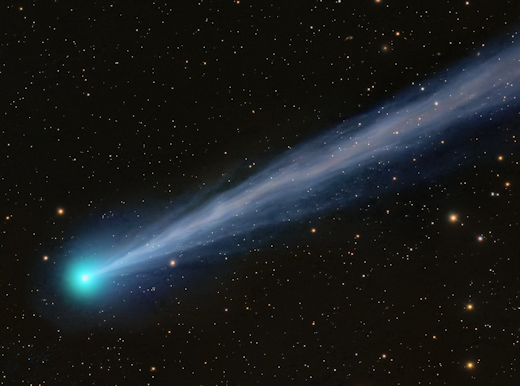
"Wow!" says Dan Bartlett, who took this picture on April 7th from June Lake, California. "NOW we have a comet!"
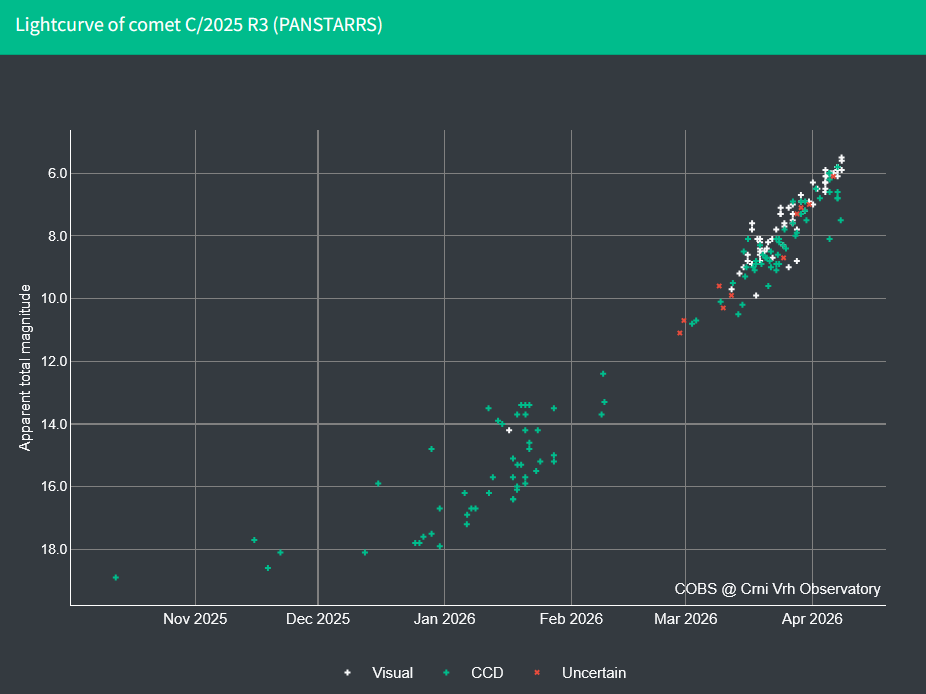
Comet PANSTARRS is approaching the sun for a safe close approach (0.5 AU) on April 19th. It will not disintegrate. On the contrary, it will emerge intact as a naked-eye object of magnitude +3 or better.
"If you want to catch the comet, your best chance is over the next week or so," says Nick James of the British Astronomical Association. "You will need to get up early, a couple of hours before sunrise, and have a good, low, eastern horizon."
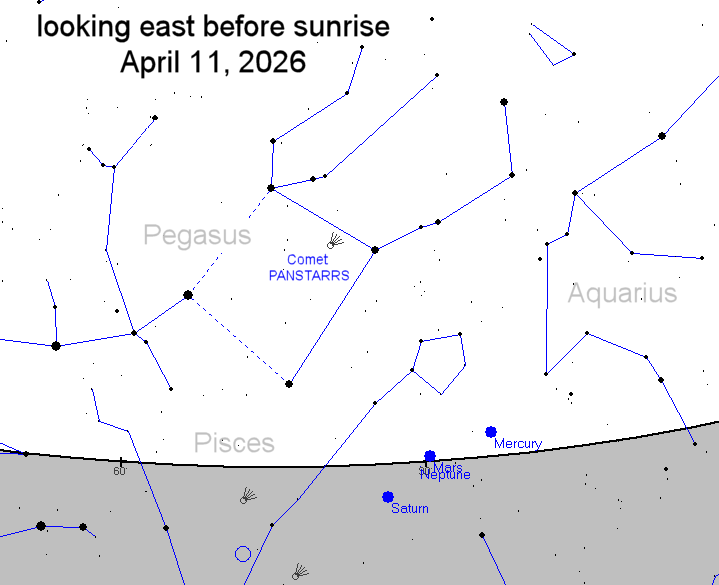
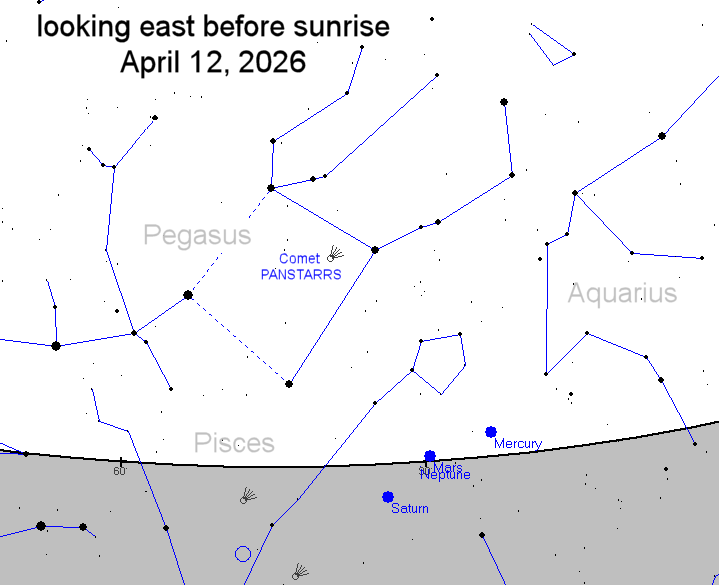
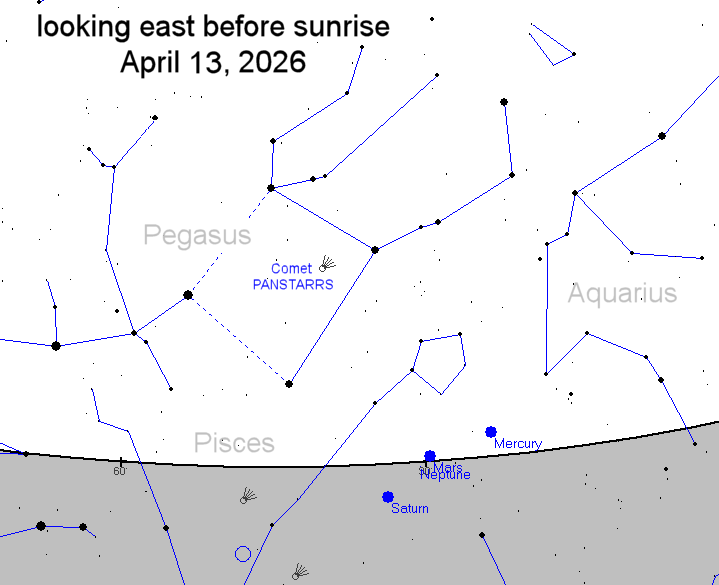
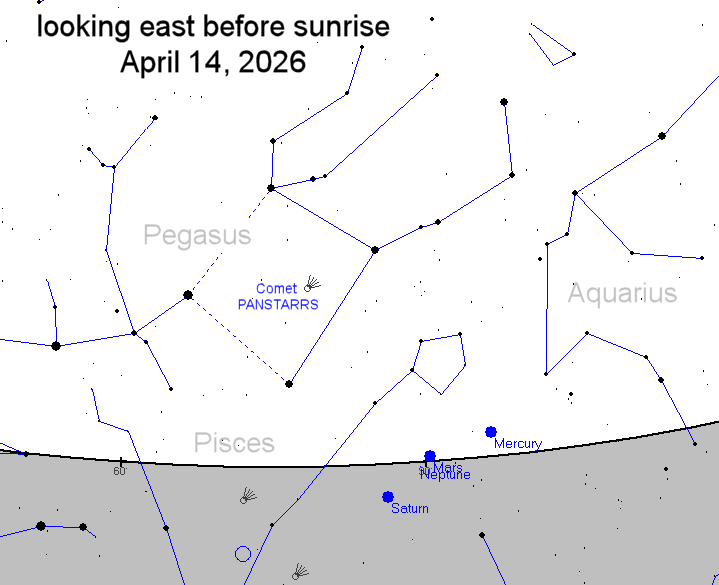
At present, the comet is about as bright as a 5th magnitude star, barely visible to the naked eye, but an easy target for cameras and telescopes. Short exposures in morning twilight will reveal the comet's long tail bisecting the constellation Pegasus. Take a look! Sky maps: April 9, 10, 11, 12, 13, 14, 15.
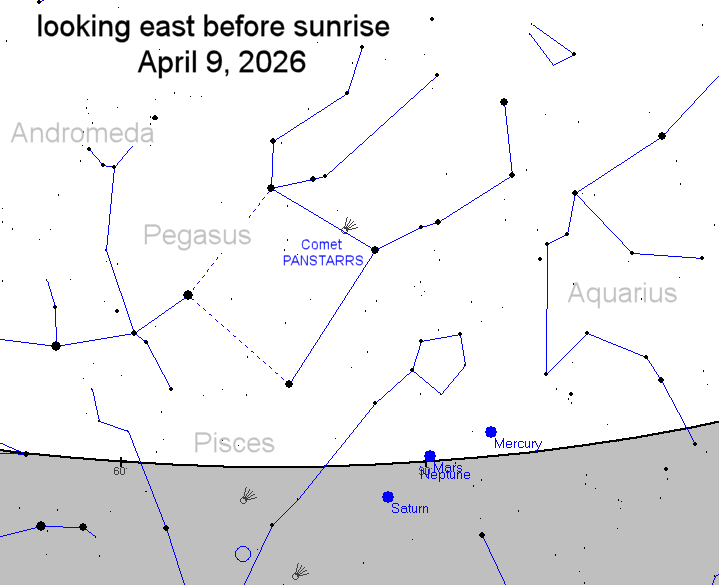
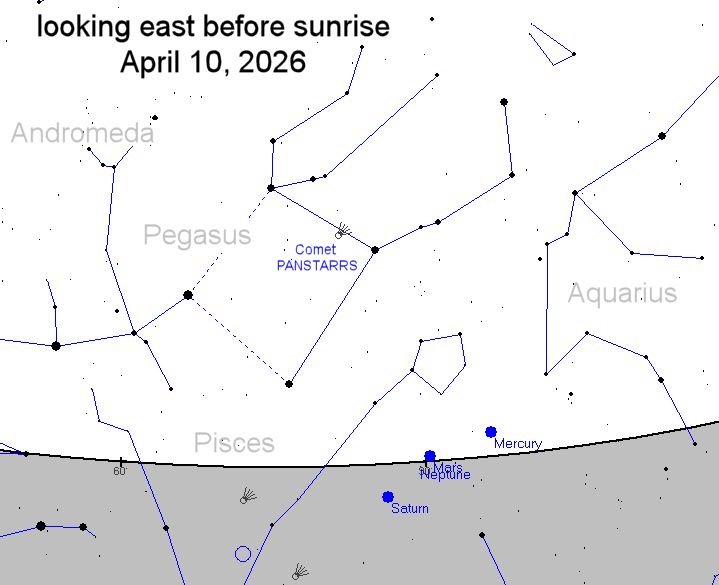
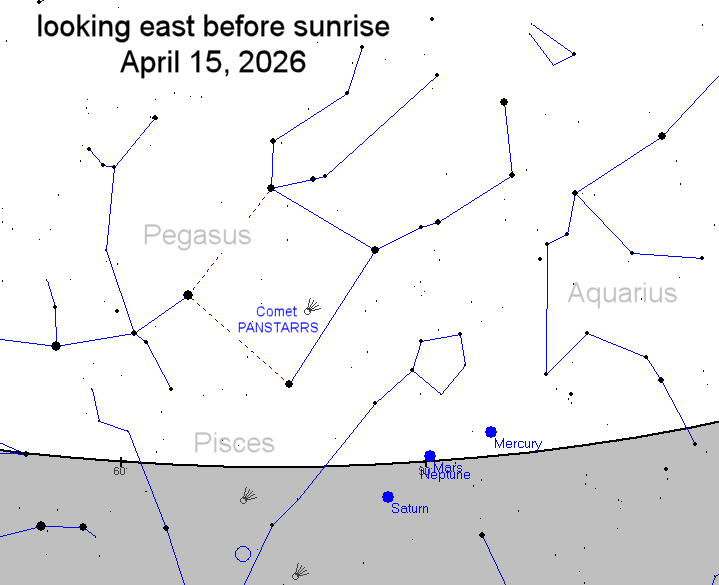
more images: from Michael Jaeger & Gerald Rhemann of Weißenkirchen, Austria; from Larry Stevens of Portal, Arizona; from the Sormano Astronomical Observatory in Sormano CO Italy; from Georg Klingersberger of Kobernaußen, Austria
Realtime Space Weather Photo Gallery
Free: Spaceweather.com Newsletter
"METEOR CRATER" CRYSTAL PENDANT: Have you heard of Moissanite? It's a very rare mineral discovered in Arizona's Meteor Crater by 19th-century chemist Henri Moissan. At first, he thought it was diamond, but later realized it was even more rare. It came from meteorites! On March 4th, the students of Earth to Sky Calculus launched a Moissanite pendant to the stratosphere onboard a cosmic ray research balloon:
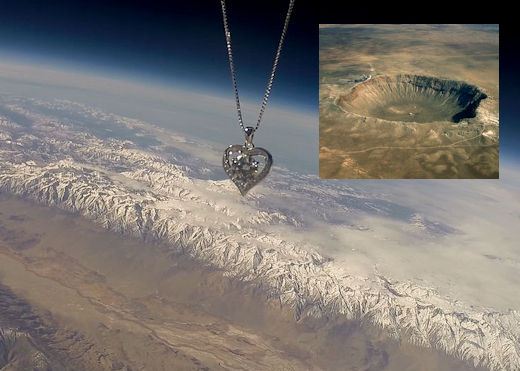
You can have it for $199.95. Almost indistinguishable from natural diamond, the 3-carat crystal is held by a sterling silver frame with the words "I Love You" engraved on the back. It's a truly out of this world gift.

The students are selling space jewelry to pay the helium bill for their high altitude ballooning program. Each pendant comes with a greeting card showing the item in flight and telling the story of its journey to the stratosphere and back again.
Far Out Gifts: Earth to Sky Store
All sales support hands-on STEM education
Realtime Comet Photo Gallery
Free: Spaceweather.com Newsletter
Realtime Aurora Photo Gallery
Free: Spaceweather.com Newsletter