CO-ROTATING INTERACTION REGION: Minor G1-class geomagnetic storms are possible on April 10th when a co-rotating interaction region (CIR) is expected to hit Earth. CIRs are transition zones between fast and slow streams of solar wind. They contain shock waves and enhanced magnetic field that do a good job sparking high-latitude auroras. Aurora alerts: SMS Text
ASTRONOMERS PHOTOGRAPH ARTEMIS COMING HOME: After a successful flyby of the Moon on April 6th, the crew of Artemis II is coming home. Michel Saint-Laurent of Québec, Canada, photographed the tiny capsule's approach on April 9th:

"The spacecraft was gliding through the star fields of Scorpius," says Saint-Laurent. "To make the movie, I used the 0.3-meter iTelescope at the Siding Spring Observatory in Australia with 8 x 180s exposures."
If all goes well, the crew will splash down in the Pacific Ocean near San Diego on Friday, April 10th, around 5:07 pm Pacific Time. Between now and then, amateur astronomers can photograph the brightening capsule (magnitude +12 to +10) in the constellations Ophiuchis and Scorpius. Here are instructions for downloading coordinates from JPL.
Realtime Artemis II Photo Gallery
Free: Spaceweather.com Newsletter
A NAKED-EYE COMET IS COMING: Astronomers were disappointed on April 4th when sungrazing Comet MAPS (C/2026 A1) disintegrated in the sun's atmosphere. Forget about it. Comet PANSTARRS (C/2025 R3) is even better:
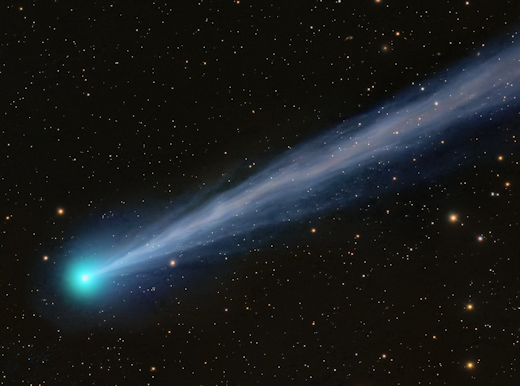
"Wow!" says Dan Bartlett, who took this picture on April 7th from June Lake, California. "NOW we have a comet!"
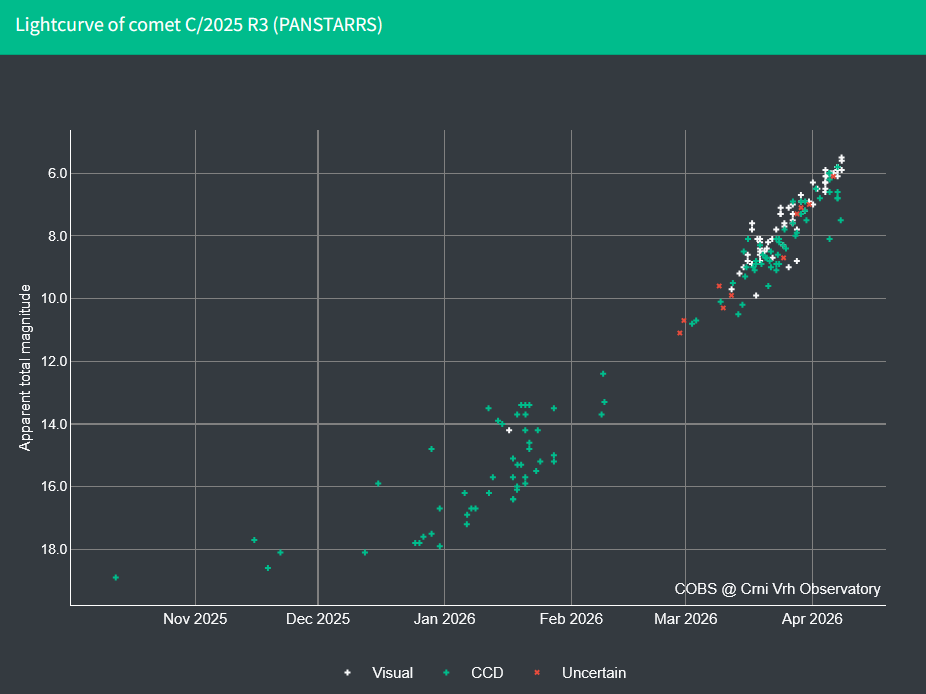
Comet PANSTARRS is approaching the sun for a safe close approach (0.5 AU) on April 19-20. It will not disintegrate. On the contrary, it will emerge intact as a naked-eye object of magnitude +3.
"If you want to catch the comet, your best chance is over the next week or so," says Nick James of the British Astronomical Association. "You will need to get up early, a couple of hours before sunrise, and have a good, low, eastern horizon."
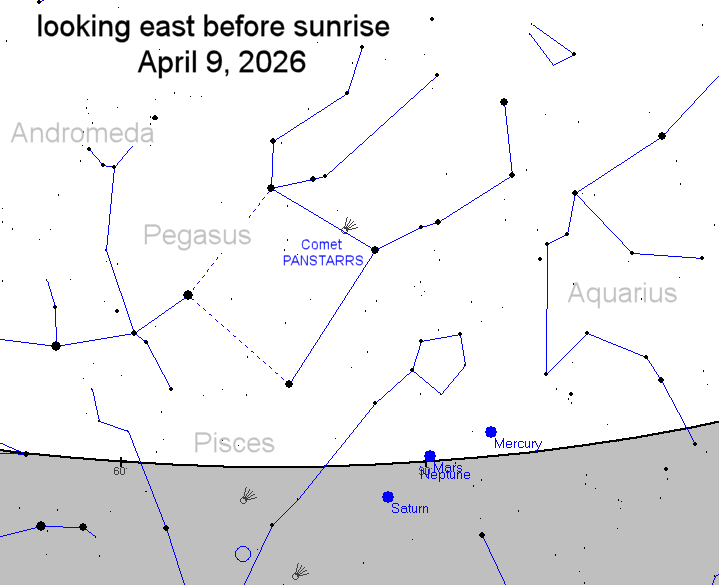
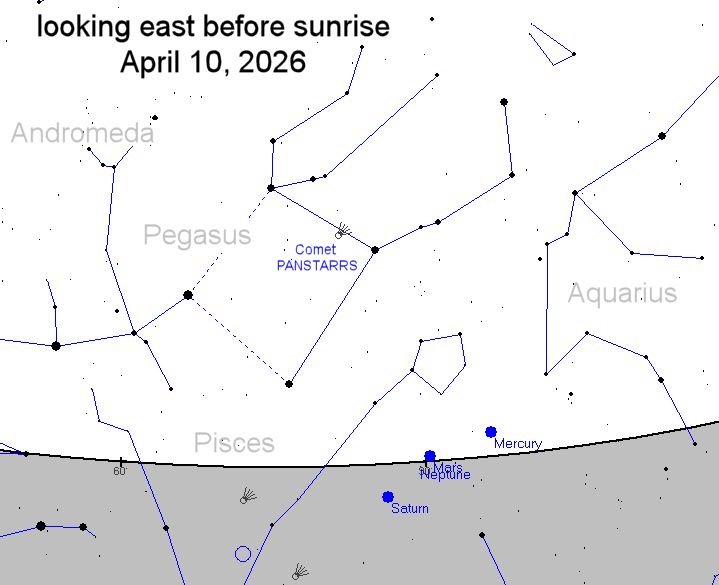
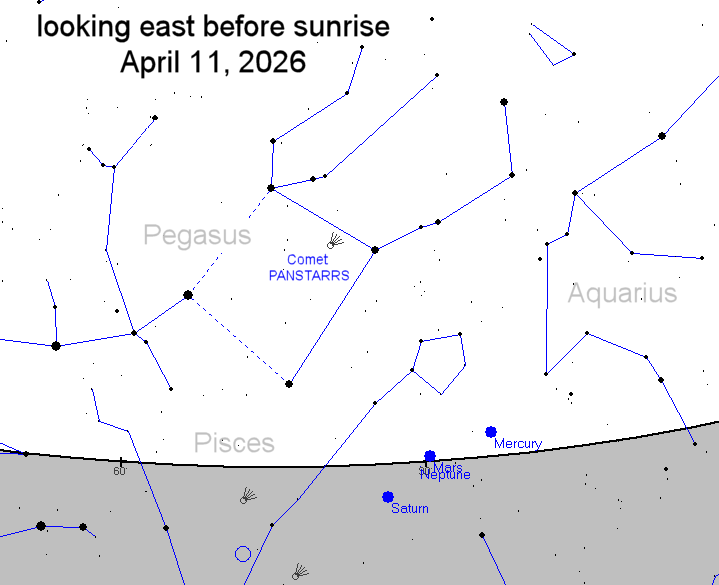
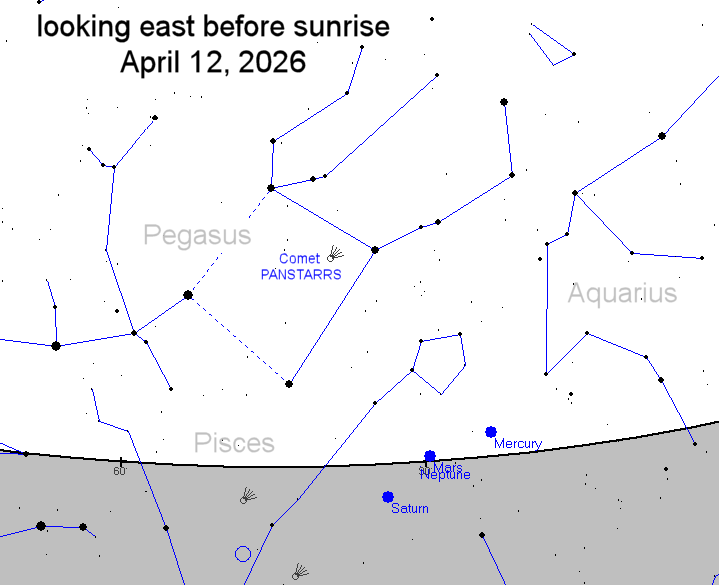
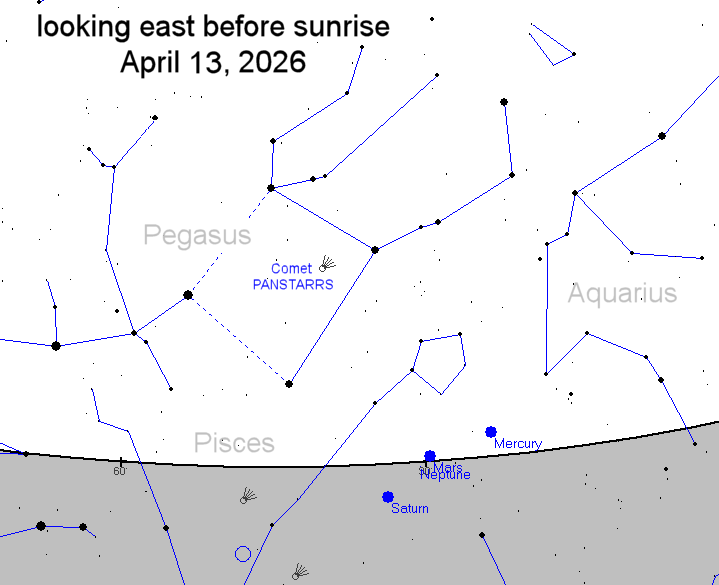
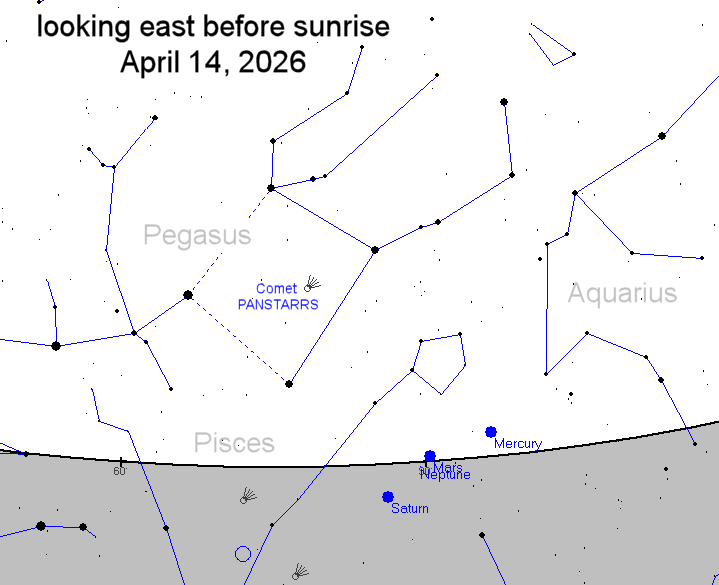
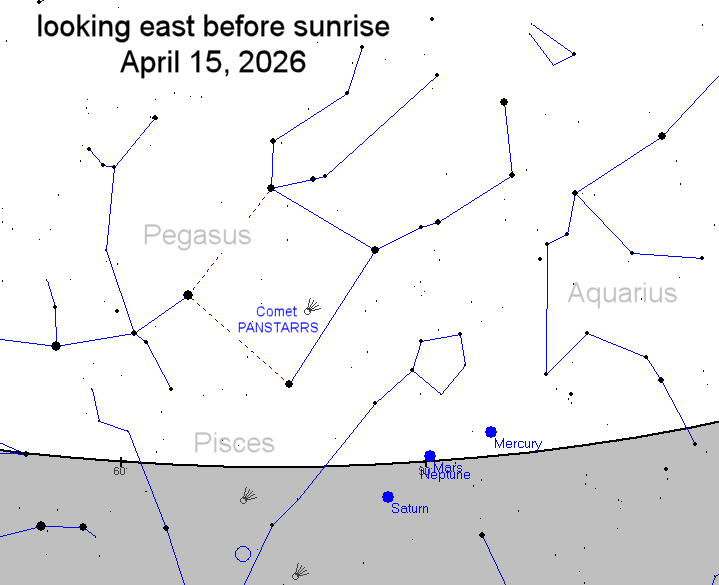
At present, the comet is about as bright as a 5th magnitude star, barely visible to the naked eye, but an easy target for cameras and telescopes. Short exposures in morning twilight will reveal the comet's long tail bisecting the constellation Pegasus. Take a look! Sky maps: April 9, 10, 11, 12, 13, 14, 15.
Realtime Space Weather Photo Gallery
Free: Spaceweather.com Newsletter
"METEOR CRATER" CRYSTAL PENDANT: Have you heard of Moissanite? It's a very rare mineral discovered in Arizona's Meteor Crater by 19th-century chemist Henri Moissan. At first, he thought it was diamond, but later realized it was even more rare. It came from meteorites! On March 4th, the students of Earth to Sky Calculus launched a Moissanite pendant to the stratosphere onboard a cosmic ray research balloon:
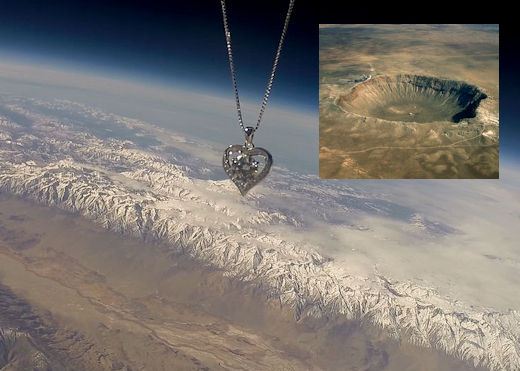
You can have it for $199.95. Almost indistinguishable from natural diamond, the 3-carat crystal is held by a sterling silver frame with the words "I Love You" engraved on the back. It's a truly out of this world gift.

The students are selling space jewelry to pay the helium bill for their high altitude ballooning program. Each pendant comes with a greeting card showing the item in flight and telling the story of its journey to the stratosphere and back again.
Far Out Gifts: Earth to Sky Store
All sales support hands-on STEM education
Realtime Comet Photo Gallery
Free: Spaceweather.com Newsletter
Realtime Aurora Photo Gallery
Free: Spaceweather.com Newsletter