ALL QUIET--FOR NOW: Solar activity is low. None of the three sunspots on the solar disk is currently producing flares. Their magnetic fields are too simple and stable for explosions. However, one sunspot (AR4416) is starting to grow and could pose a threat for Earth-directed solar flares in a day or so if its development continues apace. Free: Spaceweather.com Newsletter
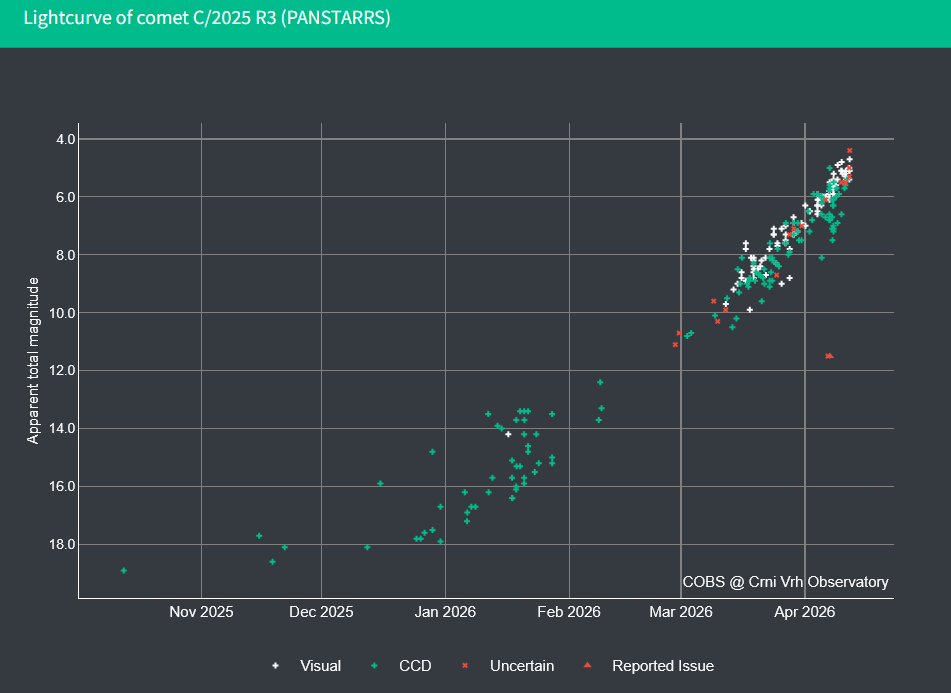
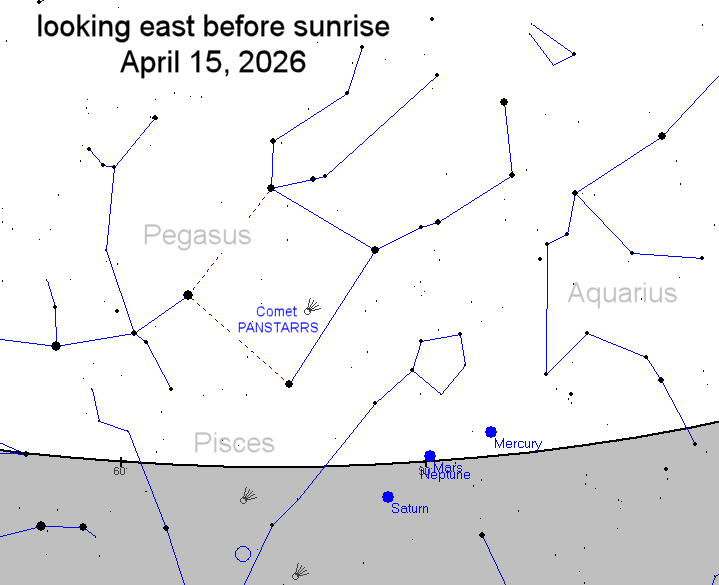
MORNING COMET UPDATE: Over the weekend, Comet PanSTARRS (C/2025 R3) almost doubled in brightness as it continues to approach the sun for a 0.5 AU close encounter on April 19-20. Observers are now reporting magnitudes near +4.5. James Perez-Rogers photographed the brightening comet before sunrise on April 12th from the Ashokan Reservoir in New York:
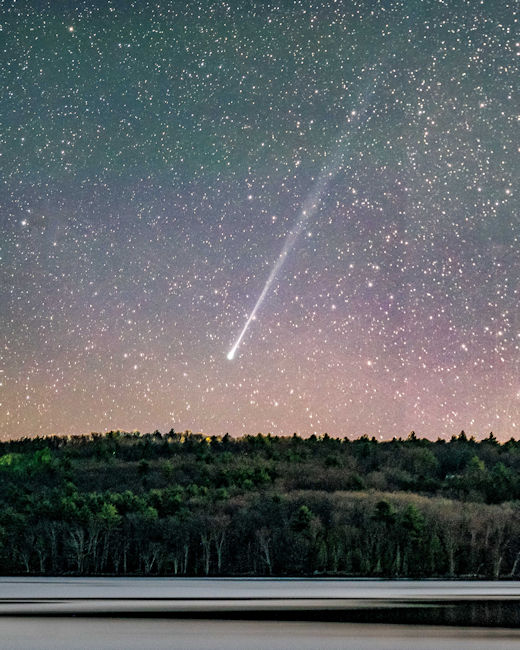
"I photographed the comet in the early hours from 4am to 5am," says Perez. "The image contains ten 2-minute exposures of the comet stacked and combined with an untracked shot of the foreground."
Perez's photo also picked up bands of red and green airglow. These emissions are due to photochemistry in Earth's upper atmosphere, and they show up in most long-exposure photos from dark sky sites. The approach of the New Moon later this week (April 17th) will provide the kind of dark skies required for airglow detection. Many photos of the comet this week will, therefore, have a subtle red and green background. Submit your photos here.
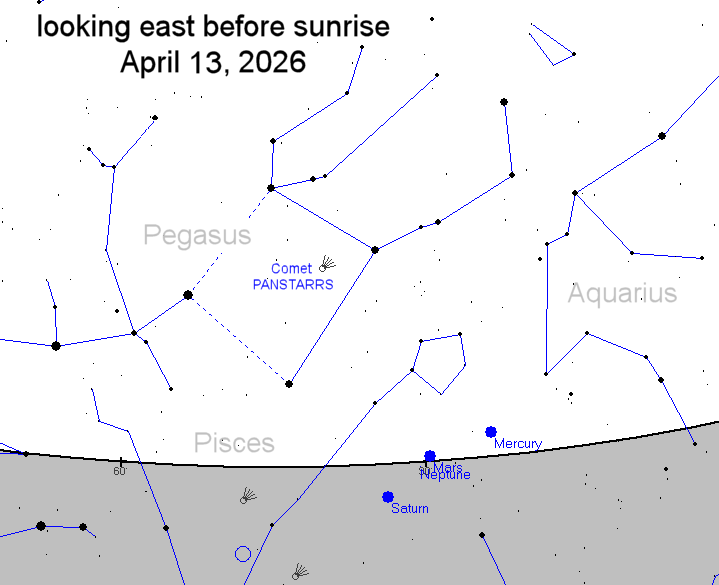
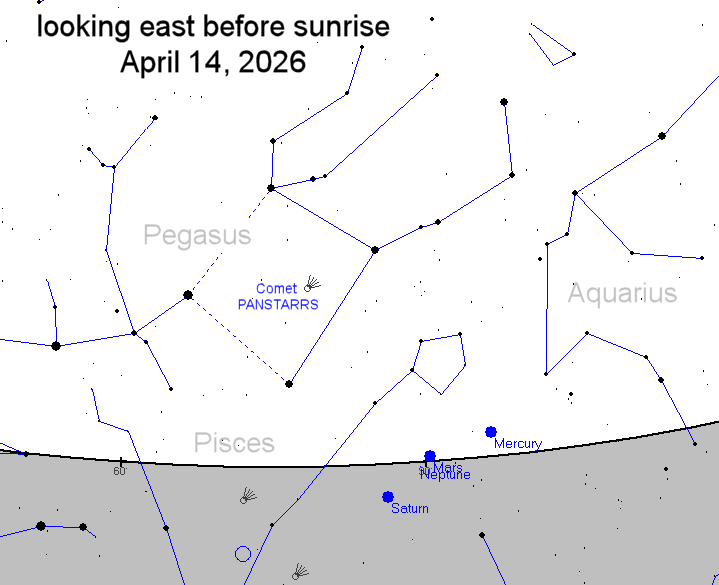
Observing tips: If you want to photograph Comet PanSTARRS, set your alarm for no later than ~3 a.m. The comet rises in the eastern sky 60 to 90 minutes before the sun. It may be be visible to the unaided eye with averted vision and is an easy target for binoculars and small telescopes. Sky maps: April 13, 14, 15
Realtime Comet Photo Gallery
Free: Spaceweather.com Newsletter
"METEOR CRATER" CRYSTAL PENDANT: Have you heard of Moissanite? It's a very rare mineral discovered in Arizona's Meteor Crater by 19th-century chemist Henri Moissan. At first, he thought it was diamond, but later realized it was even more rare. It came from meteorites! On March 4th, the students of Earth to Sky Calculus launched a Moissanite pendant to the stratosphere onboard a cosmic ray research balloon:
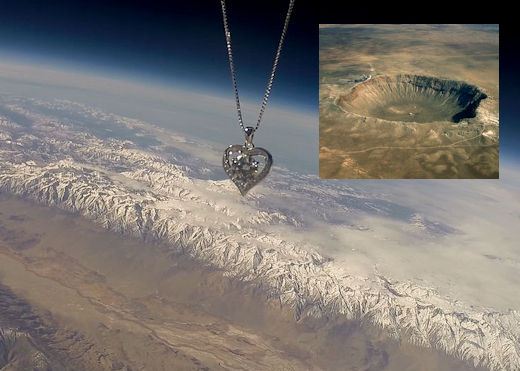
You can have it for $199.95. Almost indistinguishable from natural diamond, the 3-carat crystal is held by a sterling silver frame with the words "I Love You" engraved on the back. It's a truly out of this world gift.

The students are selling space jewelry to pay the helium bill for their high altitude ballooning program. Each pendant comes with a greeting card showing the item in flight and telling the story of its journey to the stratosphere and back again.
Far Out Gifts: Earth to Sky Store
All sales support hands-on STEM education
Realtime Comet Photo Gallery
Free: Spaceweather.com Newsletter
Realtime Aurora Photo Gallery
Free: Spaceweather.com Newsletter