MAJOR FLARE WATCH IN EFFECT: NOAA forecasters estimate a 55% chance of M-class flares and a 15% chance of X-flares on April 27th. The likely sources are sunspots 4420 and 4425, which have unstable 'delta-class' magnetic fields. Earth is in the strike zone for both active regions. Solar flare alerts: SMS Text
COMET PANSTARRS, THE UNICORN: Over the weekend, Comet PanSTARRS (C/2025 R3) passed almost directly between Earth and the sun. We couldn't see it from Earth, but SOHO's C3 coronagraph had an excellent view. Here is the complete passage. Pay special attention to what happens near the end:
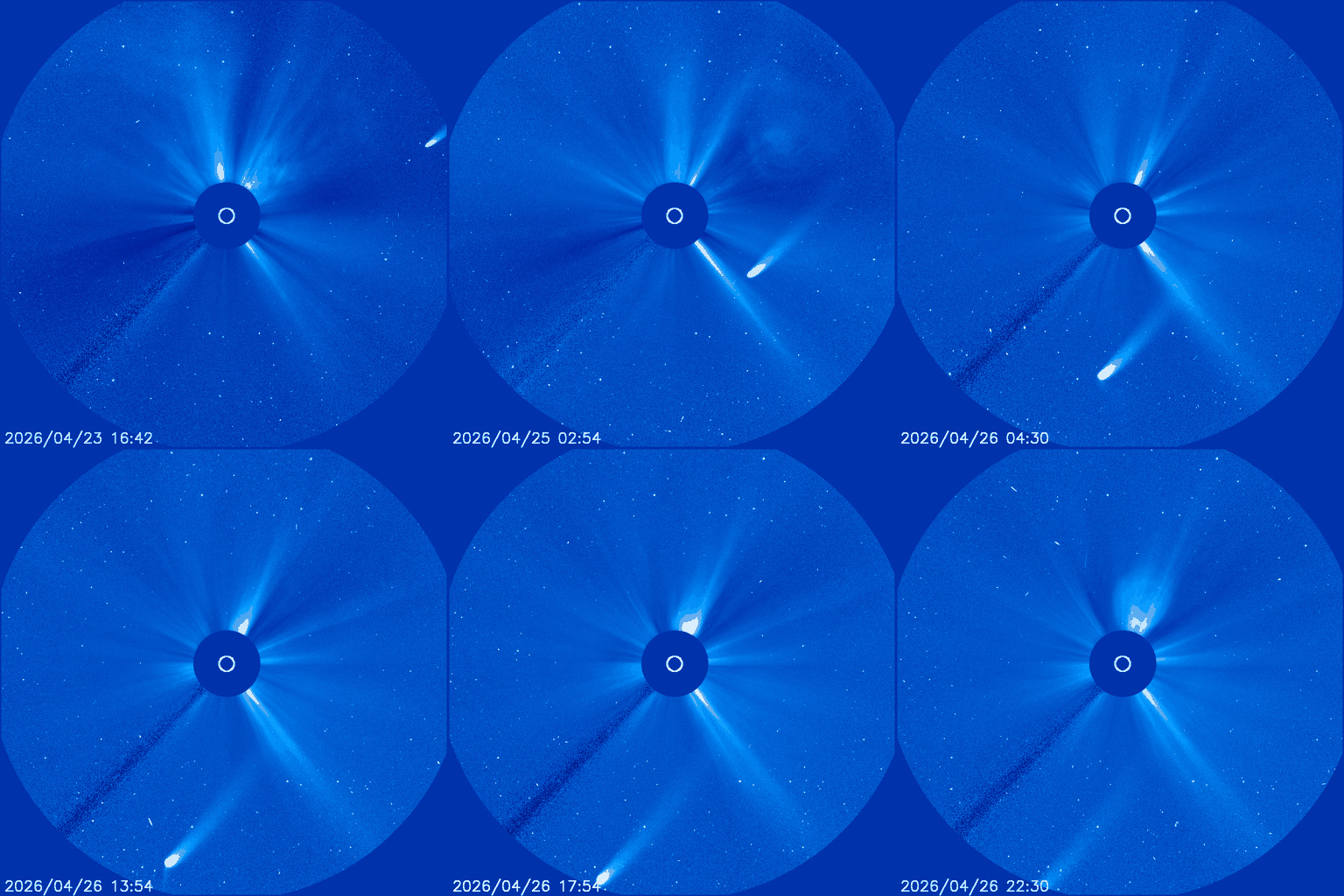
Just before the comet exits the field of view, it sprouts a second tail sticking out of its head. We slowed the animation to make it easier to catch.
We know what happened. The bright thick tail visible throughout the comet's transit is its dust tail. Comet dust is relatively heavy, so it is not easily blown away from the sun by radiation and solar wind. Thus, the dust tail tends to trace the comet's orbit.
The narrow plume emerging from the comet's head is not made of dust. It is the gaseous ion tail. Made of lightweight molecules, the ion tail is easily pushed off the comet's orbit by solar wind. At the end of the animation, this ion tail rotates into view--and a unicorn is born.
Realtime Space Weather Photo Gallery
Free: Spaceweather.com Newsletter
A FIGURE-8 IN THE SKY: David Marshall of Christ Church, Barbados, is a veteran observer of sun halos--arcs of light that circle the sun when icy clouds fill the sky. Yesterday, however, he saw something for the first time. "In addition to an ordinary 22-degree halo, there was also another circle crossing through the sun and centered on the zenith," he says. "I had never seen this before."
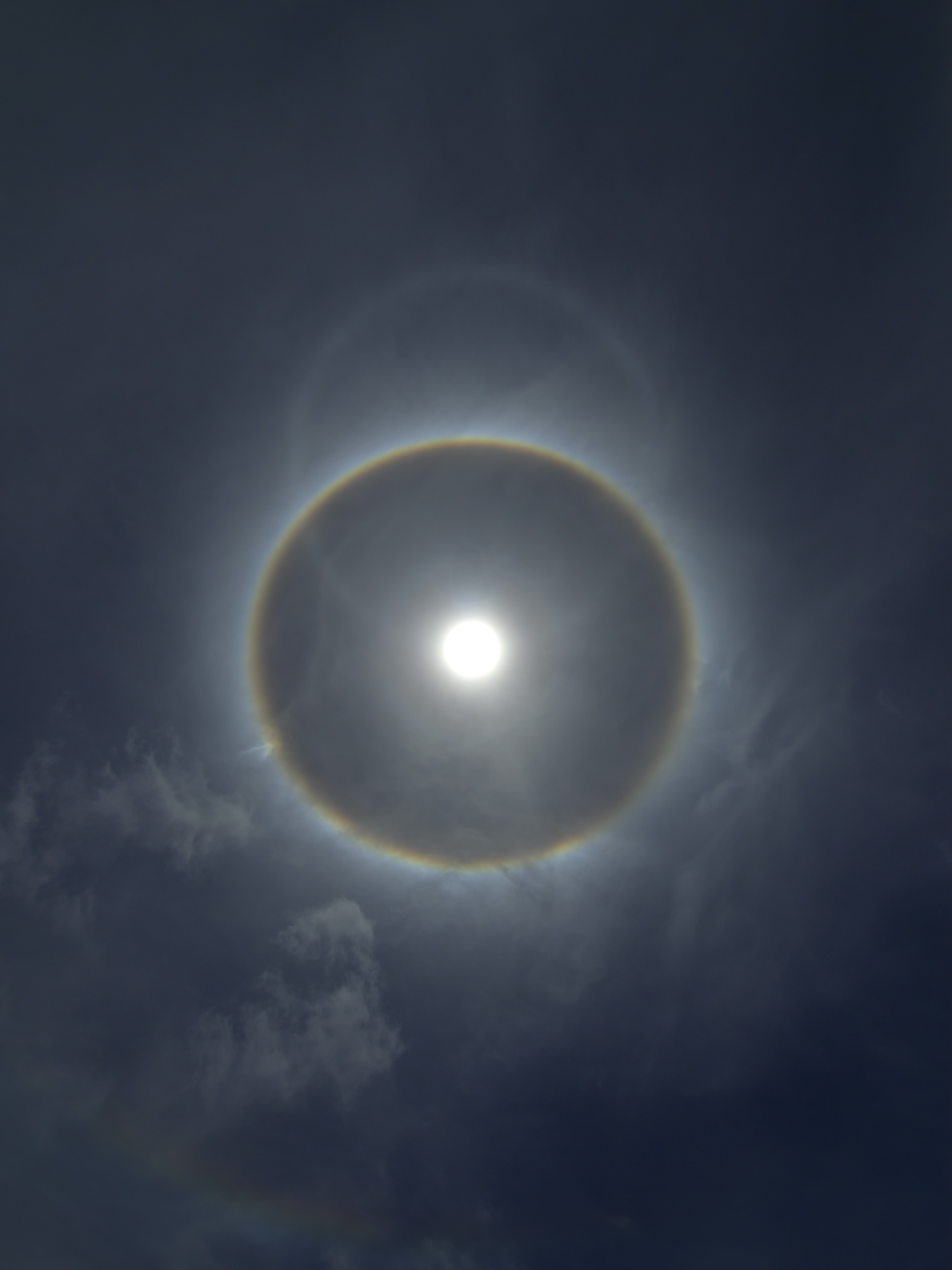
"It was easily visible to the naked eye and not a result of reflection within the camera," he adds.
Marshall photographed a complete parhelic circle--a rare sight when the sun is near the zenith. Normally, parhelic circles form when the sun is low in the sky, and the arc circles the horizon in a giant 360-degree sweep. These arcs are quite dramatic.
As the sun climbs higher in the sky, the parhelic arc shrinks in size, becoming even smaller than a 22-degree halo. This type of small parhelic circle is less dramatic than the giant version, but arguably more eye-catching. You can see the whole thing without turning around, and it creates an apparent figure-8 at the apex of the sky. Congratulations to David Marshall for catching this rare formation!
THE ANTIGRAVITY MOTHER'S DAY SCULPTURE: Mother’s Day is coming. Do you need a far-out gift? Consider the Antigravity Mother’s Day Sculpture. On Jan. 7, 2026, it flew to the stratosphere onbord a cosmic ray research balloon:
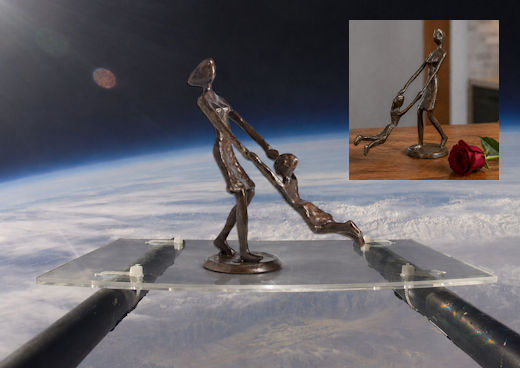
You can have it for $225.95. Made of bronze, the statue celebrates the uplift only a mom can provide. It makes a great Mother's Day gift, especially when paired with a rose.
With your purchase, you'll also receive a greeting card showing the sculpture in flight. Printed inside the card, a paragraph of text tells the story of its trip to the stratosphere and back again.
Far Out Gifts: Earth to Sky Store
All sales support hands-on STEM education
Realtime Aurora Photo Gallery
Free: Spaceweather.com Newsletter