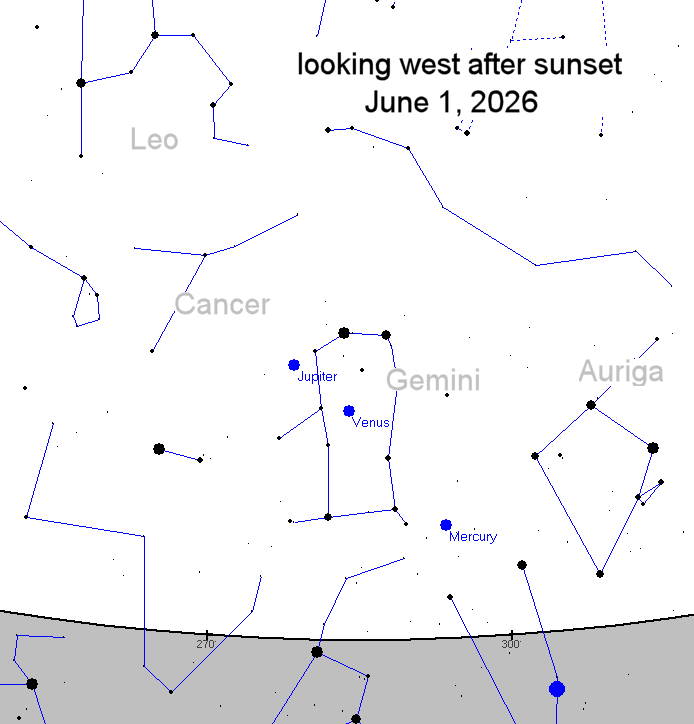
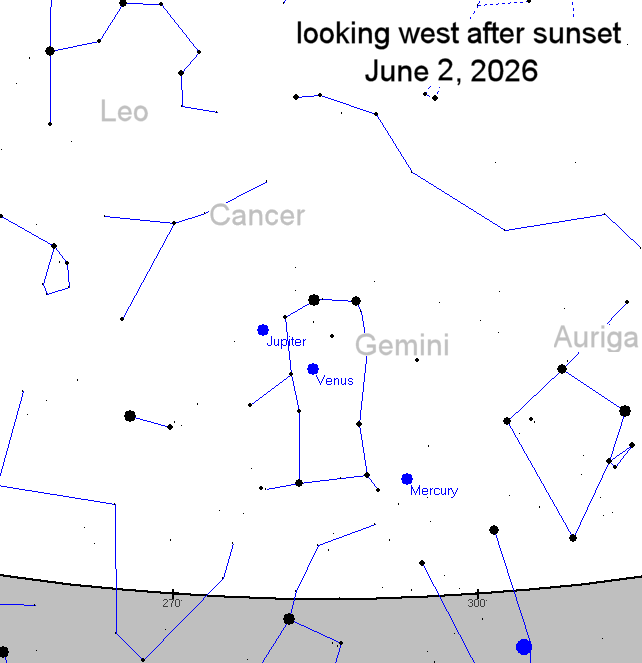
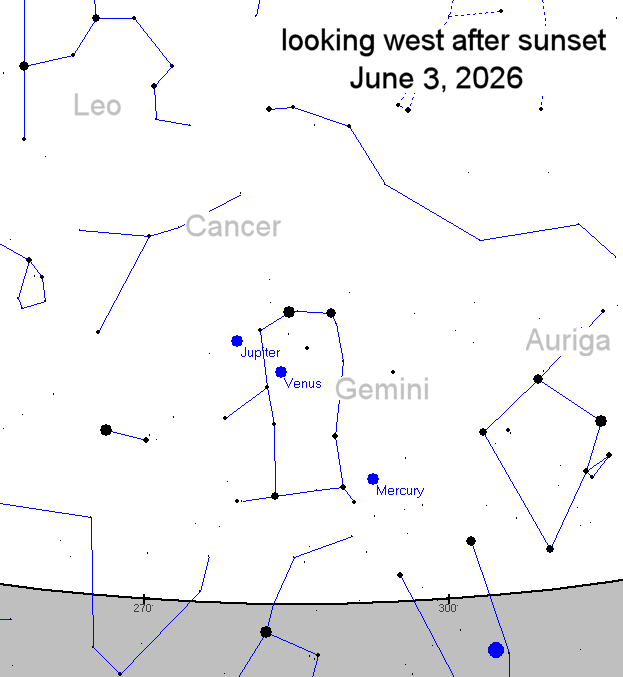
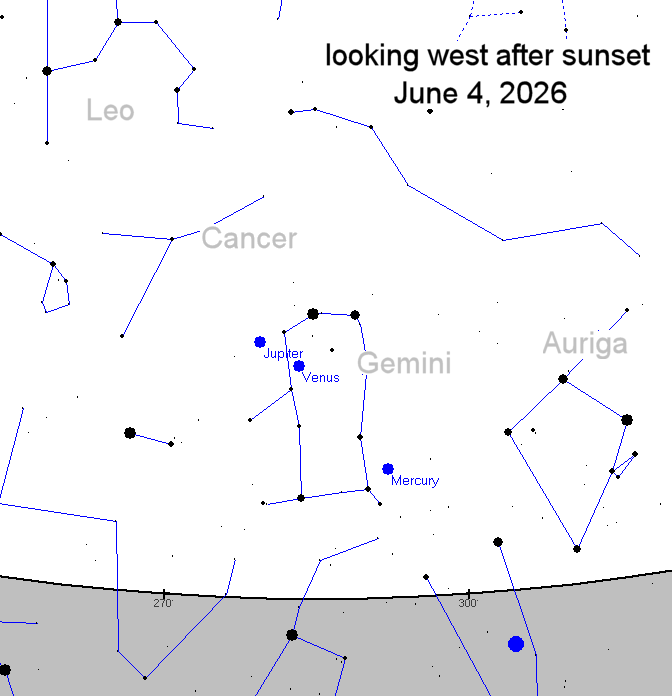
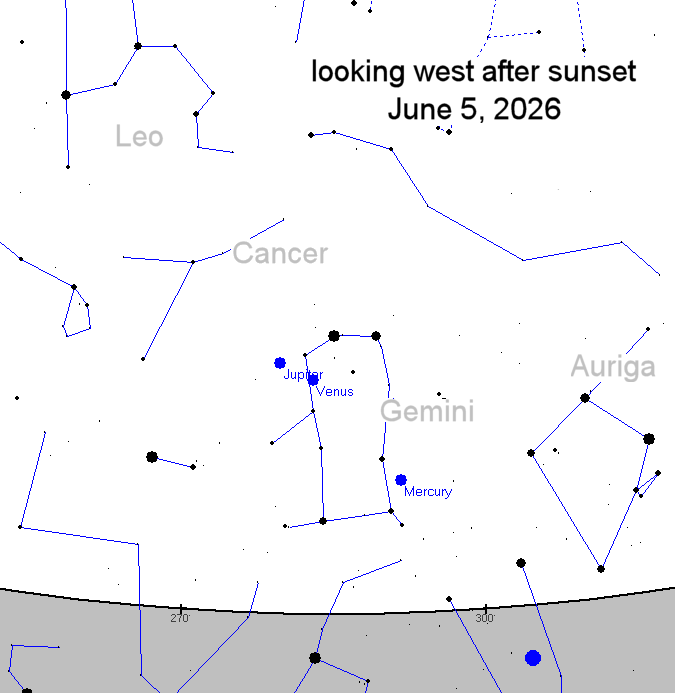
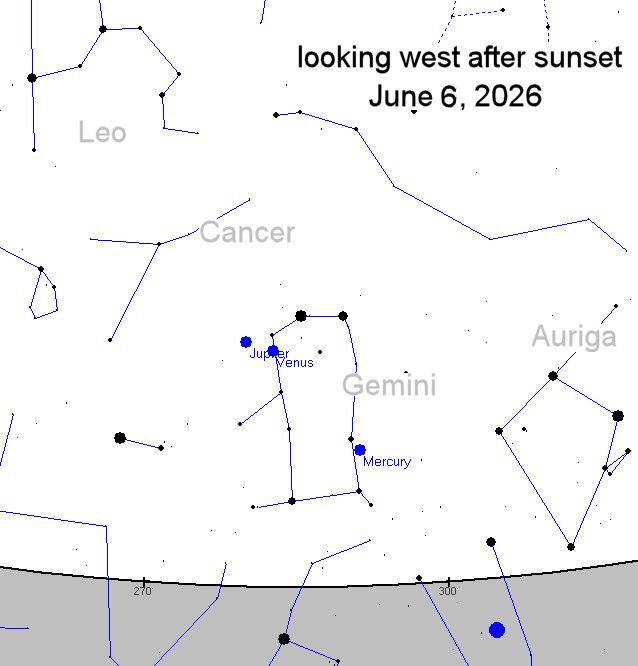
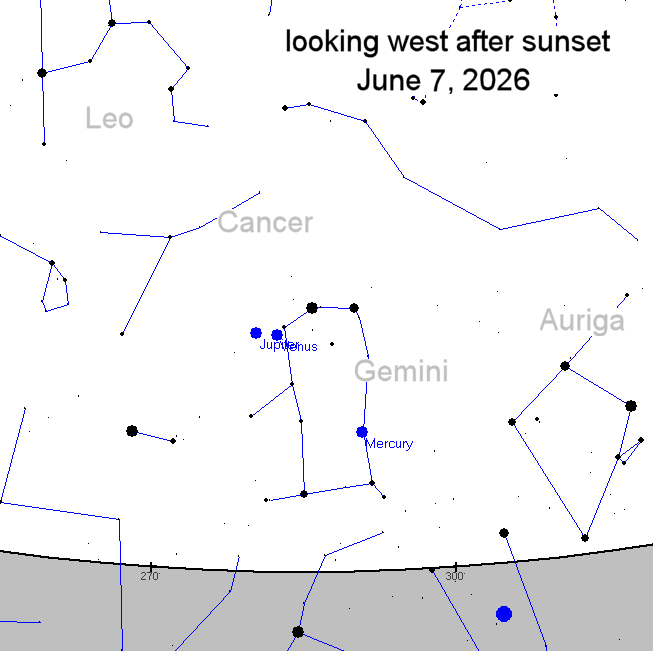
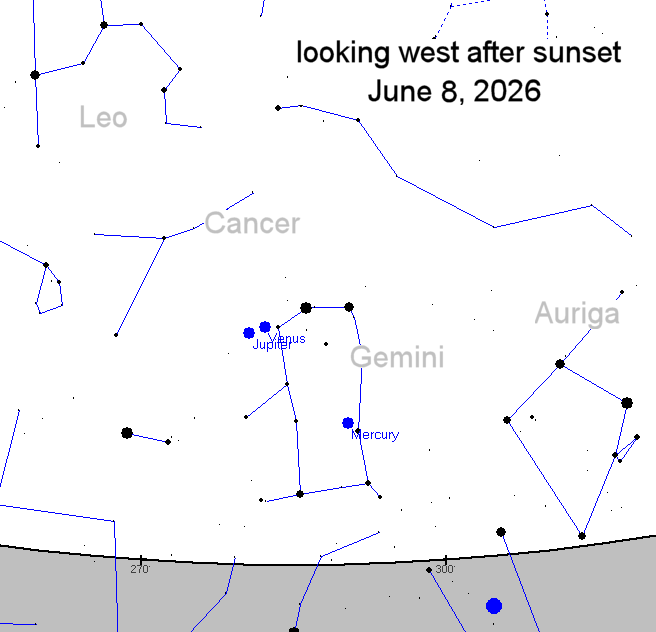
VENUS AND JUPITER ARE GETTING CLOSE TOGETHER: Tonight, when the sun goes down, go outside and look west. Venus and Jupiter are beautifully close together in the twilight sky. They're converging for a tight conjunction on June 8-9. Watch the distance shrink every night this week. Sky maps: June 1, 2, 3, 4, 5, 6, 7, 8. Free: Space Weather Newsletter
METEOR EXPLODES LIKE 300 TONS OF TNT: On Saturday, May 30th, sky watchers in 9 northeastern US states and 2 Canadian provinces witnessed a fireball in broad daylight at 2 pm EDT. The area was blanketed with scattered clouds and storms, so many people experienced the event as a sudden brightening behind the clouds. Astronomer Frankie Lucena decided to take a closer look--and he found the explosion in GOES-19 satellite data:
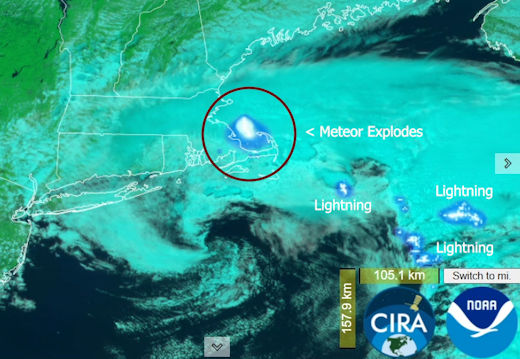
"I was able to find the meteor explosion using the Group Energy Density layer and the Day Fire layer in the GOES-19 slider app,"says Lucena. "The explosion occured above Cape Cod just north of some dense clouds and intense lightning clusters. Could the two small white dots seen below the main explosion be fragments?"
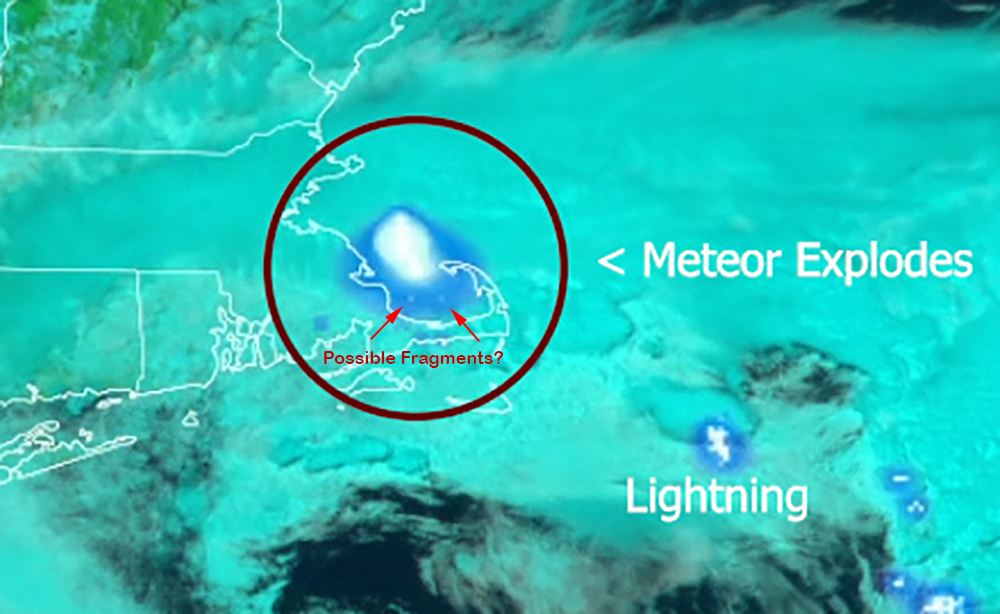
According to JPL's Center for Near Earth Object Studies (CNEOS), this meteor exploded 32 km high (within reach of typical weather balloons) with an energy equal to about 300 tons of TNT. That makes it a top-10 meteor for the past year; since May 2025, government sensors detected only 8 other space rocks exploding in the atmosphere with as much energy. Fragments are a definite possibility.
How big was it? A 0.3-kiloton airburst at 32 km altitude was probably caused by a meteoroid roughly 1.5 to 2 meters across, with a mass of several tons. If you saw this fireball, please submit your report to the American Meteor Society.
Realtime Space Weather Photo Gallery
Free: Spaceweather.com Newsletter
THE SPACE WRENCH: It's the Father's Day gift for the dad who has everything: The Space Wrench. This unique tool has just returned to Earth after a flight to the stratosphere onboard an Earth to Sky Calculus cosmic ray balloon. Here it is floating 101,243 feet above Mono Lake:
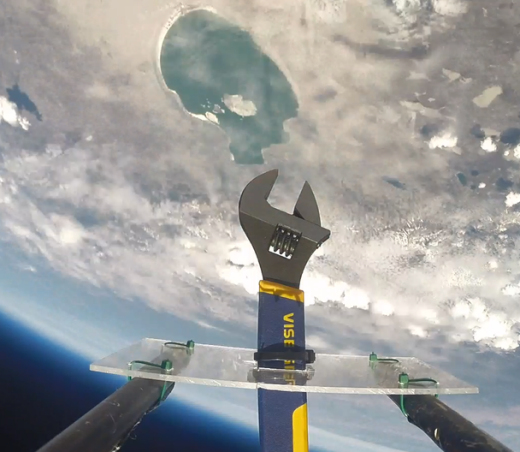
You can have it for $97.95. Made of chrome vanadium steel, this wrench is tough enough to parachute from the edge of space and still tighten a nut more than an inch wide. Imperial and metric scales allow it to be used by mechanics in the Klingon Empire and the Federation.
Each wrench comes with a greeting card showing the tool in flight and telling the story of its trip to the stratosphere.
Far Out Gifts: Earth to Sky Store
All sales support hands-on STEM education
Realtime Aurora Photo Gallery
Free: Spaceweather.com Newsletter