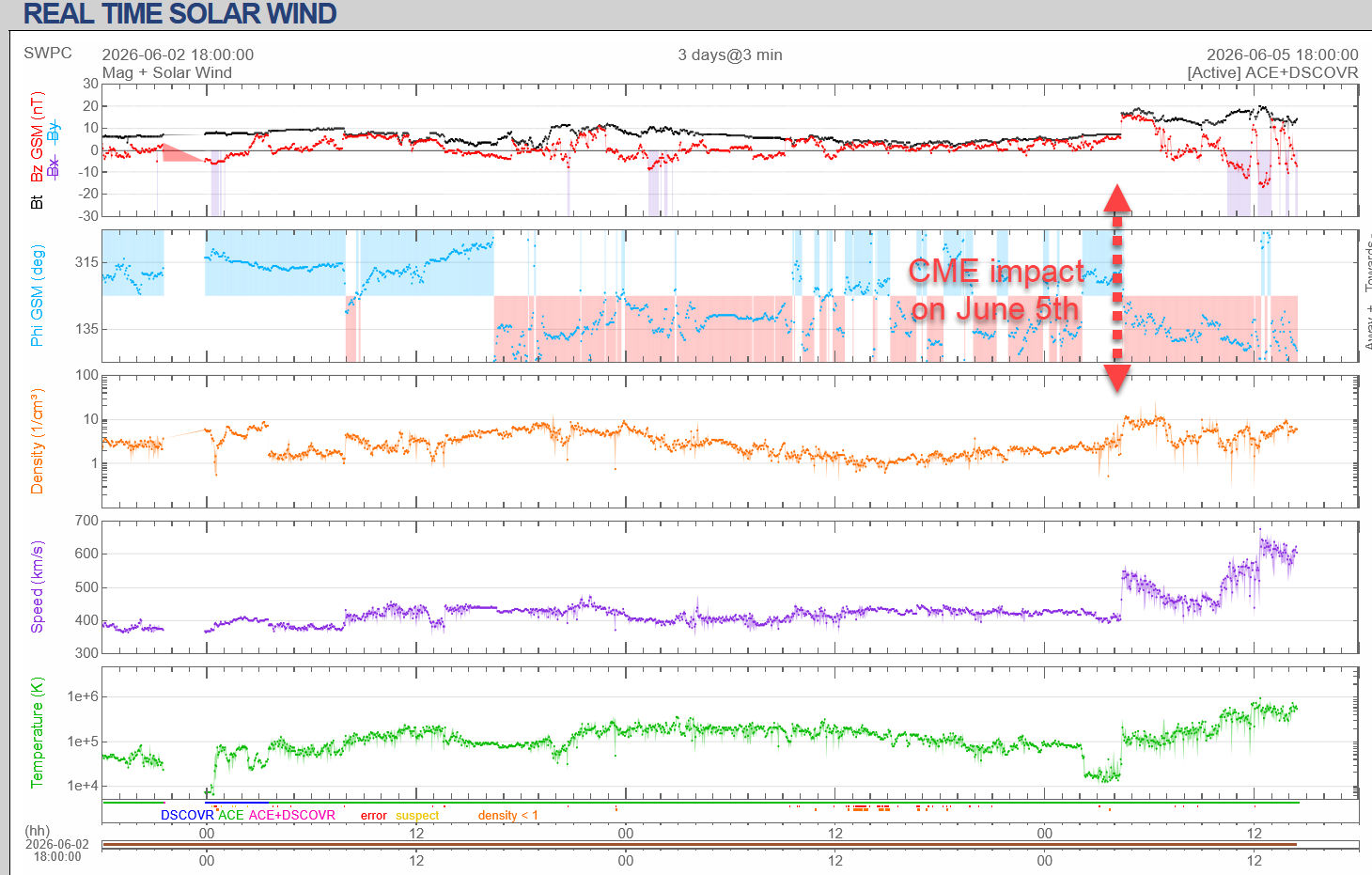
A DISAPPOINTING CANNIBAL CME (UPDATED): A Cannibal CME struck Earth on June 5th (0511 UTC). Normally, such a CME would spark a strong geomagnetic storm, but this one did not. Its internal magnetic fields were relatively weak, so the CME's interaction with Earth was mostly minor (category G1). Indeed, we have received only a few aurora photos from this event--a disappointing outcome for sky watchers. Free: Space Weather Newsletter

ANOTHER CME IS COMING: The sun is getting a second chance. On June 6th, it launched another CME toward Earth, which could spark a strong G3-class geomagnetic storm when it arrives on June 8th. Here is NOAA's forecast model of the incoming CME:

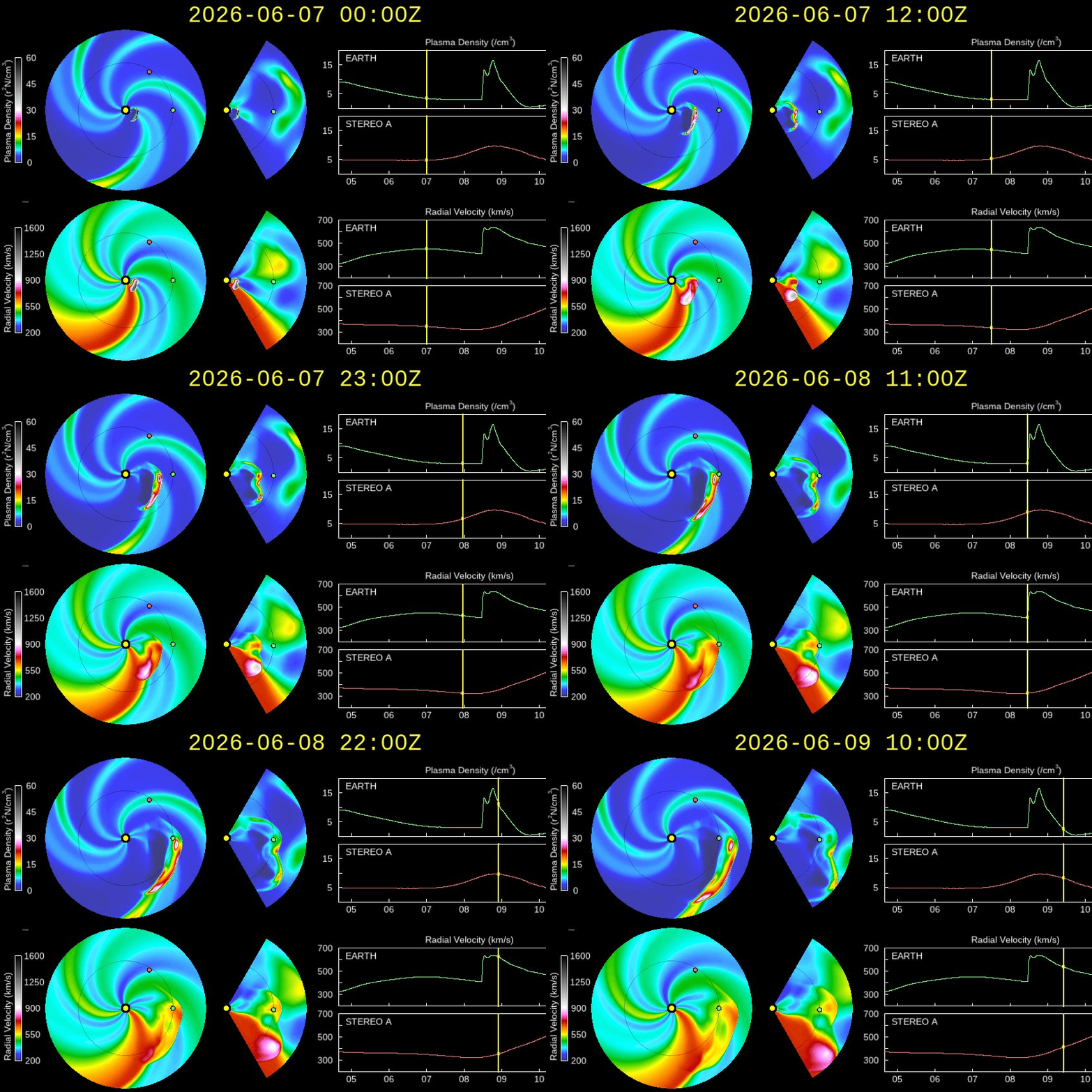
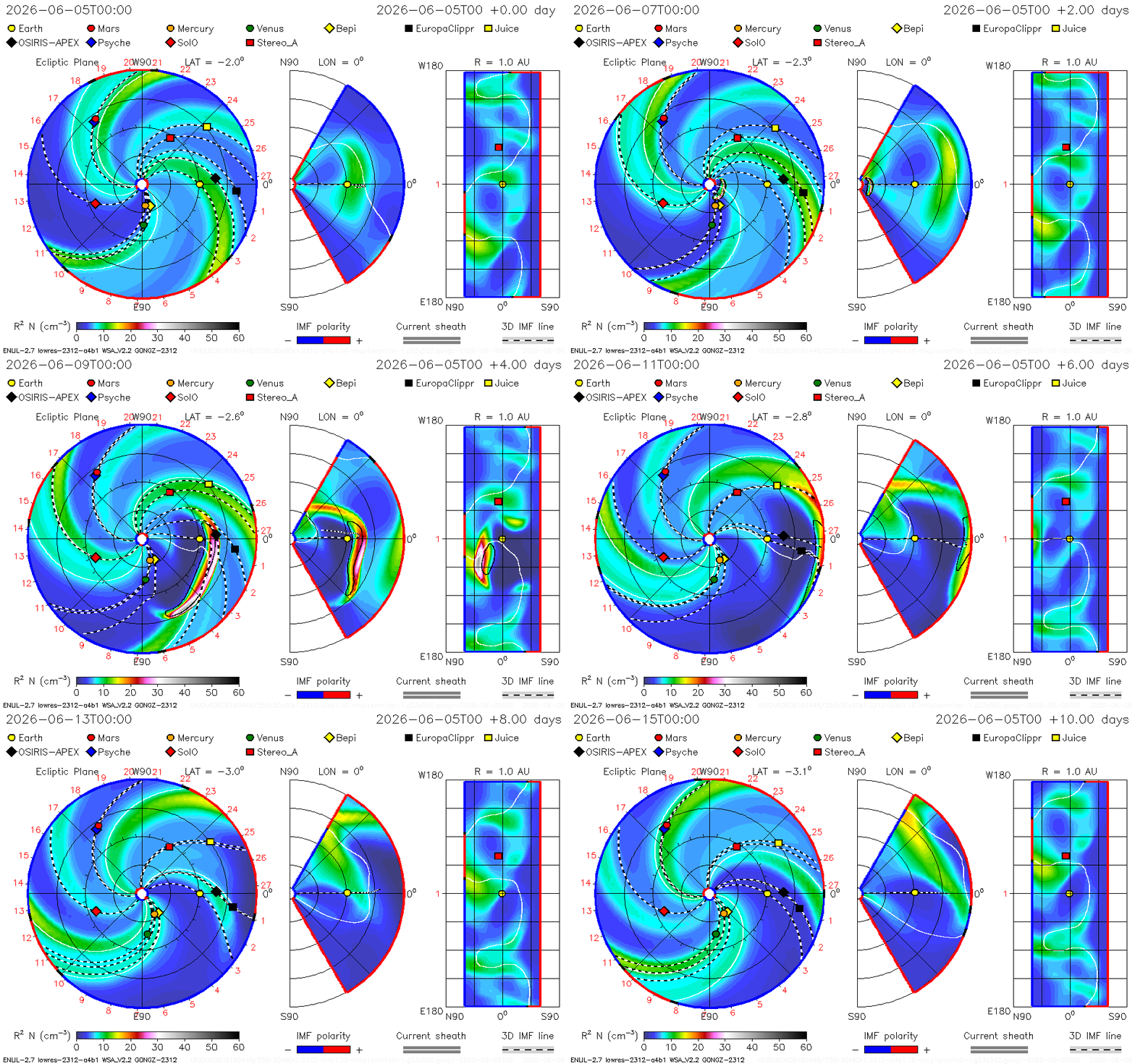
The source of the CME is sunspot 4461, a miniscule sunspot that was not on forecasters' radar before the M1-class explosion. NOAA and NASA models differ slightly on the details of the incoming CME. NASA predicts a more direct hit, NOAA a less direct hit. Both agree that the CME will arrive midday on June 8th (UTC).
If a strong geomagnetic storm materializes, naked-eye auroras could spread across much of Europe and all northern-tier US states. Would you like an instant text message when the CME arrives? Sign up for our Space Weather Alert Service.
Realtime Aurora Photo Gallery
Free: Spaceweather.com Newsletter
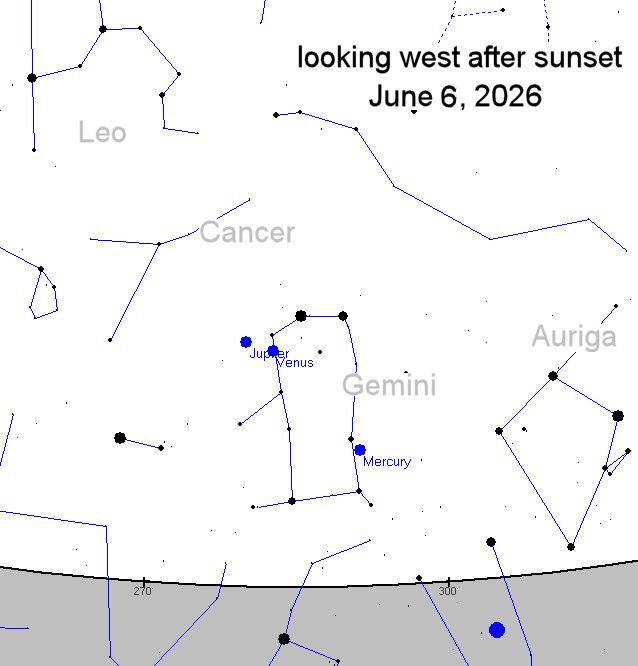
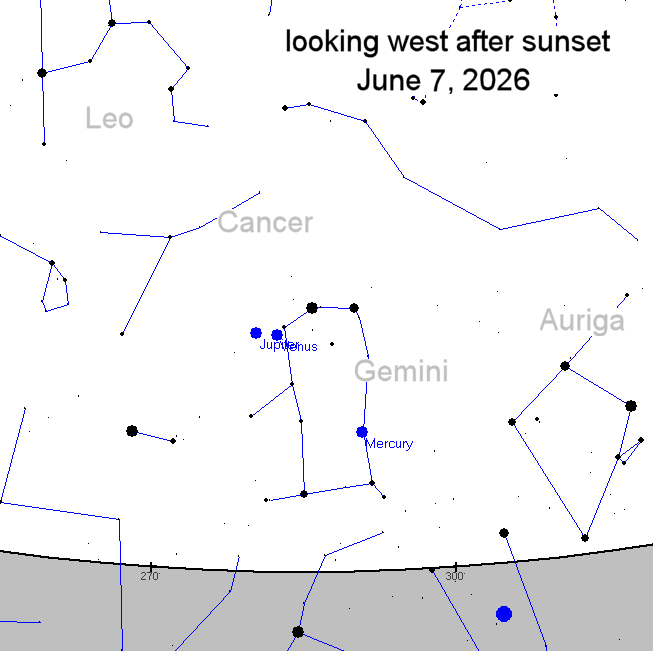
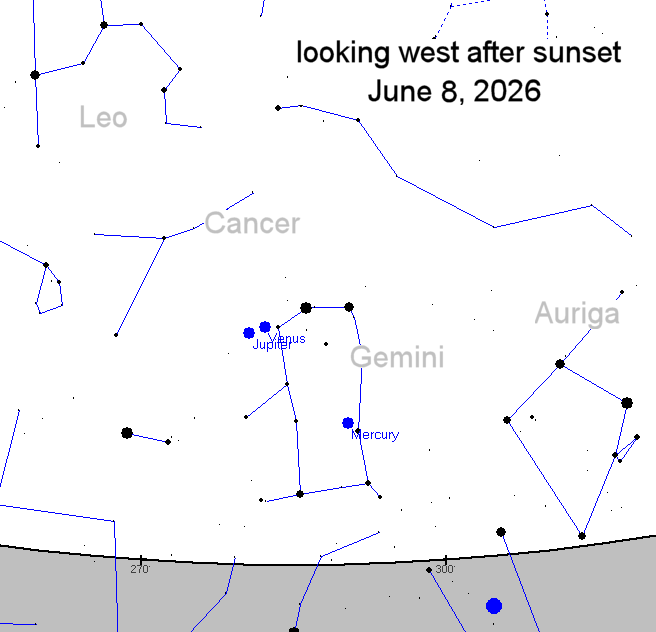
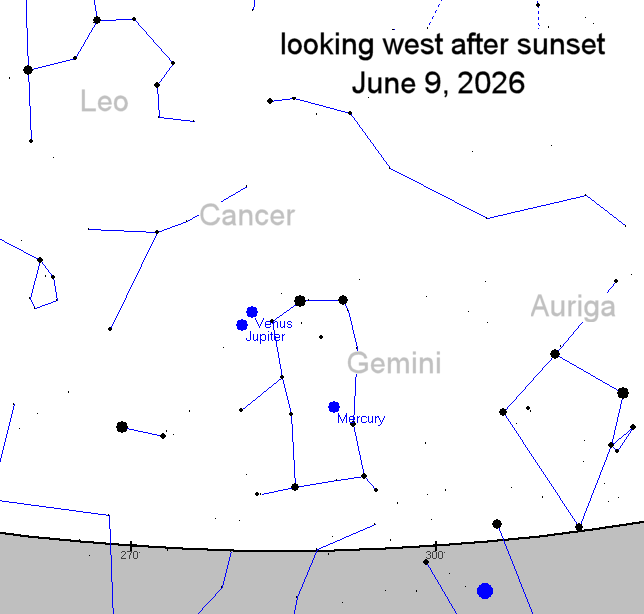
WATCH VENUS AND JUPITER CONVERGE THIS WEEKEND: It's happening now. The two brightest planets in the Solar System are converging for one of the best sunset conjunctions in years. On June 8th and 9th, Jupiter and Venus will be only 1.6 degrees apart. Valerie Liard sends this picture of the converging planets from Epernay, Marne, France:
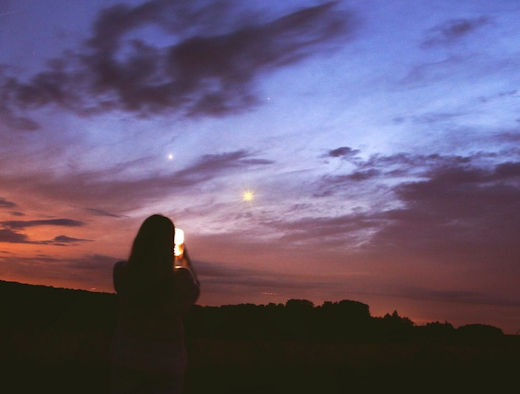
"This observation was a very special moment for me because I shared it with my niece," says Liard. "We spent a wonderful evening together watching the sky, and we enjoyed witnessing this beautiful celestial event."
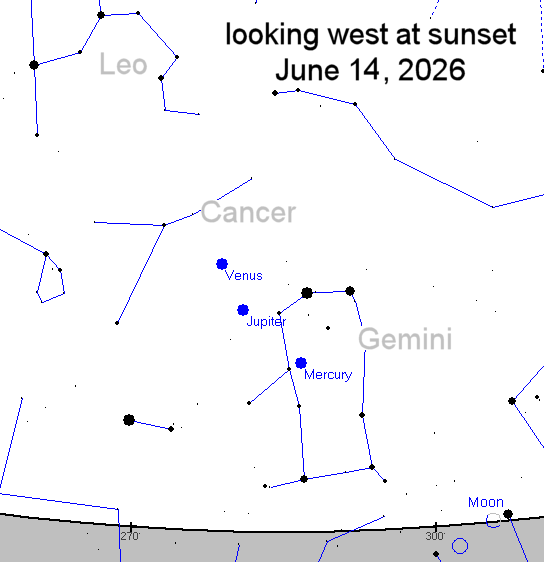
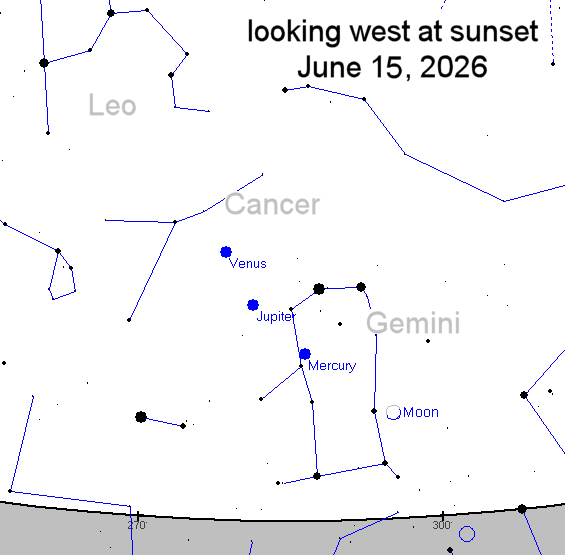
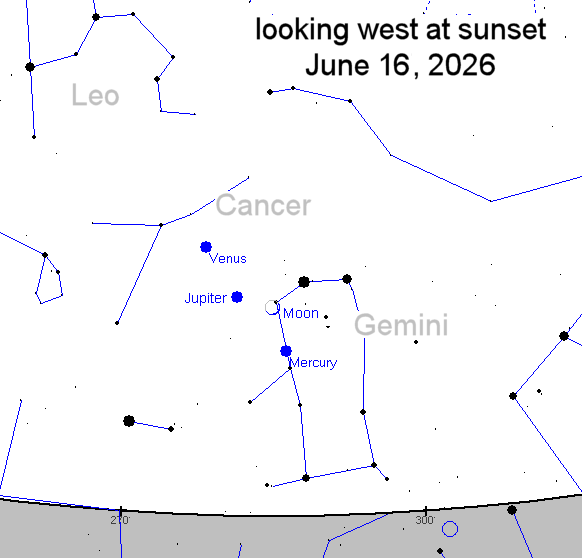
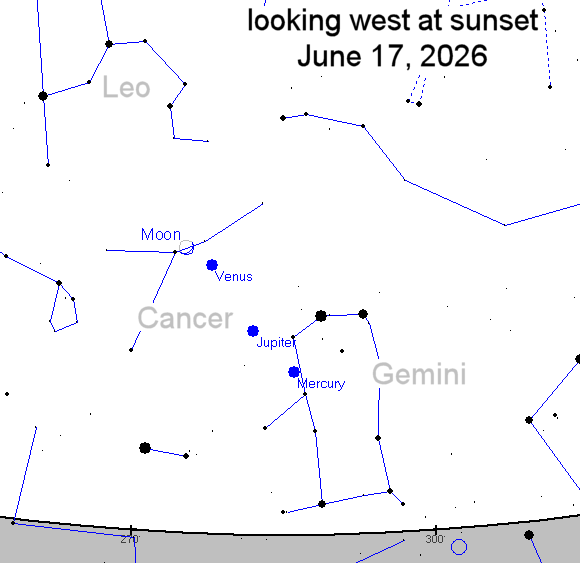
The convergence of Venus and Jupiter kickstarts the finest backyard sky show of 2026. After the two planets "kiss" on June 8th and 9th, Mercury will leap up from the horizon to join them for the rest of the week. Then the crescent Moon add itself to the gathering on June 16th and 17th, forming a must-see quartet in the twilight sky.
Step outside at sunset, look west, and enjoy the show. Sky maps: June 6, 7, 8, 9, 10, 11, 12, 13, 14, 15, 16, 17.
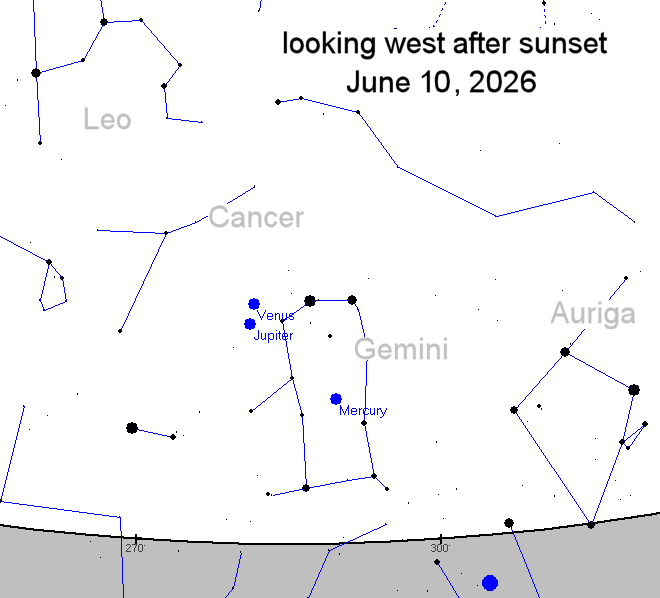
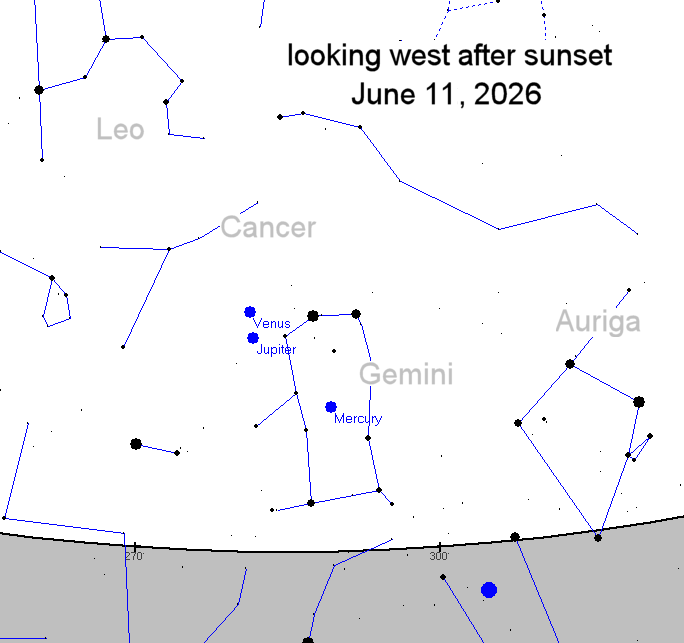
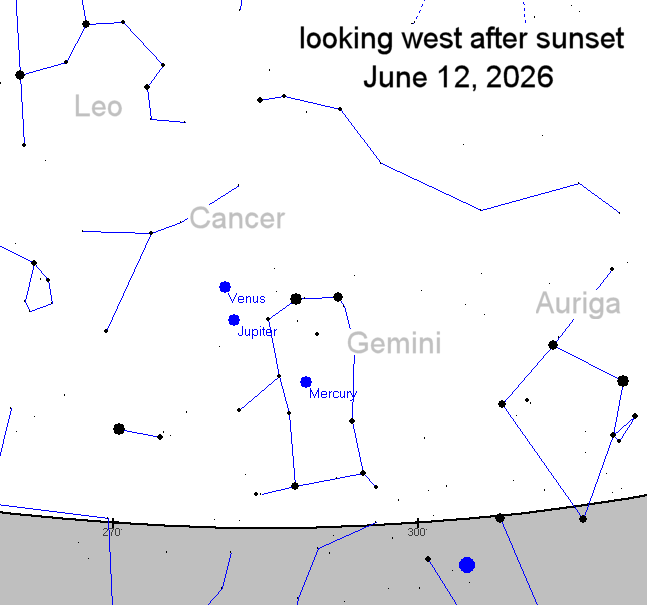
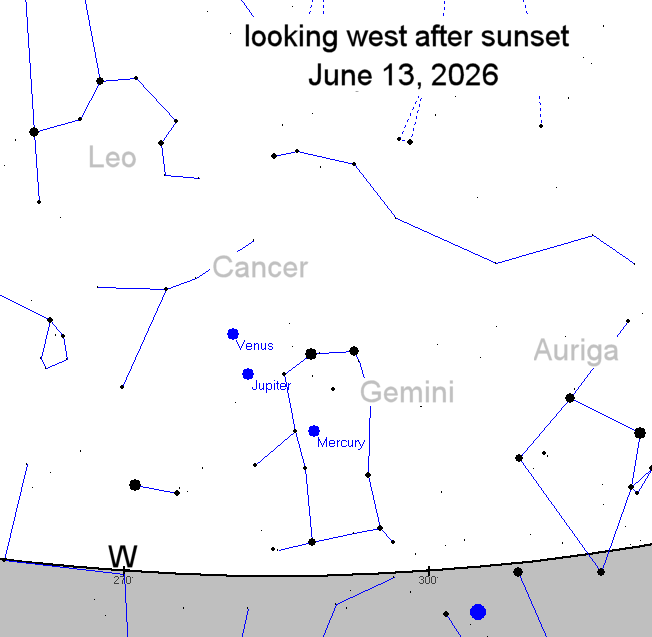
Realtime Space Weather Photo Gallery
Free: Space Weather Newsletter
STERLING SILVER RAINBOW DRAGONFLY: Are you looking for a far-out gift? Consider the Rainbow Dragonfly Space Pendant. The students of Earth to Sky Calculus launched it to the stratosphere onboard a cosmic ray research balloon:
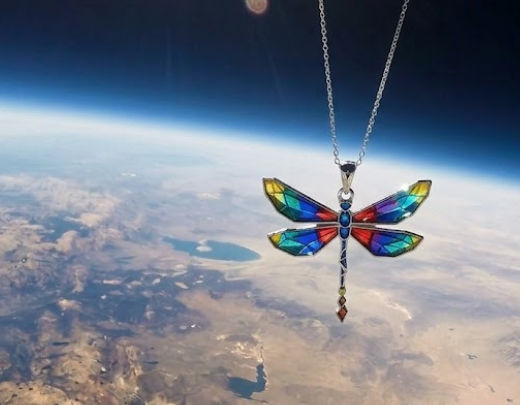
You can have it for $179.95. Made of stained glass with a sterling silver exoskeleton, the pendant has a wingspan of 1.1-inches and comes with a matching 18-inch sterling silver chain.
The students are selling space pendants to pay the helium bill for their cosmic ray ballooning program. Each one comes with a greeting card showing the jewelry in flight and telling the story of its trip to the stratosphere and back again.
Far Out Gifts: Earth to Sky Store
All sales support hands-on STEM education
Realtime Aurora Photo Gallery
Free: Spaceweather.com Newsletter