A MINOR CME IS COMING: Another CME is heading for Earth. Estimated time of arrival: June 14th. NOAA models suggest the impact will be weak, sparking no more than a minor G1-class geomagnetic storm. If such a storm does materialize, high-latitude sky watchers could catch some auroras. The phase of the Moon on June 14th will provide dark skies for photography. CME Impact alerts: SMS Text.

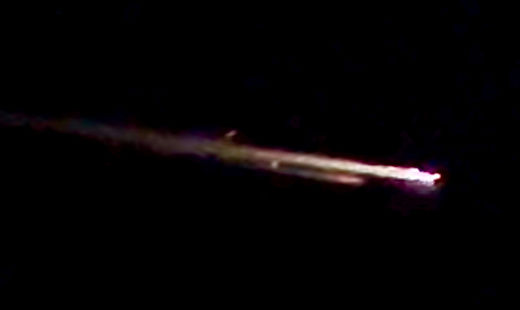
AN UNUSUAL SATELLITE JUST BURNED UP OVER CALIFORNIA: Early this morning, June 10th, a bright fireball crawled across the skies of the US West Coast. It was the re-entry of Clarity-1, an unusual satellite launched in March 2025 by Albedo Space. "I saw it almost directly overhead at 1:43 am PDT," reports Richard Sears, who photographed the disintegration from Ballico, California:
Clarity-1 is unusual because it was designed to operate in Very Low Earth Orbit (VLEO), a region of space less than 400 km above Earth's surface. Orbiting at only half the altitude of a typical Earth-observing satellite, Clarity-1 could see and photograph objects on the ground with a resolution of only 10 cm.
VLEO is not an easy place to be. Aerodynamic drag at such low altitudes can be 10 times higher than in normal orbits, pulling satellites down in a matter of weeks. In addition, relatively high levels of atomic oxygen could degrade satellite surfaces and solar arrays.
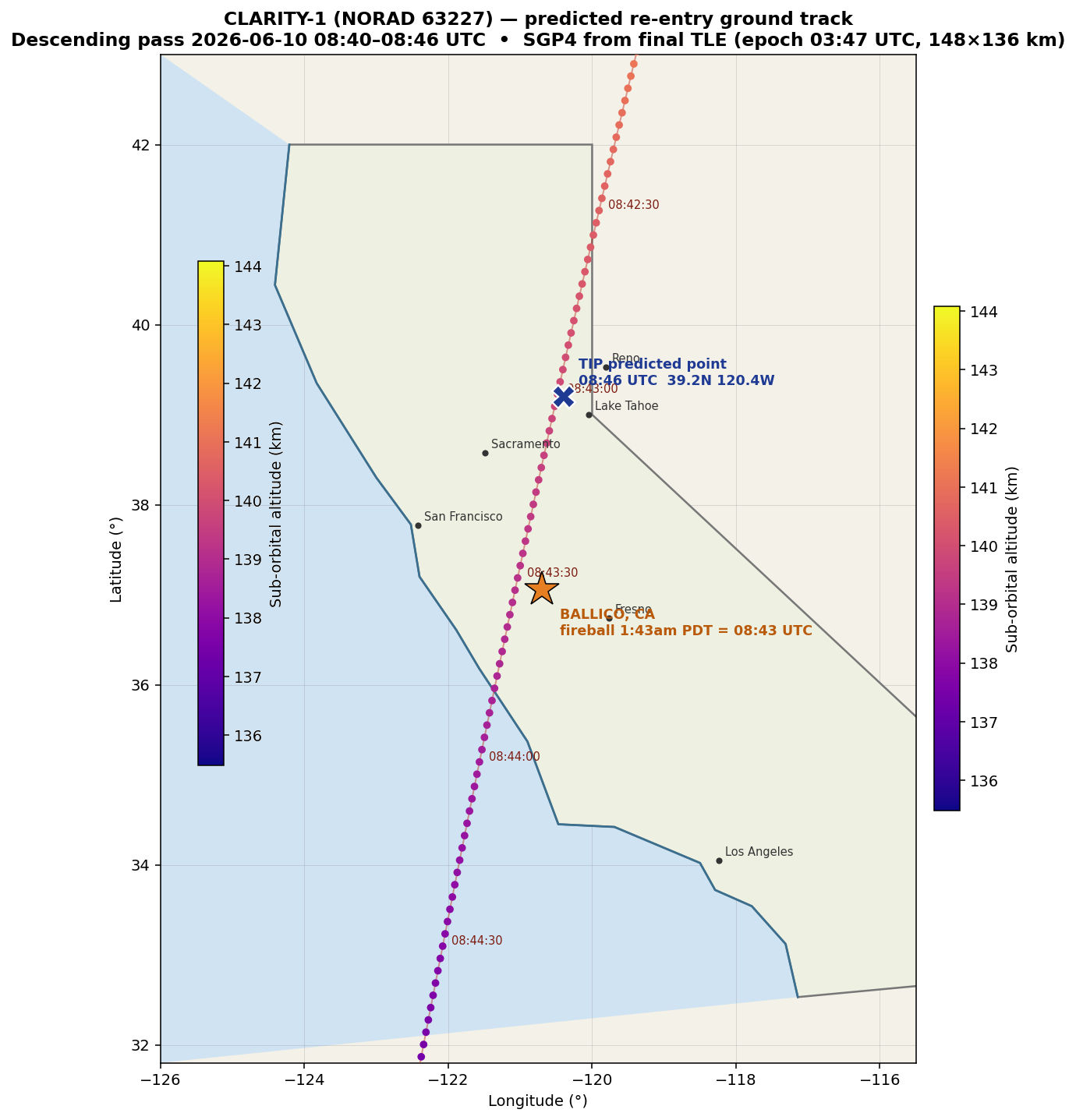 Clarity-1 spent more than a year in this harsh environment. For the first 9 months after launch, onboard electric propulsion helped it maintain a steady orbit. In late 2025, however, Albedo lost contact. Nature did the rest, pulling Clarity-1 to its doom over California this morning.
Despite the fiery end, Albedo almost certainly considers this to be a successful mission. Before Clarity-1, only a handful of government missions, such as ESA's GOCE gravity satellite (224 km) and Japan's SLATS technology demonstrator (167 km, a Guinness world record), had ventured so deep for so long. Clarity-1 showed that a commercial satellite could do it, too.
Clarity-1 thus sets the stage for -- you guessed it -- an entire constellation of VLEO satellites. Albedo hopes to launch as many as 24 more using the same technology that Clarity-1 tested. Flying far closer to Earth than Starlink, they're expected to appear strikingly bright in the night sky, albeit nowhere near as numerous.
Now for the good news: When they fail, they disintegrate rapidly. Stay tuned for more fireballs.
Realtime Space Weather Photo Gallery
Free: Space Weather Newsletter
THIS IS *REAL* MONEY FROM SPACE: Last month, the US Mint released new $1 coins to honor one of America's greatest innovators: Steve Jobs. On May 14, 2026, the students of Earth to Sky Calculus launched them to the stratosphere onboard a cosmic ray research balloon:
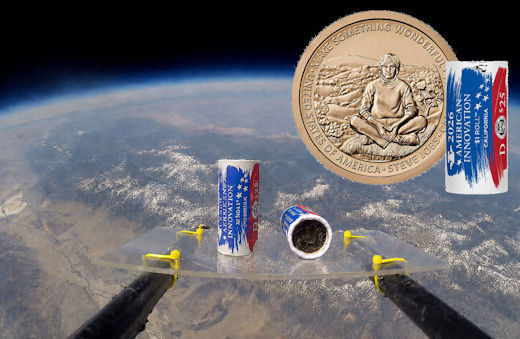
You can have a single coin for $49.95 or an entire unbroken roll for $299.95 (25 coins). No longer available from the US Mint, these rare coins flew 111,113 feet above the Sierra Nevada. One side shows Steve Jobs in a meditative pose; the other side features the Statue of Liberty in profile. The coin is inscribed with the words "MAKE SOMETHING WONDERFUL."


The students are selling space coins to support to support their cosmic ray research program. (Helium is expensive!) Each order comes with a greeting card showing the coins in flight and telling the story of their journey to the stratosphere and back again.
Far Out Gifts: Earth to Sky Store
All sales support hands-on STEM education
VENUS, JUPITER AND FROSTED METEOR SMOKE: When Alan Dyer went outside at sunset to photograph this week's conjunction of Venus and Jupiter, he found something else as well. The bright planets were shining through electric-blue veils of frosted meteor smoke:
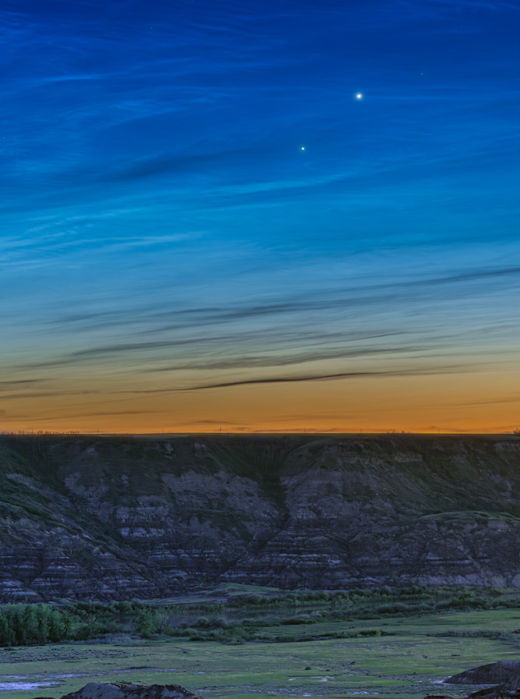
"Venus and Jupiter were embedded in what looked like glowing noctilucent clouds (NLCs)," says Dyer.
He's right, the summer season for noctilucent clouds has begun. NLCs form every year around his time when plumes of water vapor rise up from the Earth to the mesosphere. Water molecules stick to fine particles of meteor smoke (the remains of disintegrated meteoroids), crystallizing into icy electric-blue NLCs.
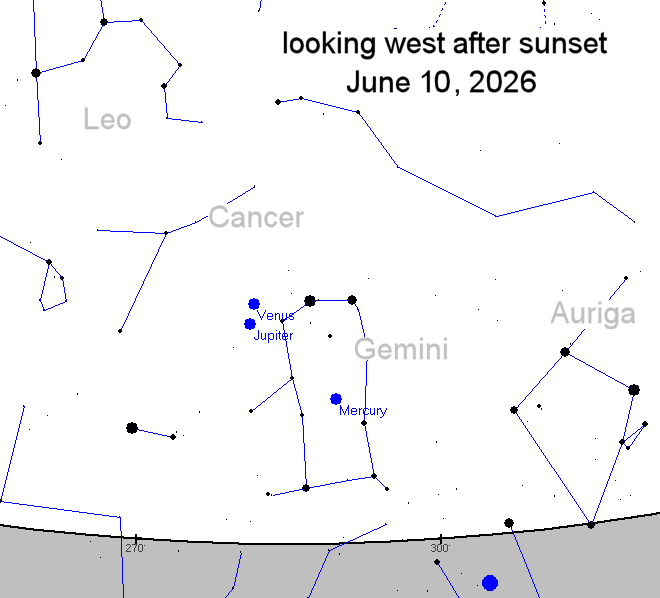
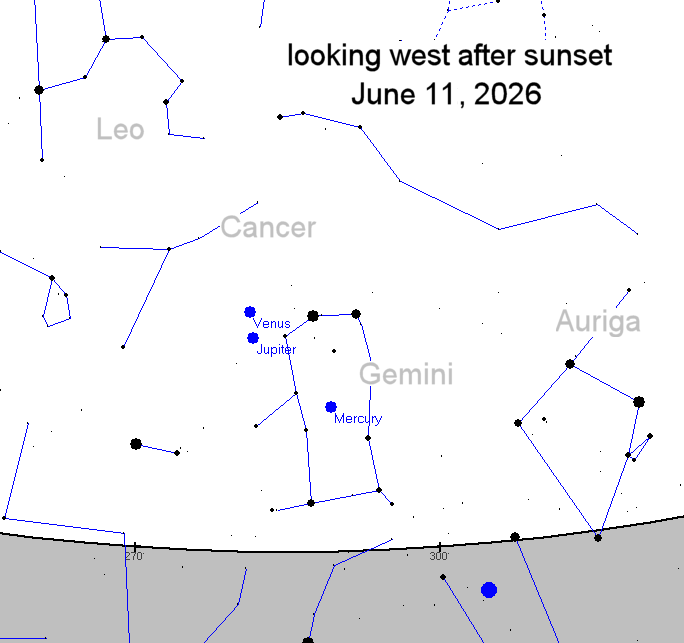
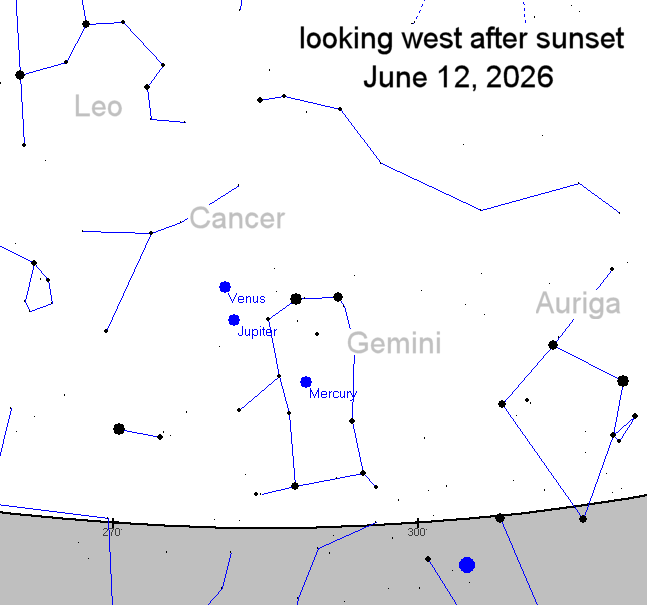
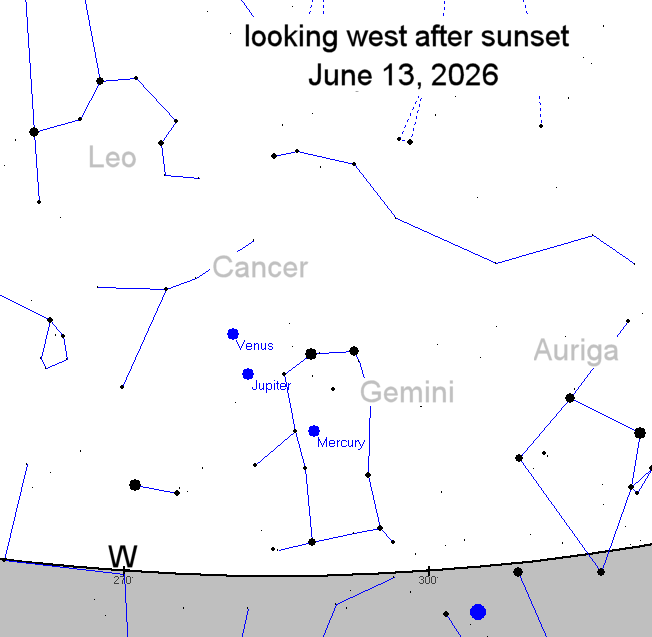
Watch the evening sky this week. Venus, Jupiter, Mercury and the crescent Moon will all be there. There's a chance of NLCs as well. Sky maps: June 10, 11, 12, 13, 14, 15, 16, 17.
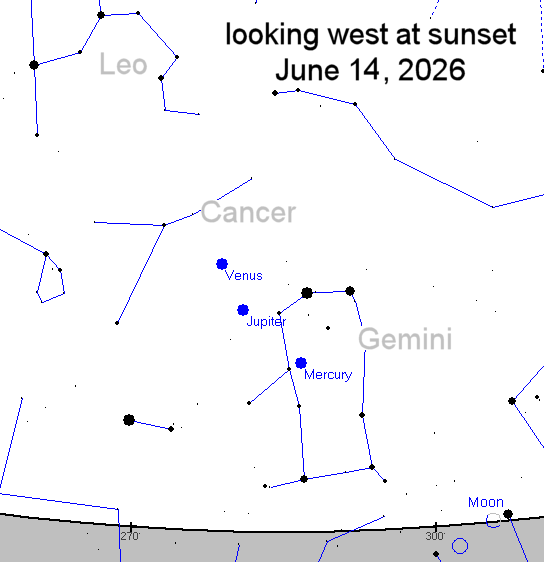
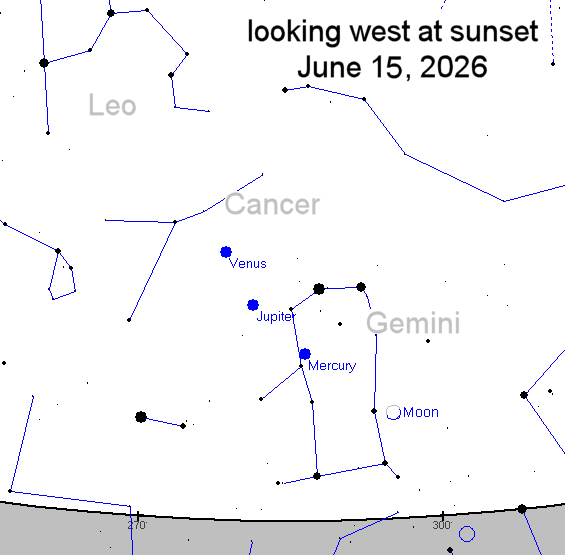
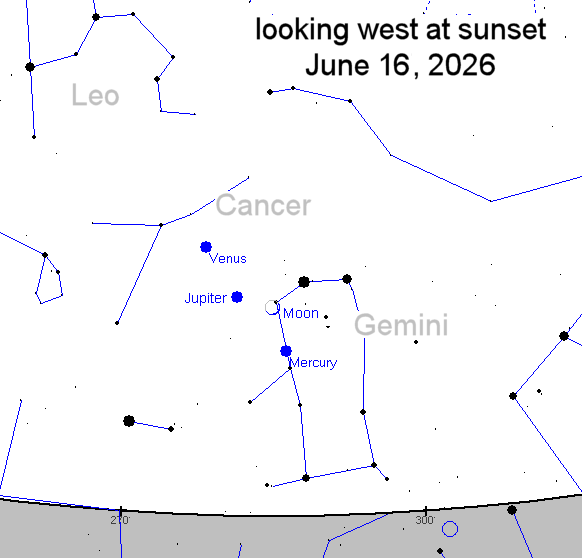
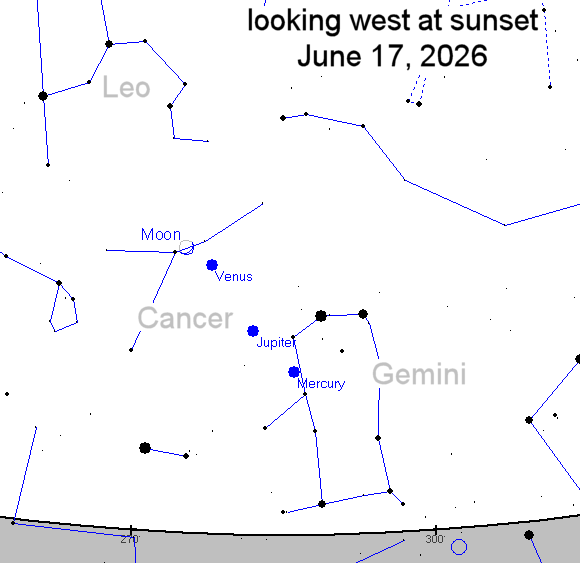
more images: from Petr Horálek of Ústupky, Seč, Czech Republic; from Gwenael Blanck of Foligno, Italy; from Marina Prol Franco of Gran Canaria, Canary Islands (Spain); from Sim Jaehyun of Seoul, S. Korea; from Marcus Prazniak of Tonopah, NV; from Giovanni Passalacqua of Sicily, Italy; from Miroslav Grnja of Bratislava, Slovakia; from S. Sabet of Alborz, Karaj, Iran
Realtime Space Weather Photo Gallery
Free: Space Weather Newsletter
Realtime Aurora Photo Gallery
Free: Spaceweather.com Newsletter