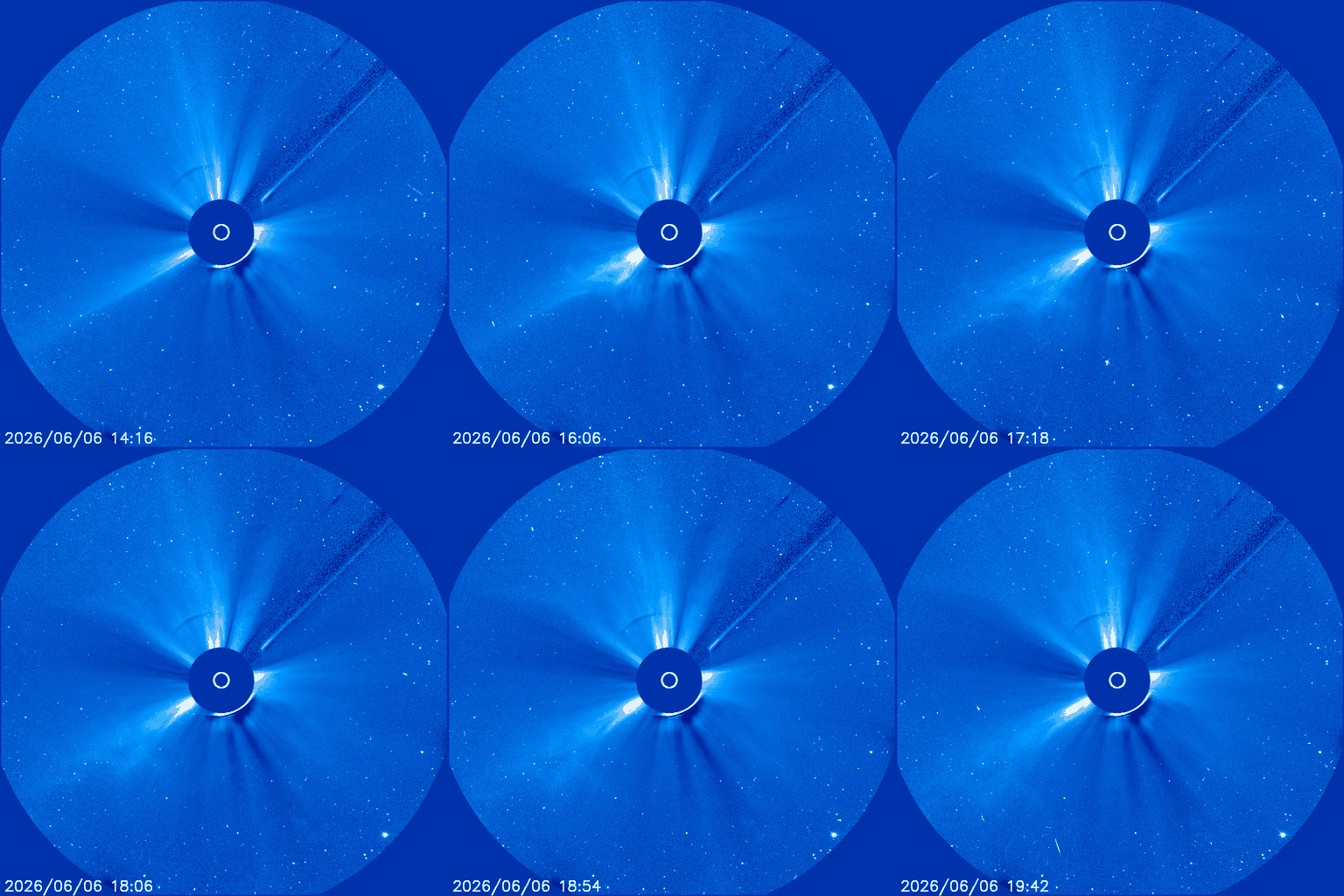
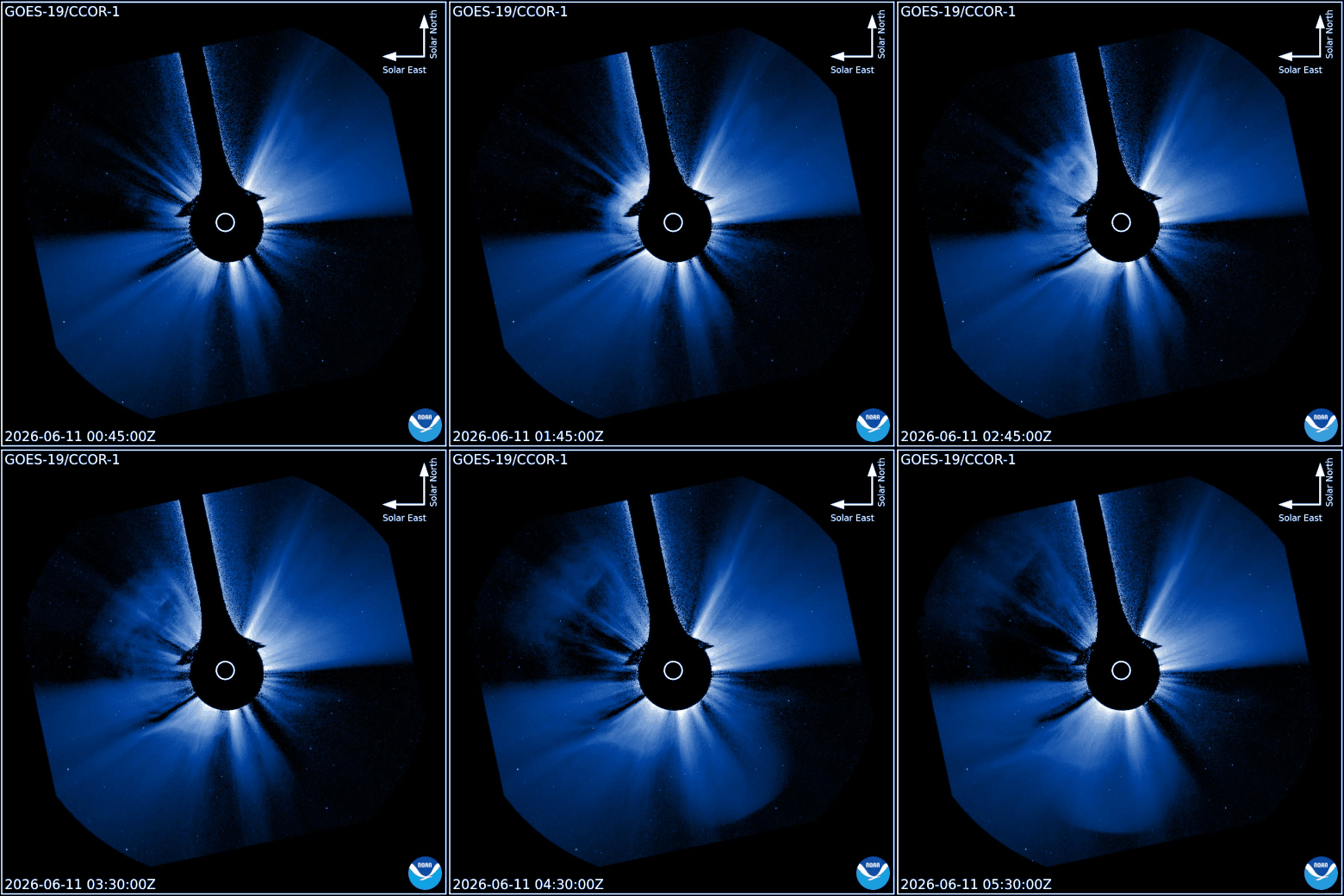
AURORAS HATE SOLSTICES: Regular readers have often heard us say "auroras love equinoxes." It's a real physical phenomenon. Because of the Russell-McPherron Effect, the magnetic connection between sun and Earth is strongest around equinoxes, giving CMEs a boost when they try to spark auroras. But the opposite is also true: Auroras hate solstices. Think of it as the anti-Russell-McFerron Effect. The magnetic connection is weakest around solstices--i.e., now. Perhaps this is why recent CMEs have failed to produce strong geomagnetic storms. Aurora alerts: SMS Text.
A SPACEX ROCKET IS GOING TO HIT THE MOON: A SpaceX rocket will hit the Moon this summer, and NASA wants your help observing the impact.
On August 5th at 6:35 UTC, a Falcon 9 upper stage left over from the launch of Firefly Aerospace's Blue Ghost lunar lander will slam into the Moon near Einstein crater, according to Bill Gray of Project Pluto. The 4-ton rocket body is expected to strike at 2.43 km/s, excavating a fresh crater 10 to 20 meters wide and throwing lunar debris high above the impact site.
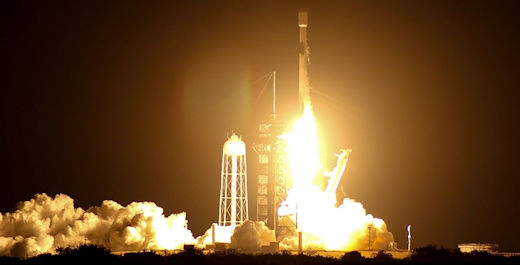
Above: A Falcon 9 rocket launches the Blue Ghost lunar lander Jan. 15, 2025.
"Citizen scientists may be able to help us observe this event," said Brian Day of NASA Ames Research Center and SSERVI in a June 12th briefing. "Observers in the Americas will have the best view."
When the rocket hits, it will produce a flash of light, much like natural meteoroids do when they strike the Moon. However, the rocket will be crashing slowly into daylit terrain, and "the flash may be too faint to see," noted Bill Cooke of NASA's Meteoroid Environment Office at the same briefing. Indeed, he says, it could be as dim as 17th magnitude.
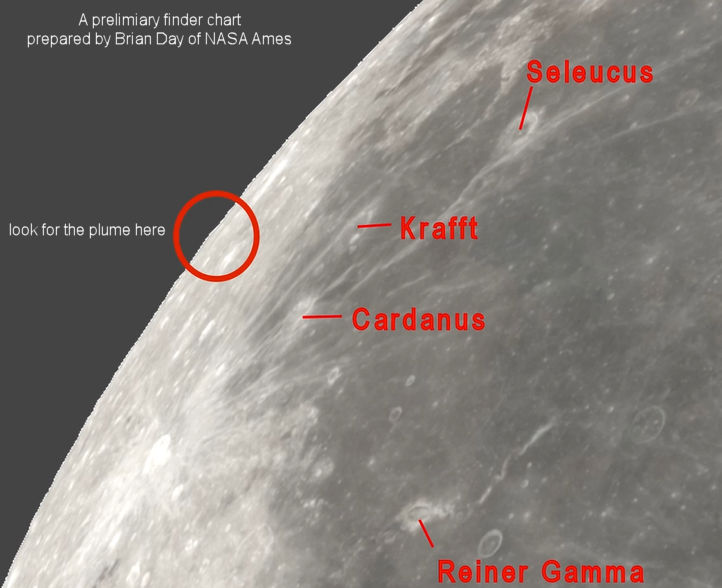 Of greater interest is the impact plume. Cooke estimates the collision will hurl as much as 800,000 pounds of debris above the lunar surface. If sunlight catches the expanding cloud, it could become bright enough to see above the Moon's limb.
This isn't the first time a rocket has hit the Moon. During the Apollo era, NASA routinely crashed Saturn V rocket stages into the lunar surface to generate moonquakes for seismometers left behind by astronauts. In 2009, NASA's LCROSS mission crashed a 2.3-ton Centaur rocket stage into the lunar south pole in a successful search for water ice.
None of these previous rocket impacts has been convincingly observed by amateur astronomers--so this would be a first if anyone sees it.
Want to try? We will provide updated crash-site coordinates and observing tips as August 5th approaches. Stay tuned!
Realtime Space Weather Photo Gallery
Free: Space Weather Newsletter
FATHER-SON IRON SCULPTURE: Father’s Day is coming. Are you looking for a far-out gift? Consider the Father-Son Iron Sculpture. Last month, it flew to the stratosphere on board an Earth toSky Calculus cosmic ray research balloon:
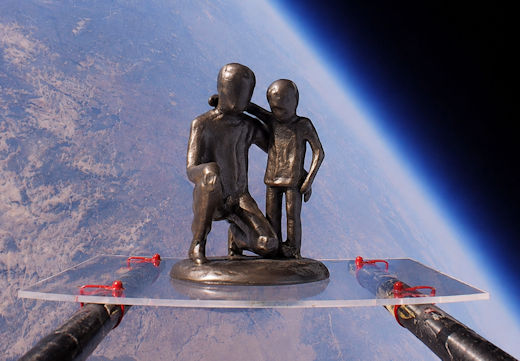
You can have it for $149.95. Handcrafted from iron, the sculpture celebrates the special relationship between dads and their sons. There's a statue for father's and daughters, too!
The students are selling Father's Day Gifts to pay the helium bill for their cosmic ray ballooning program. Each one comes with a greeting card showing the jewelry in flight and telling the story of its trip to the stratosphere and back again.
Far Out Gifts: Earth to Sky Store
All sales support hands-on STEM education
Realtime Aurora Photo Gallery
Free: Spaceweather.com Newsletter