EARTH-DIRECTED X-FLARE AND CME: As predicted, sunspot 4479 erupted today, June 30th, producing an X1.1-class solar flare. NASA's Solar Dynamics Observatory recorded the extreme ultraviolet flash:
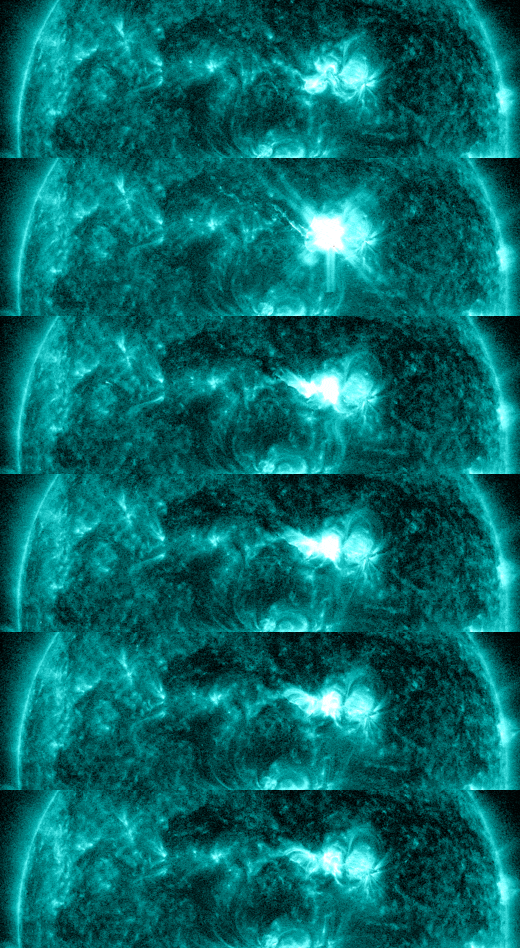
Radiation ionized Earth's upper atmosphere, creating a brief shortwave radio blackout over North America and the Pacific Ocean. Mariners and ham radio operators may have noticed loss of signal at frequencies below 25 MHz around 20:45 UTC.
Of greater interest is the CME. There is one! First-look coronagraph images show a full halo CME heading for Earth. Type II solar radio emissions from the CME's leading edge suggest it is moving ~1400 km/s--a fast and potent storm cloud. The CME will probably hit Earth on July 2nd, but stay tuned for a better forecast in the hours ahead. Solar flare alerts: SMS Text.
Realtime Space Weather Photo Gallery
Free: Space Weather Newsletter
NOCTILUCENT CLOUDS IN PARIS: An outbreak of noctilucent clouds (NLCs) is underway in Europe this week. On June 29th, they descended from the Arctic Circle to central France:

"Noctilucent clouds were visible from Paris this morning," reports photographer Bertrand Kulik. "They are the thin silvery ripples to the left of the Eiffel Tower."
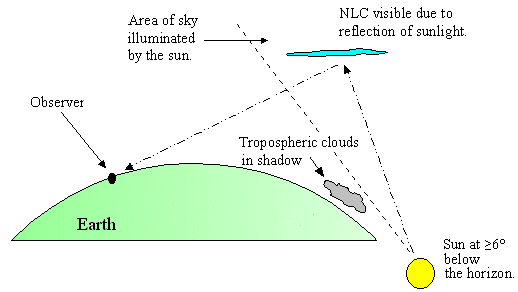
Late June is peak season for NLCs. At this time of year, summertime plumes of water vapor rise to the edge of space and crystalize around specks of meteor dust. The resulting icy clouds glow electric-blue in the night sky. Sunrise and sunset are good times to see them.
Realtime Noctilucent Cloud Photo Gallery
Free: Space Weather Newsletter
NEW! BACKYARD ASTRONOMY ALERTS: We're proud to announce a new service from Spaceweather.com: Backyard Astronomy Alerts. We love this product. Subscribers receive real-time alerts about space station flybys, aurora outbursts, planetary conjunctions, meteor showers and more -- all easy to see with the naked eye.

SMS text messages tell you to go outside right now while the event is happening, and companion emails include sky maps and detailed observing tips. Give it a try! Introductory offer: 1 year for 50% off
Far Out Gifts: Earth to Sky Store
All sales support hands-on STEM education
A COMPLICATED SOLAR FLARE: Today's M5.8-class solar flare was more than just a solar flare. It was *three* solar flares. NASA's Solar Dynamics Observatory caught three sunspots erupting in quick succession:
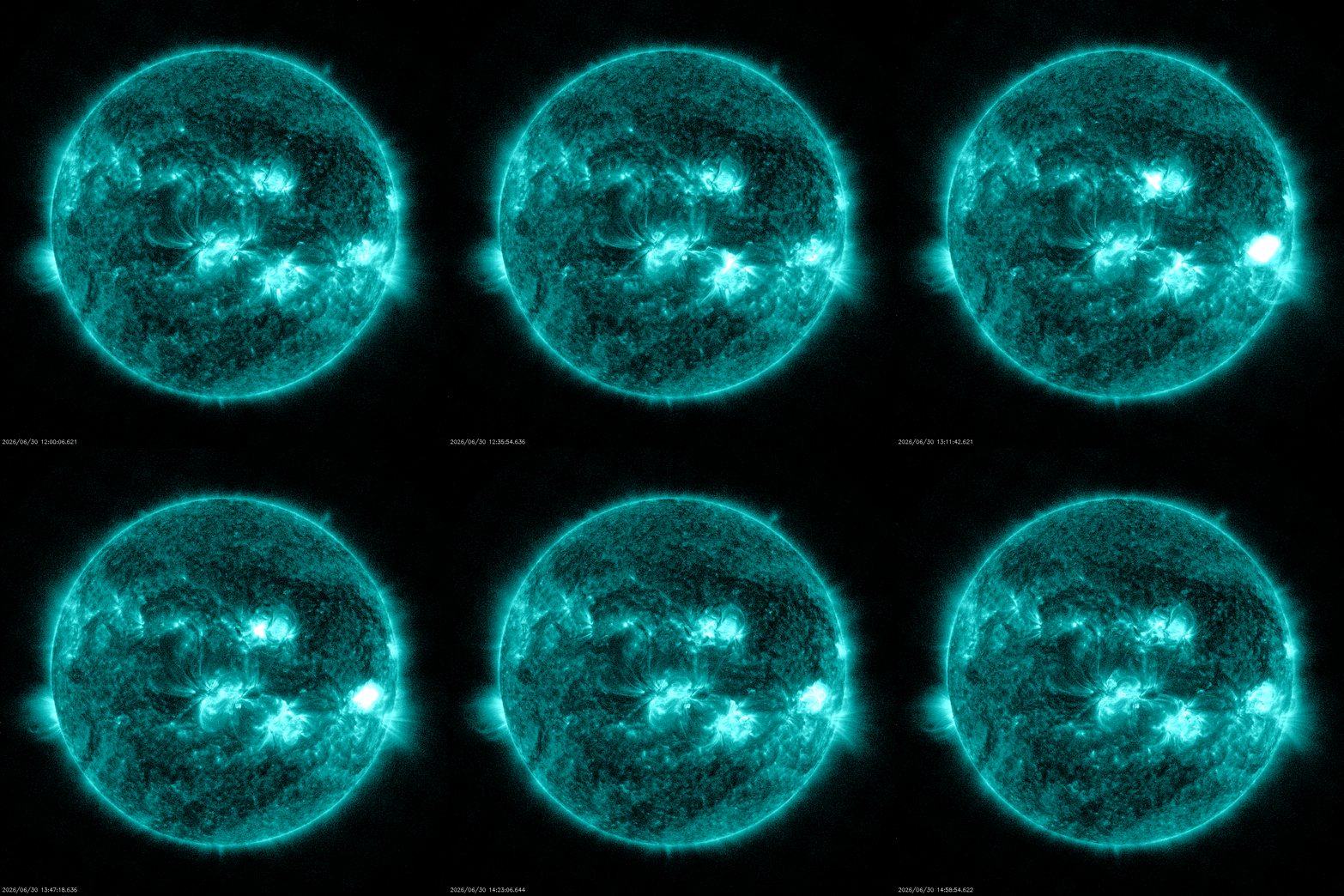
This kind of chain reaction is hardly unprecedented. SDO has seen it many times before. Hidden magnetic connections between seemingly unrelated sunspots can trigger a series of rapid-fire flares. In this case, the sequence was 4477-4475-4479, with sunspot 4475 producing most of the energy.
Update: This complex explosion did *not* produce a significant CME.
Realtime Aurora Photo Gallery
Free: Spaceweather.com Newsletter
Realtime Space Weather Photo Gallery
Free: Space Weather Newsletter