4TH OF JULY AURORAS PREDICTED: Multiple CMEs are heading for Earth, including one launched by the June 30th X-flare. A series of direct+glancing blows beginning on July 3rd could spark G2 to G3-class geomagnetic storms over the 4th of July holiday weekend. Aurora visibility will be mitigated by (1) a bright moon, (2) short nights in the northern hemisphere, and (3) the Russell-McPherron Effect, which suppresses solstice auroras. Nevertheless, there could be a light show, especially in northern-tier US states. The best time to look is during the dark hours around midnight.CME impact alerts: SMS Text.
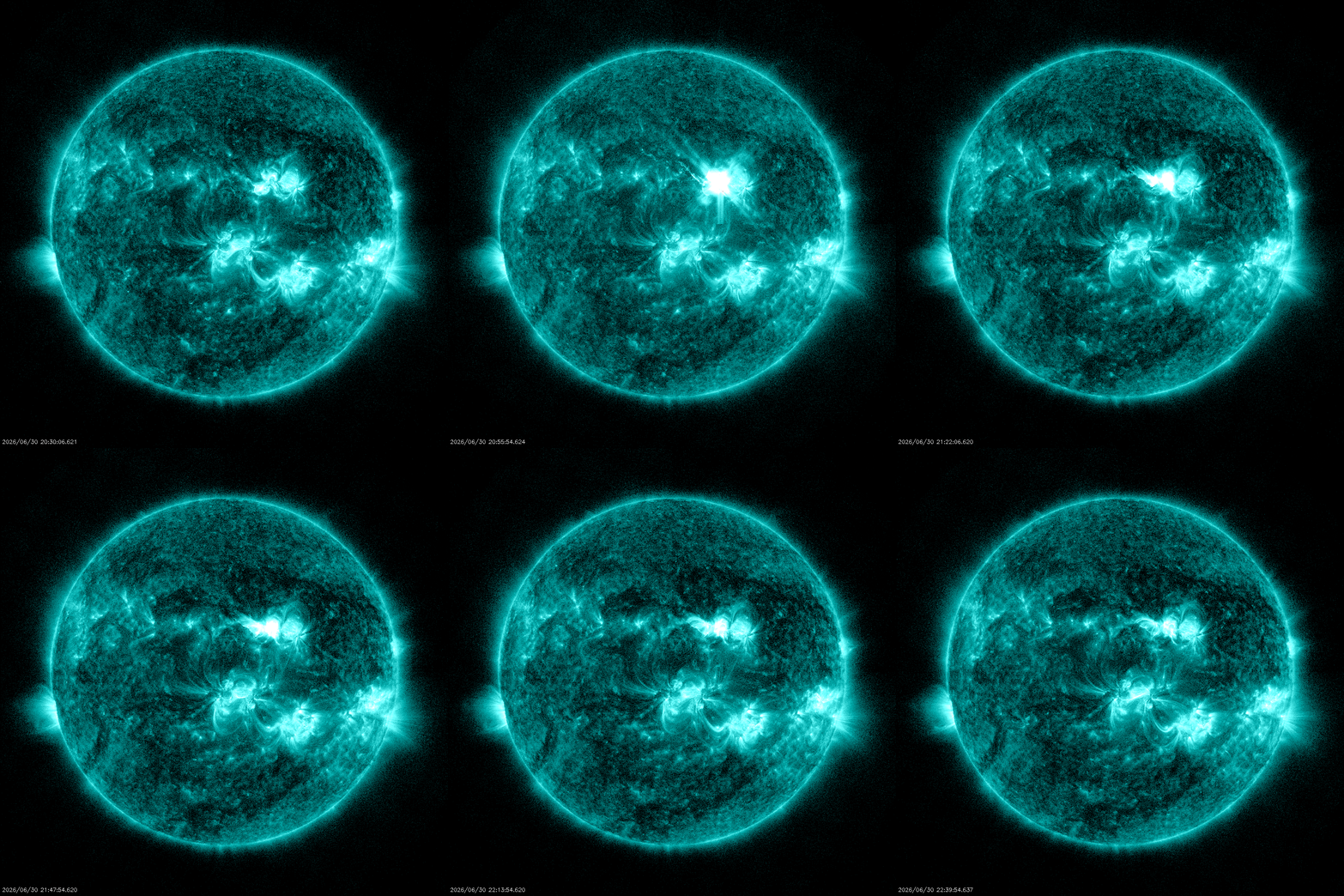


HIGH SOLAR ACTIVITY CONTINUES: Solar activity remains high as the sun crackles with X-class and near-X-class solar flares. Three sunspots are participating (4477, 4478 and 4479), and they appear to be talking to one another. Consider this 8-hour movie recorded on July 1st by NASA's Solar Dynamics Observatory:
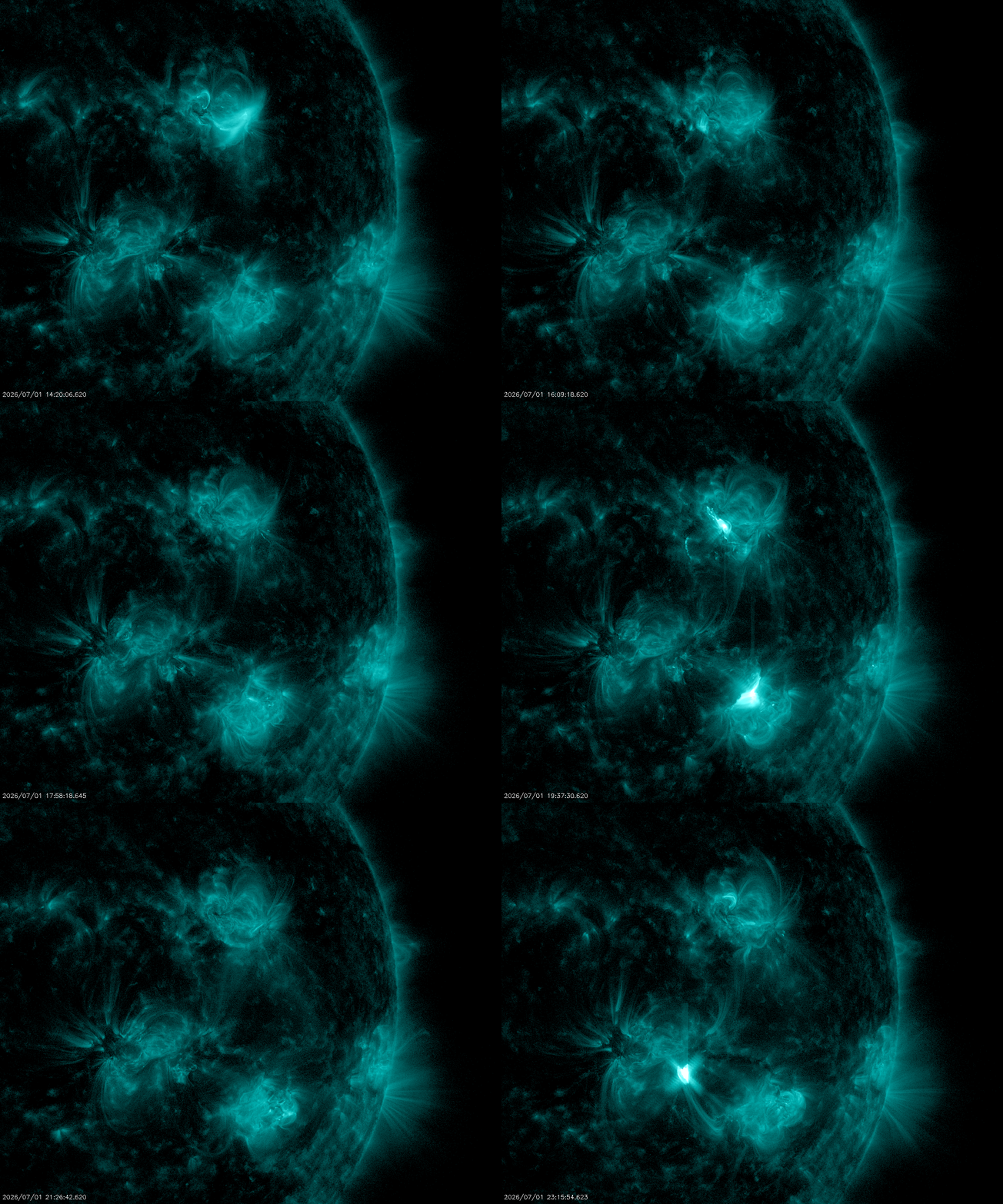
The sequence includes a pair of M3-class solar flares and a powerful M8.5. All of the explosions are puffing clouds of hot plasma into space--some of them with an Earth-directed component. Our magnetosphere will feel the blows over the 4th of July weekend, setting the stage for a light show even more heavenly than fireworks. CME impact alerts: SMS Text.
Realtime Space Weather Photo Gallery
Free: Space Weather Newsletter
SPACEX NOCTILUCENT CLOUD: Last night, July 1st (7:58 p.m PDT), SpaceX launched a Falcon 9 rocket from California's Vandenberg Space Force Base. Paul Maley saw the icy exhaust 500 miles away in Carefree, Arizona:
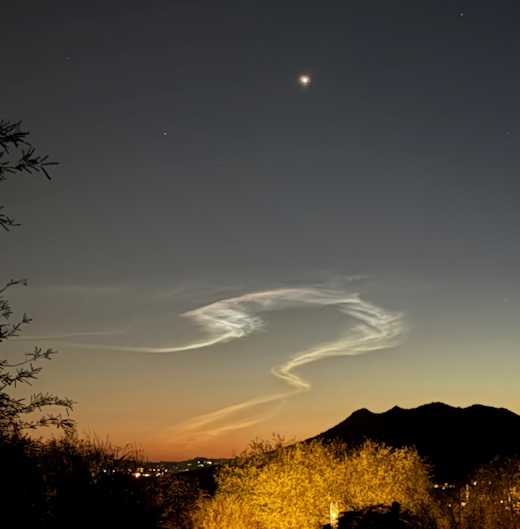
"We saw the noctilucent cloud with Venus in the background in a completely clear sky against Arizona saguaros," says Maley.
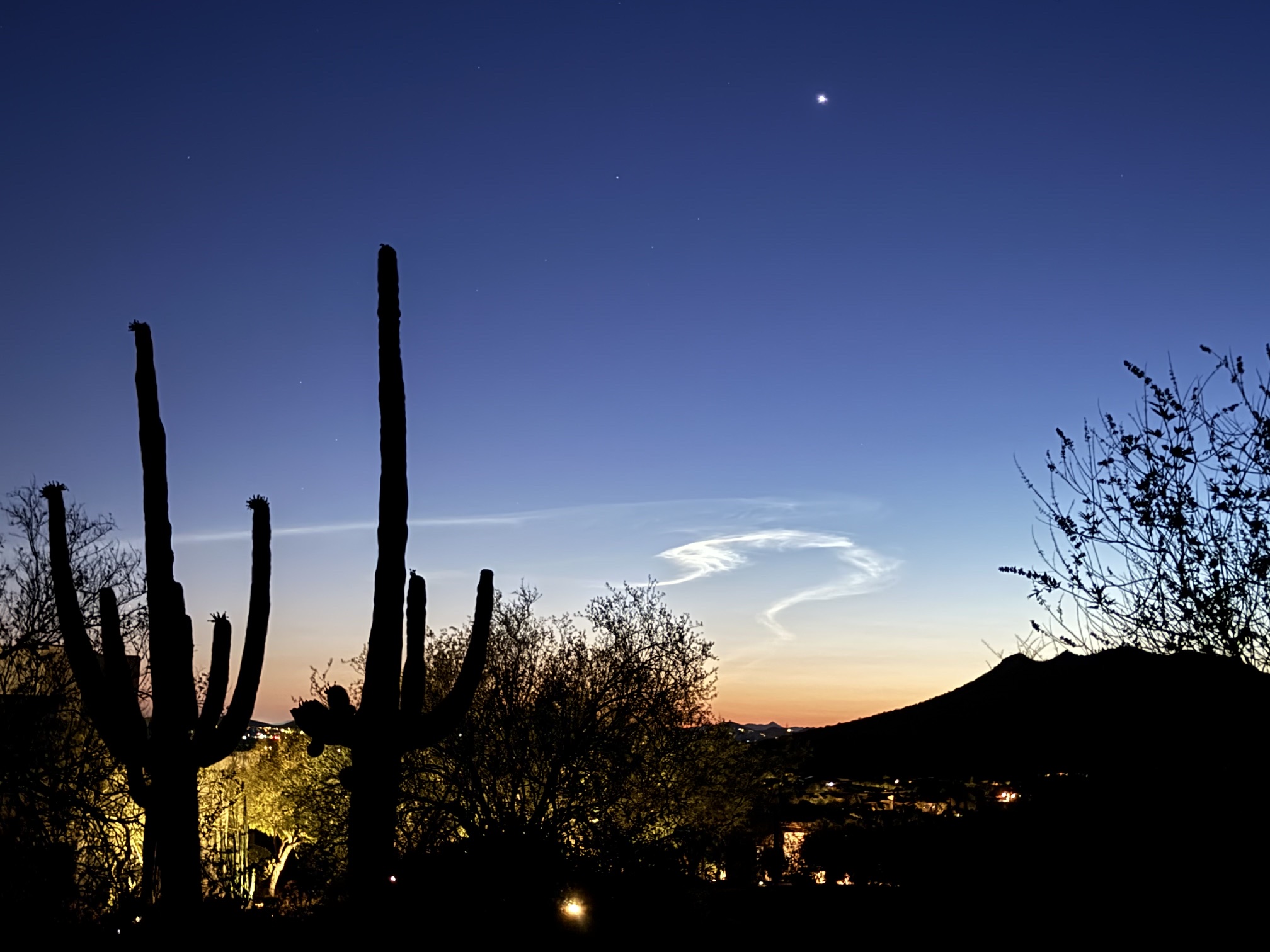
This week in Europe, sky watchers have been seeing natural noctilucent clouds, created when summertime plumes of water vapor rise to the edge of space and crystalize around meteor dust. Maley witnessed something different--a manmade noctilucent cloud. SpaceX provided the water vapor that once came only from Mother Nature.
PS: The rocket deployed 24 new Starlink satellites into Earth orbit, bringing the total to 10,746. Take a look.
NEW! BACKYARD ASTRONOMY ALERTS: We're proud to announce a new service from Spaceweather.com: Backyard Astronomy Alerts. We love this product. Subscribers receive real-time alerts about space station flybys, aurora outbursts, planetary conjunctions, meteor showers and more -- all easy to see with the naked eye.
SMS text messages tell you to go outside right now while the event is happening, and companion emails include sky maps and detailed observing tips. Give it a try! Introductory offer: 1 year for 50% off
Far Out Gifts: Earth to Sky Store
All sales support hands-on STEM education
Realtime Aurora Photo Gallery
Free: Spaceweather.com Newsletter
Realtime Space Weather Photo Gallery
Free: Space Weather Newsletter