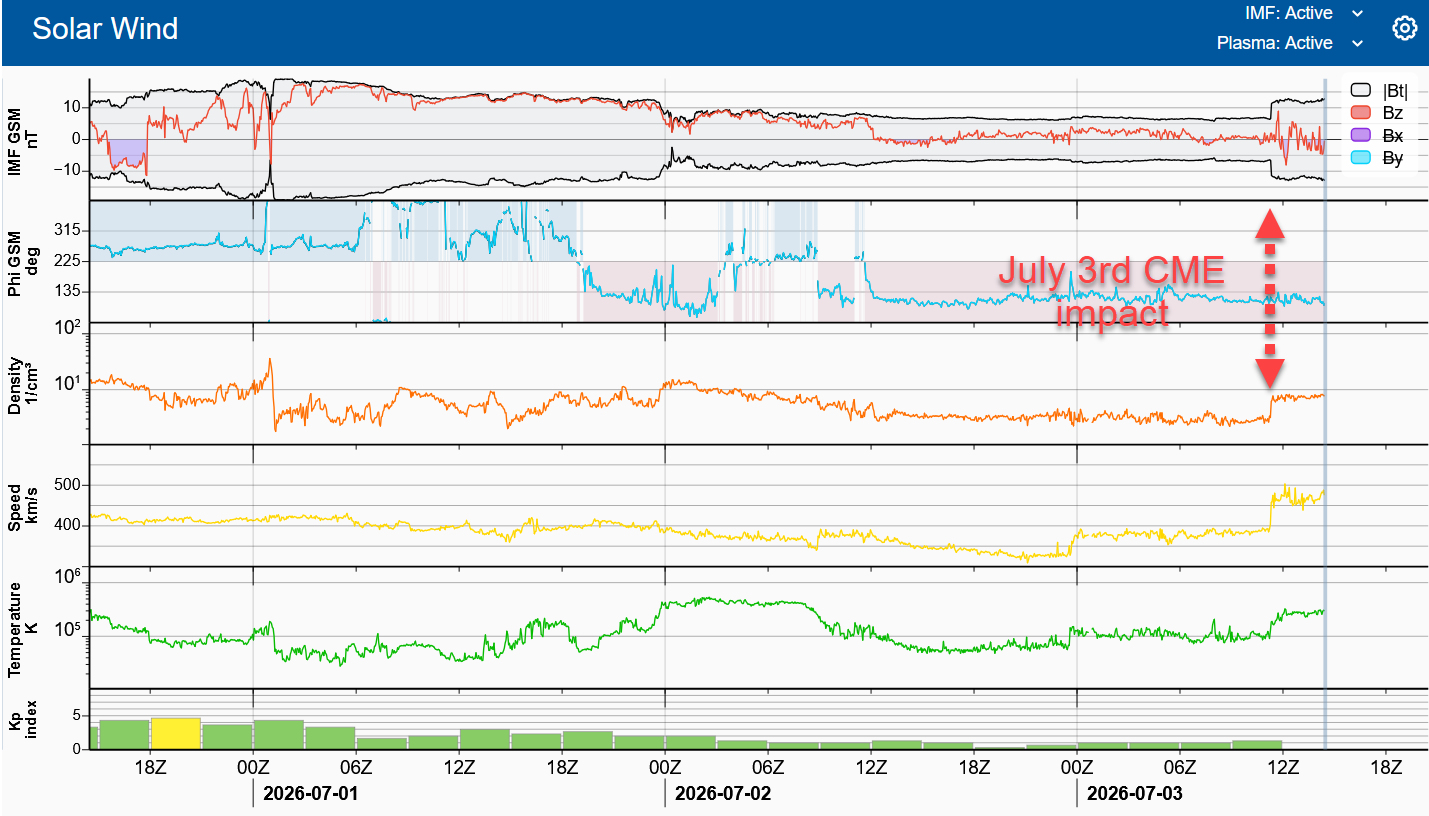
THE CME HAS ARRIVED: As predicted, a CME hit Earth's magnetic field on July 3rd (1200 UTC). The impact was not strong, and it did not produce an immediate geomagnetic storm. Nevertheless, NOAA analysts continue to predict G2-class geomagnetic storms in the hours ahead when Earth passes through the CME's magnetized wake. Plus, another CME is expected to graze Earth late on July 4th. Stay tuned. CME impact alerts: SMS Text.

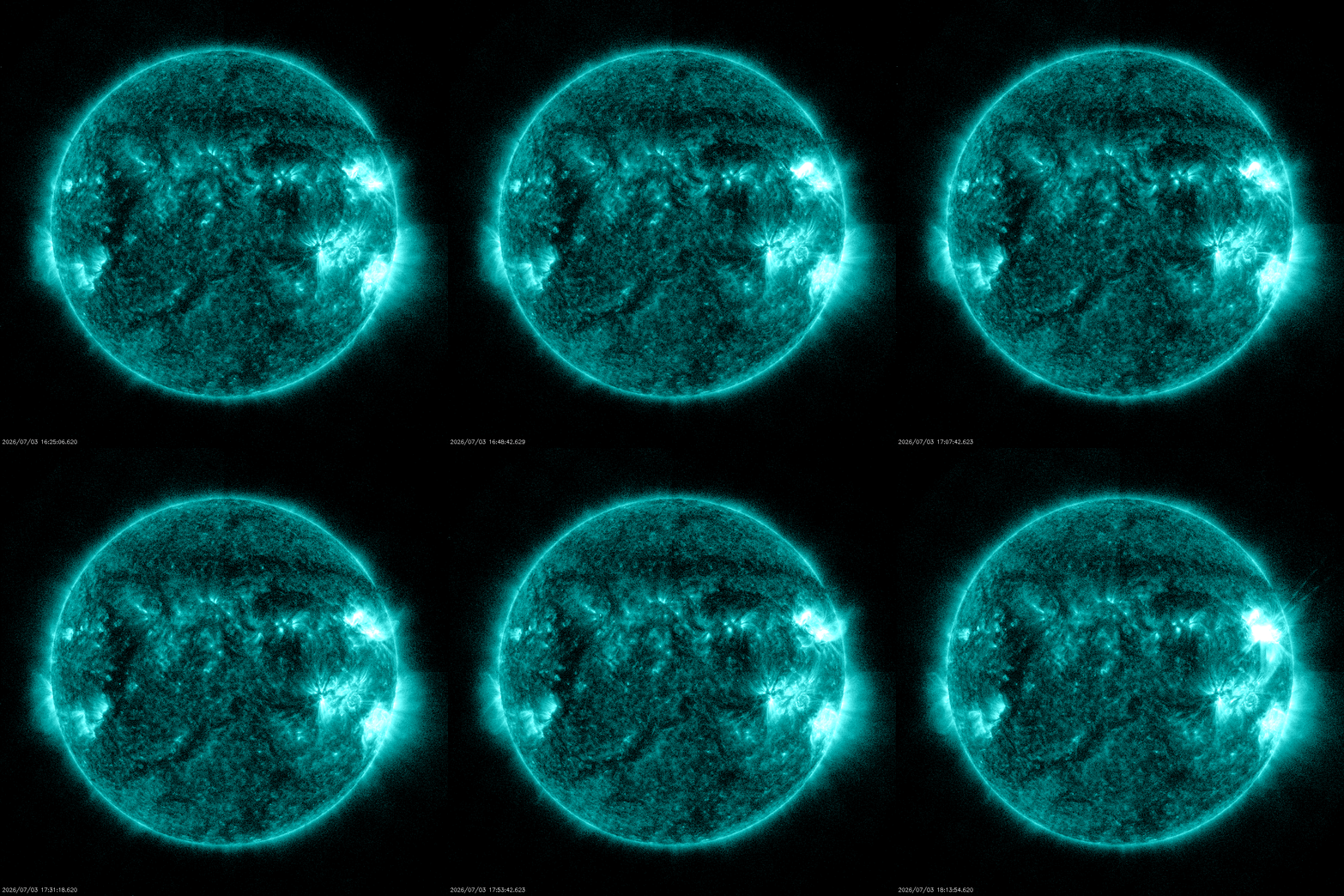
ANOTHER SIGNIFICANT SOLAR FLARE (UPDATED): Active sunspot 4479 erupted again today, July 3rd (1811 UTC), producing an M6.8-class solar flare. NASA's Solar Dynamics Observatory recorded the extreme ultraviolet flash:
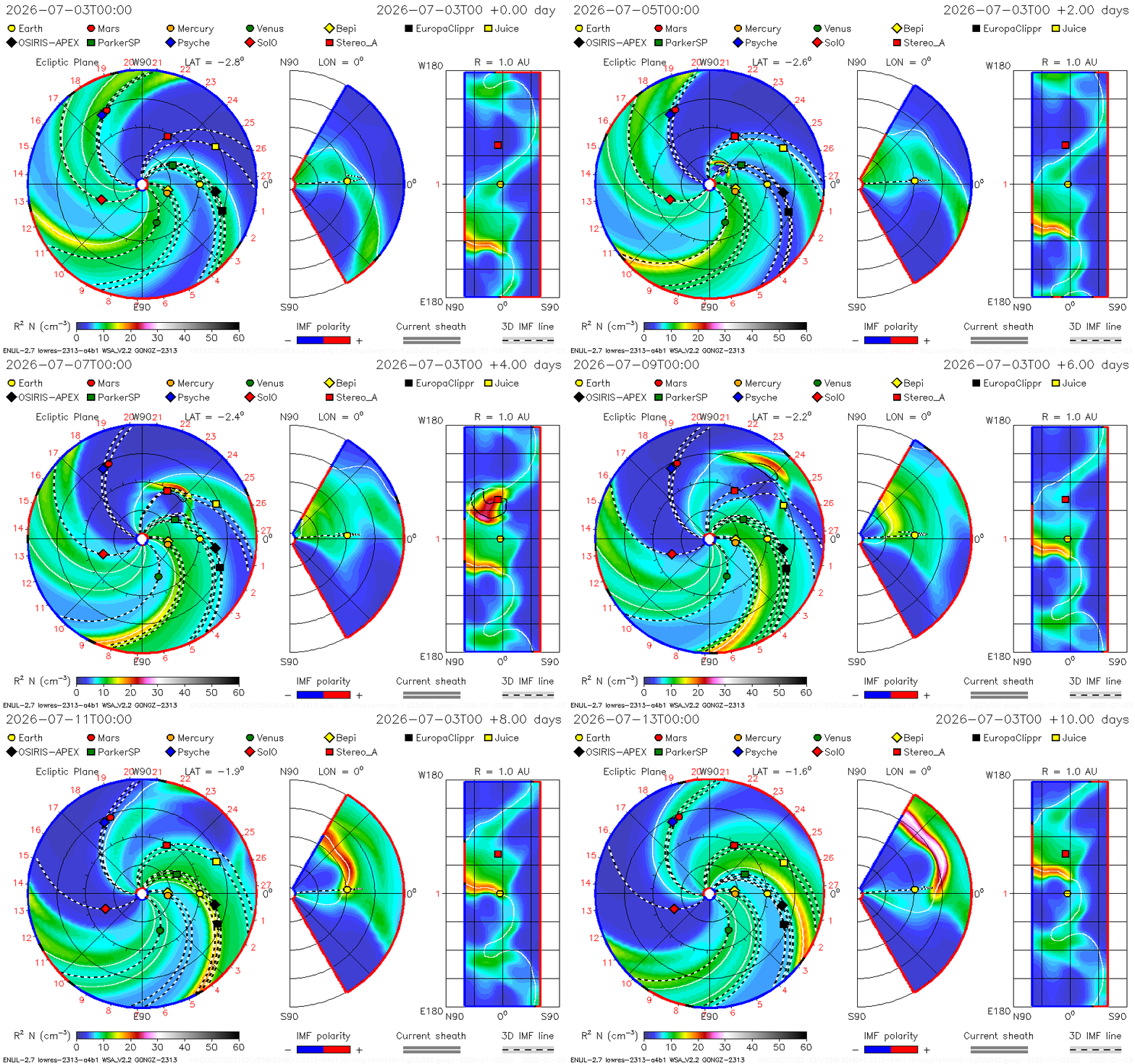
There is a good chance that this eruption produced a fast CME with an Earth-directed component. Type II radio emissions suggest that a CME emerged from the blast site moving ~1,800 km/s.
Update: New coronagraph images show that the CME does indeed have an Earth-directed component, but it is minor The bulk of the CME will miss upstream of our planet. A minor glancing blow is possible on July 7th, accordng to a NASA model. Solar flare alerts: SMS Text.
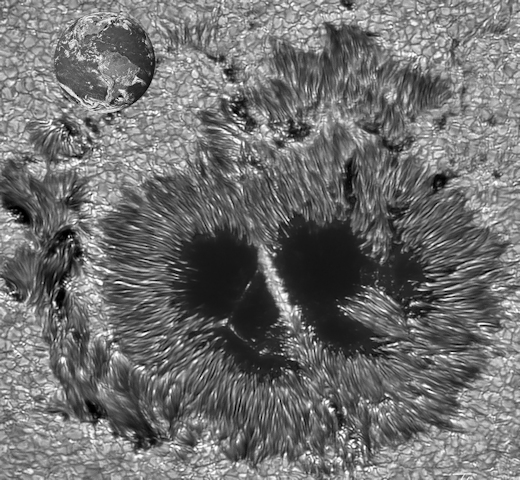
GIANT SUNSPOT TOO BIG FOR CAMERAS: Sunspot 4478 is so big, astrophotographer Thierry Legault could fit only half of it in his camera's field of view. Even that much is big enough to swallow Earth (insert for scale):
Here's the whole thing. "It has been a long time since we had such large sunspots...they hardly fit in my sensor on the Soleye 300!" says Legault.
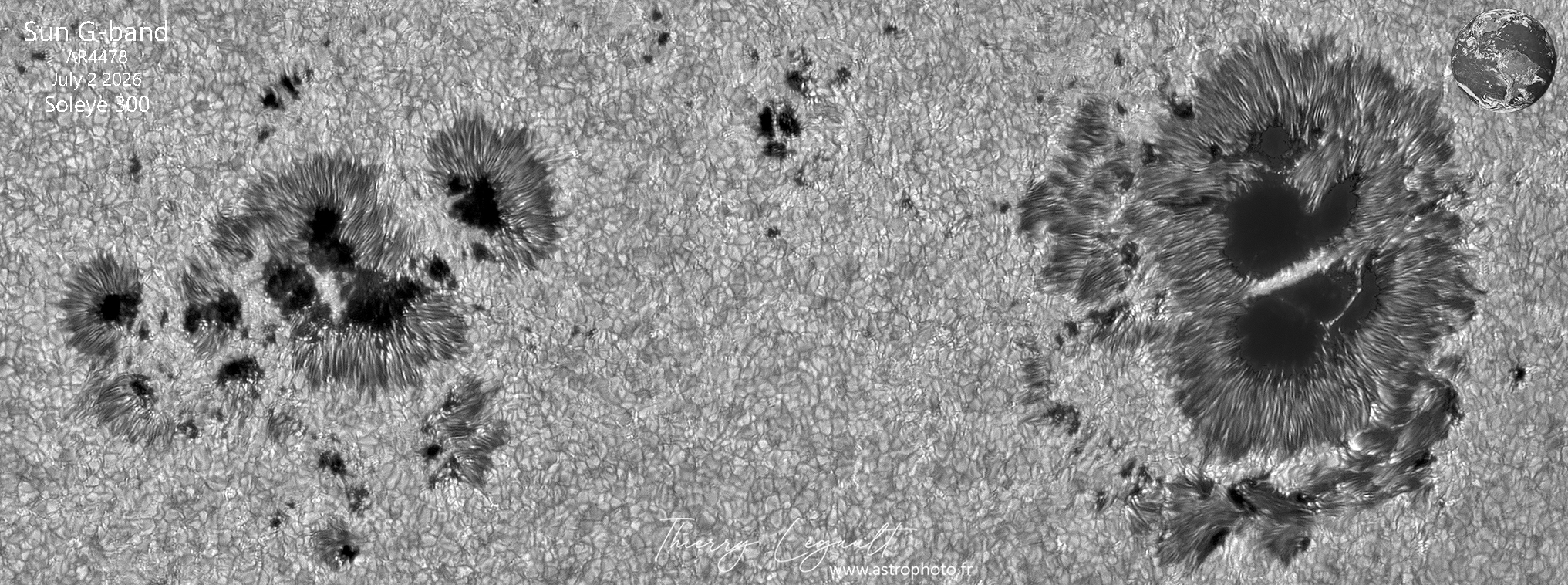
A striking feature of Legault's photo is the luminous gash bisecting the middle of the sunspot. This is called a "light bridge," and it is more than 12,000 km long x 1.000 km wide.
The nature of light bridges is not fully understood. They often herald the break-up of a sunspot, with jets of plasma shooting up from the chasm as the sunspot decays. Some research suggests that magnetic fields at the base of a light bridge are busy cross-crossing and reconnecting--the same explosive process that sparks solar flares. Does this mean sunspot AR4478 will explode--or quietly fall apart? Readers with solar telescopes are encouraged to monitor developments. Solar flare alerts: SMS Text.
more images: from Raffaello Lena of Rome, Italy; from Francois Rouviere of Cannes, France; from Peter Rosén of Stockholm, Sweden; from Maximilian-Vlad Teodorescu of Magurele, Romania; from Tulio Roberto Xavier de Aguiar of Belo Horizonte, Brasil
Realtime Space Weather Photo Gallery
Free: Space Weather Newsletter
NEW! BACKYARD ASTRONOMY ALERTS: We're proud to announce a new service from Spaceweather.com: Backyard Astronomy Alerts. We love this product. Subscribers receive real-time alerts about space station flybys, aurora outbursts, planetary conjunctions, meteor showers and more -- all easy to see with the naked eye.
SMS text messages tell you to go outside right now while the event is happening, and companion emails include sky maps and detailed observing tips. Give it a try! Introductory offer: 1 year for 50% off
Far Out Gifts: Earth to Sky Store
All sales support hands-on STEM education
Realtime Aurora Photo Gallery
Free: Spaceweather.com Newsletter
Realtime Space Weather Photo Gallery
Free: Space Weather Newsletter