EARTH AT APHELION: Today, July 6th, Earth is at the most distant point in its yearly orbit around the sun--a point called "aphelion." We are about 3% farther from the sun than we are in January. This has almost no effect on summer heat, however, because seasons are dominated by the tilt of Earth's axis, not slight differences in orbital distance. Sorry, France.
A POTENTIALLY DANGEROUS SUNSPOT: A big new sunspot (AR4482) has just emerged over the sun's southeastern limb, and it is potentially dangerous. On July 4th, it produced an X1.3-class solar flare while it was still partially hidden. Today, Maximilian-Vlad Teodorescu was able for the first time to photograph the entire active region:
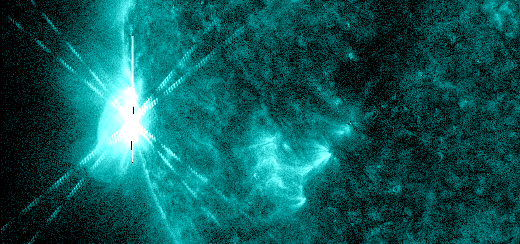
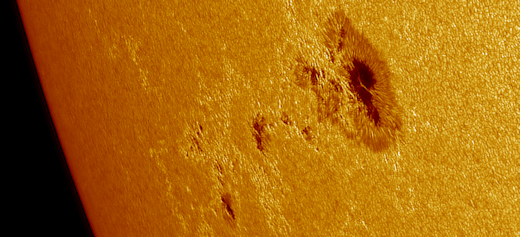
"AR4482 is now the main attraction on the sun, with lots of activity," says Teodorescu.
This sunspot is turning toward Earth, and if it produces any more solar flares, we will be in the strike zone. NOAA analysts estimate a 75% chance of M-class flares and a 20% chance of X-flares on July 6th. Solar flare Alerts: SMS Text
more images: from Michael Borman of Evansville, Indiana
MOTHER NATURE'S FIREWORKS: When you hear loud thunder, the National Weather Service has some pointed advice: Avoid tall objects. This picture of New York City on July 3rd shows why:
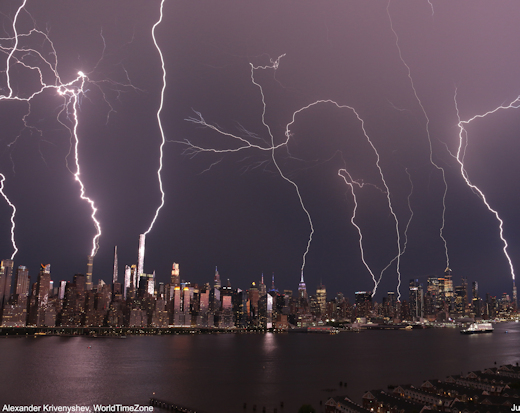
"After another day of record-breaking heat, lightning danced across the city's skyline," says photographer Alex Krivenyshev of Manhattan. Bolts were touching the tips of almost every tall building.
Why does lightning do this? Simple. Lightning is just a giant spark between a cloud and the ground. Like any spark, it takes the shortest path it can find. A skyscraper is, essentially, the ground reaching up closer to the cloud. An antenna tower, a steeple, a lone tree in a field--each one shaves distance off the trip, so the bolt prefers it.
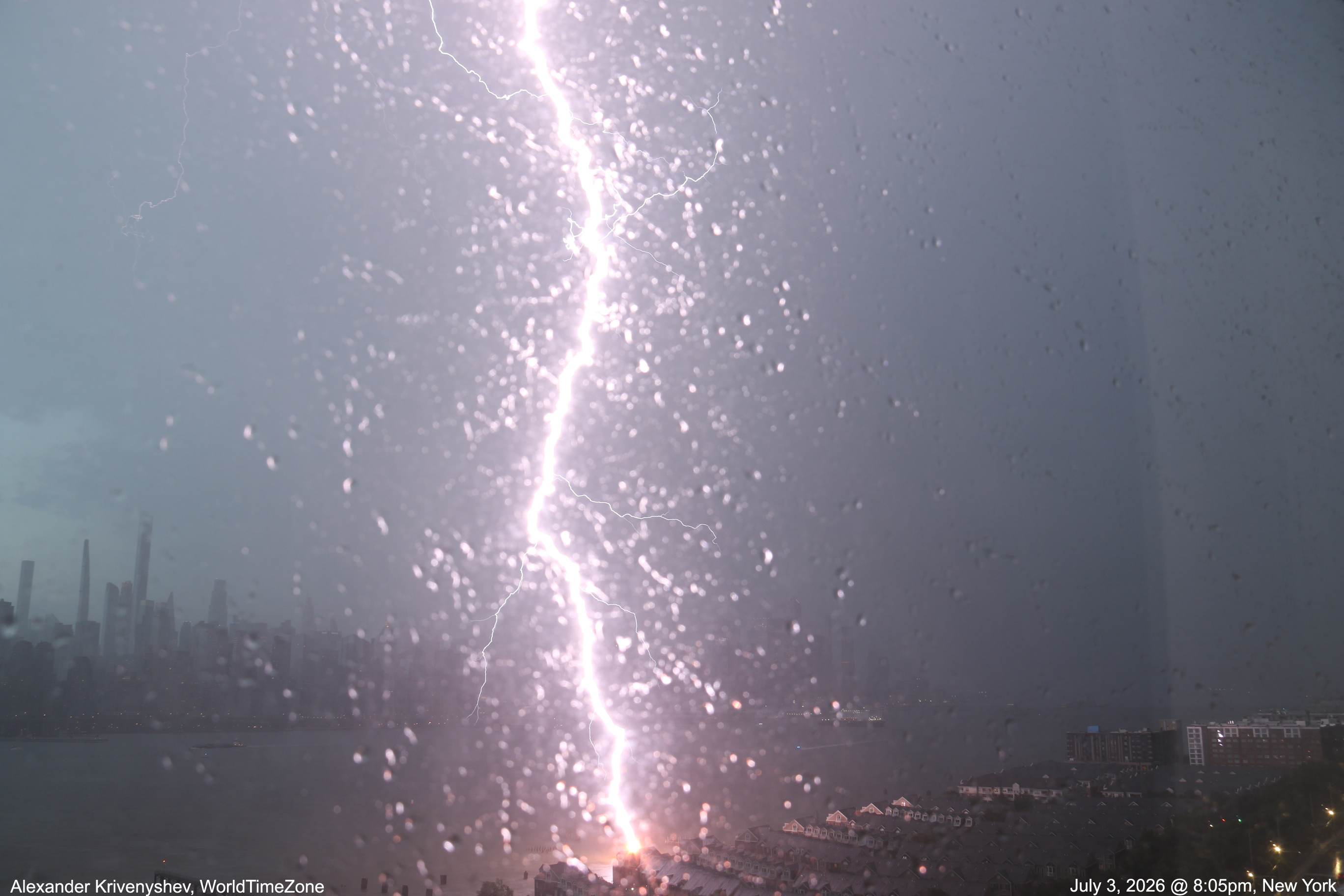
Caveat Skyscraper: Avoiding skyscrapers is no guarantee of safety. Krivenyshev took this picture during the same storm--a little too close for comfort even at ground level.
Realtime Space Weather Photo Gallery
Free: Space Weather Newsletter
NEW! BACKYARD ASTRONOMY ALERTS: We're proud to announce a new service from Spaceweather.com: Backyard Astronomy Alerts. We love this product. Subscribers receive real-time alerts about space station flybys, significant aurora outbursts, planetary conjunctions, meteor showers and more -- all easy to see with the naked eye.

SMS text messages tell you to go outside right now while the event is happening, and companion emails include sky maps and detailed observing tips. Give it a try! Introductory offer: 1 year for 50% off
Far Out Gifts: Earth to Sky Store
All sales support hands-on STEM education
Realtime Aurora Photo Gallery
Free: Spaceweather.com Newsletter
Realtime Space Weather Photo Gallery
Free: Space Weather Newsletter