STARSHIP 13 LAUNCH--DELAYED: SpaceX's launch of Starship13 has just been postponed from today to Thursday, July 23rd (6:45pm EDT). Blasting off from the Texas Starbase, Starship will deploy 20 production Starlink V3 satellites for the first time. These are super-Starlink satellites 10x more capable than previous models, so massive that they need Starship to launch them. Ironically, the satellites will disintegrate ~40 minutes after the launch of this suborbital flight. It's just a test. On Thursday, watch the launch video here.
FAST-EVOLVING SUNSPOT RING: Yesterday, this sunspot was barely detectable. "Today, it is the biggest sunspot group on the Earthside of the sun," reports Maximilian-Vlad Teodorescu, who photographed the growing ring from the Institute of Space Science, Romania:
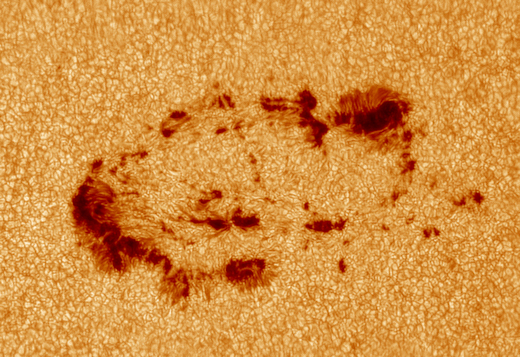
This sunspot ring is 100,000 km wide, spacious enough to swallow 7 planet Earths
"What an evolution," he says. "This might be the trigger for some nice Earth-directed flares."
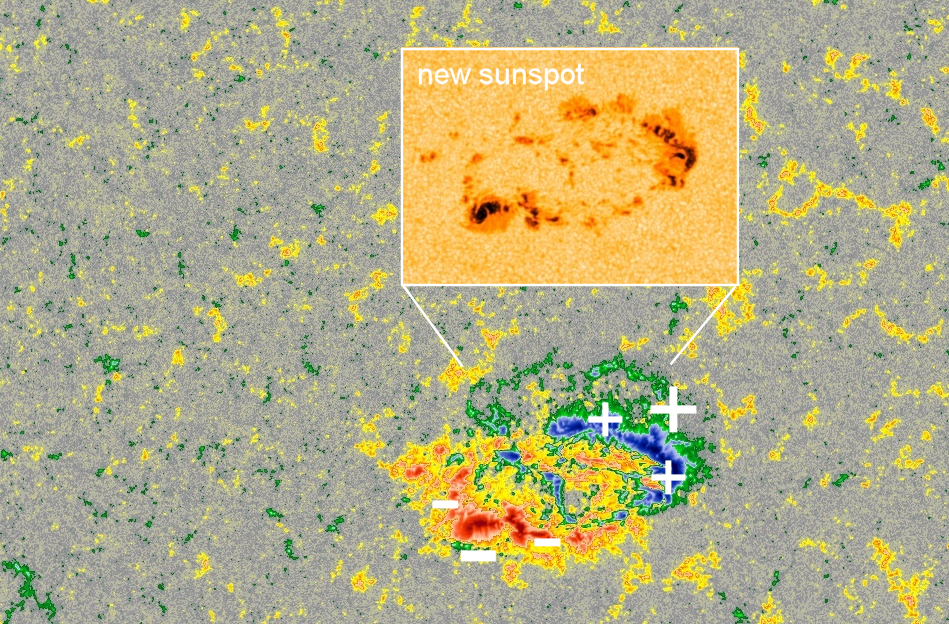
Indeed, the active region emitted an M2.5-flare this morning, breaking a week of very low solar activity. A closer look reveals why. The sunspot's magnetization is unusual. Its bipolar (+/-) axis is twisted ~45 degrees away from that of a normal sunspot. This twist is a sign of tension that could be released by additional flares. Solar flare alerts: SMS Text
more images: from Pepe Manteca of Begues, World-Cup-Champion Spain; from Siegfried Trattnig of Vienna, Austria
Realtime Space Weather Photo Gallery
Free: Space Weather Newsletter
A FUTURE METEOR STORM: A meteor storm is coming, but don't get excited. The peak is still 300 years away. Frankie Lucena of Cabo Rojo, Puerto Rico photographed one of the first arrivals on July 6th:
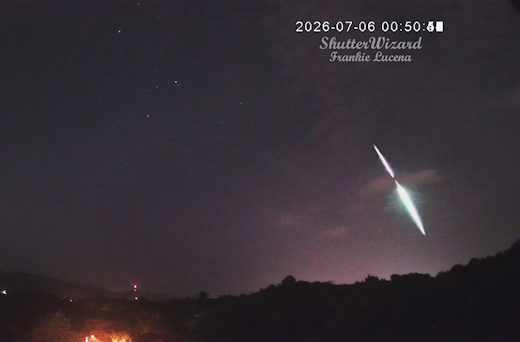
"This is an alpha Capricornid meteor," says Lucena. "It appeared all of a sudden above the hills near my home."
Alpha Capricornid meteors are debris from Comet 169P/NEAT. They appear every year in July with peak rates of 5 to 9 meteors per hour. Many “alpha Caps” are slow, bright fireballs like Lucena saw.
Researchers Peter Jenniskens (SETI Institute) and Jeremie Vaubaillon (Paris Observatory) have studied the alpha Cap debris stream. They believe it resulted from a major fragmentation event ~5000 years ago when as much as half of the original comet disintegrated. Since then, the debris has been drifting toward Earth. When it arrives, this late July meteor shower will intensify into a full-fledged storm with thousands of meteors per hour.
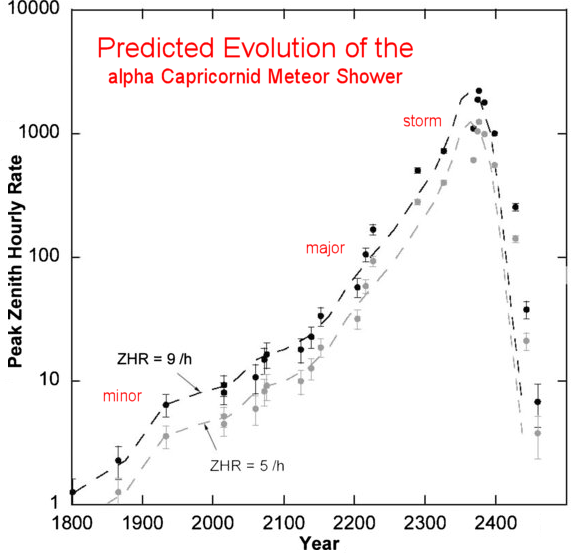
Next step: Cryogenic hibernation. Wake up in July 2326 and enjoy the show.
Realtime Space Weather Photo Gallery
Free: Space Weather Newsletter
BLOWN GLASS BLACK CAT SPACE PENDANT: Are you looking for a far-out gift? Consider the Black Cat Space Pendant. On July 17th, the students of Earth to Sky Calculus launched it to the stratosphere onboard a cosmic ray research balloon:
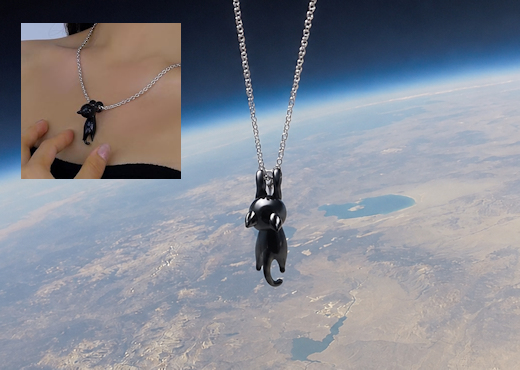
You can have it for $109.95. This feline astronaut is made of human-blown glass, and hangs from an 18-inch sterling silver chain. It is a purrfect birthday, anniversary or belated graduation gift.
The students are selling space pendants to pay the helium bill for their cosmic ray ballooning program. Each one comes with a greeting card showing the jewelry in flight and telling the story of its trip to the stratosphere and back again.
Far Out Gifts: Earth to Sky Store
All sales support hands-on STEM education
Realtime Aurora Photo Gallery
Free: Spaceweather.com Newsletter
Realtime Space Weather Photo Gallery
Free: Space Weather Newsletter