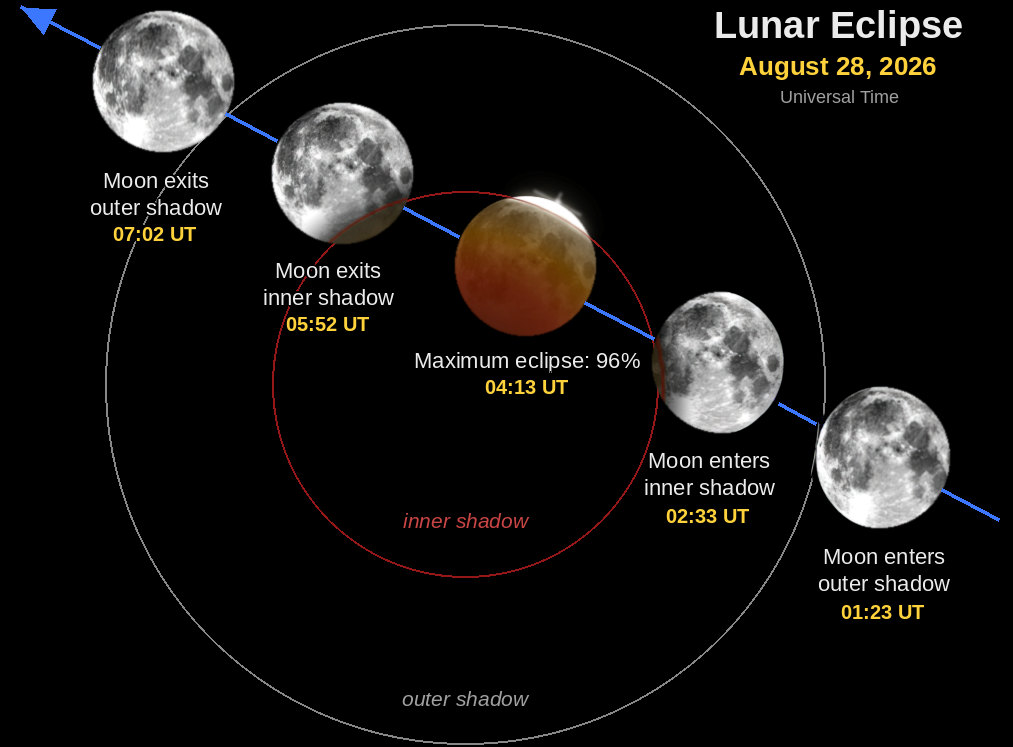
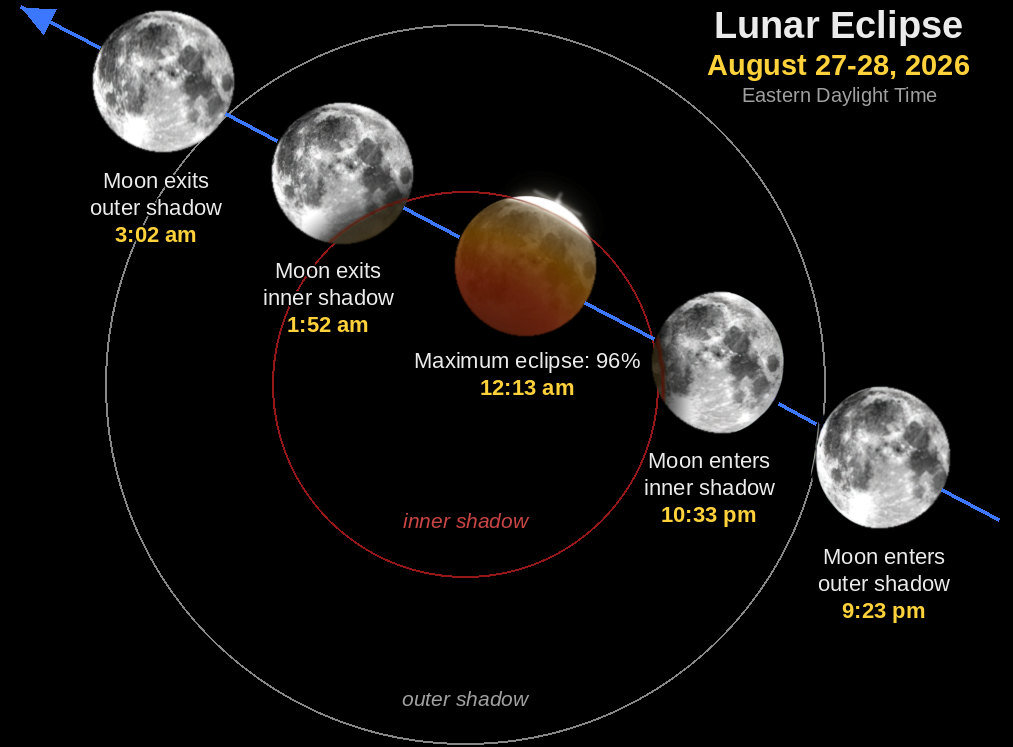
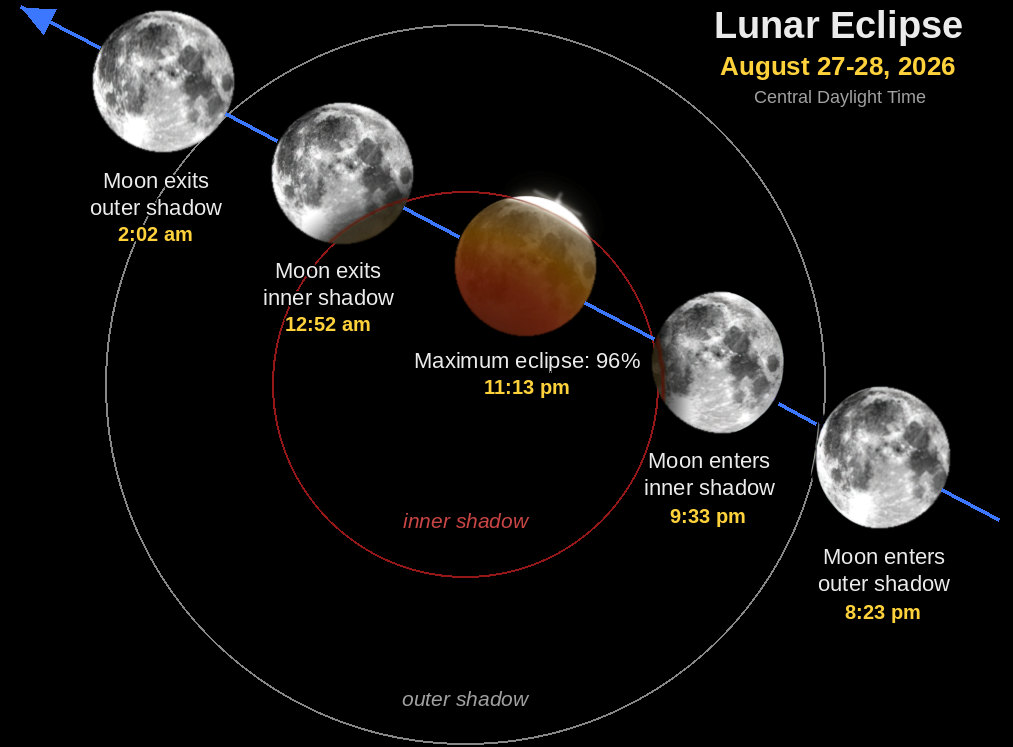
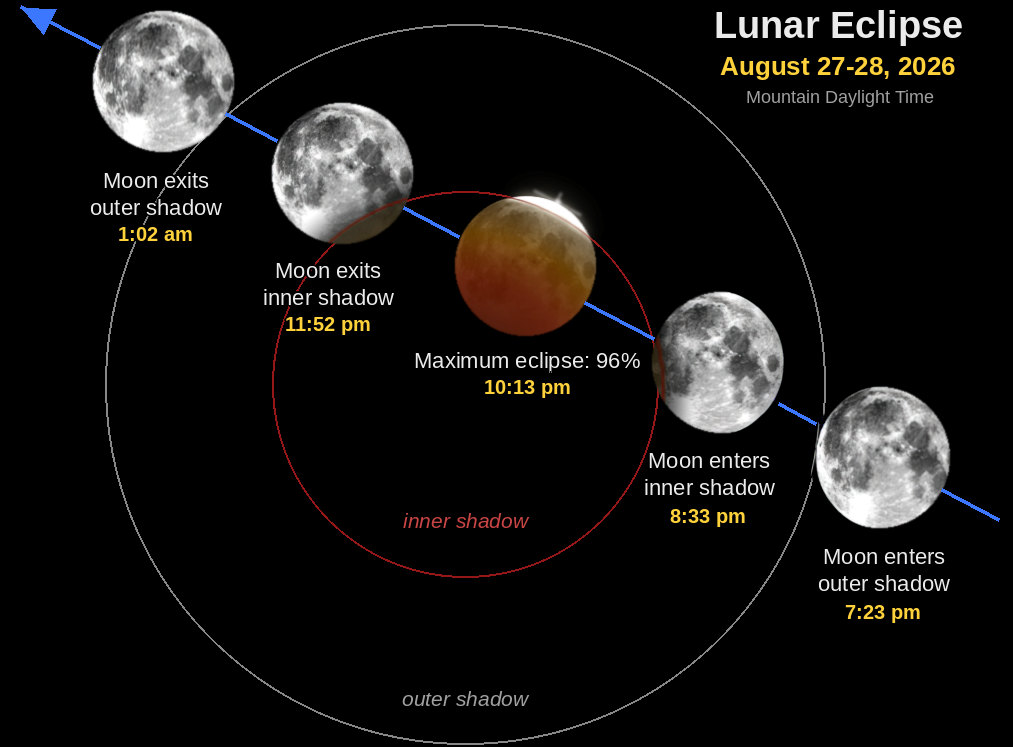
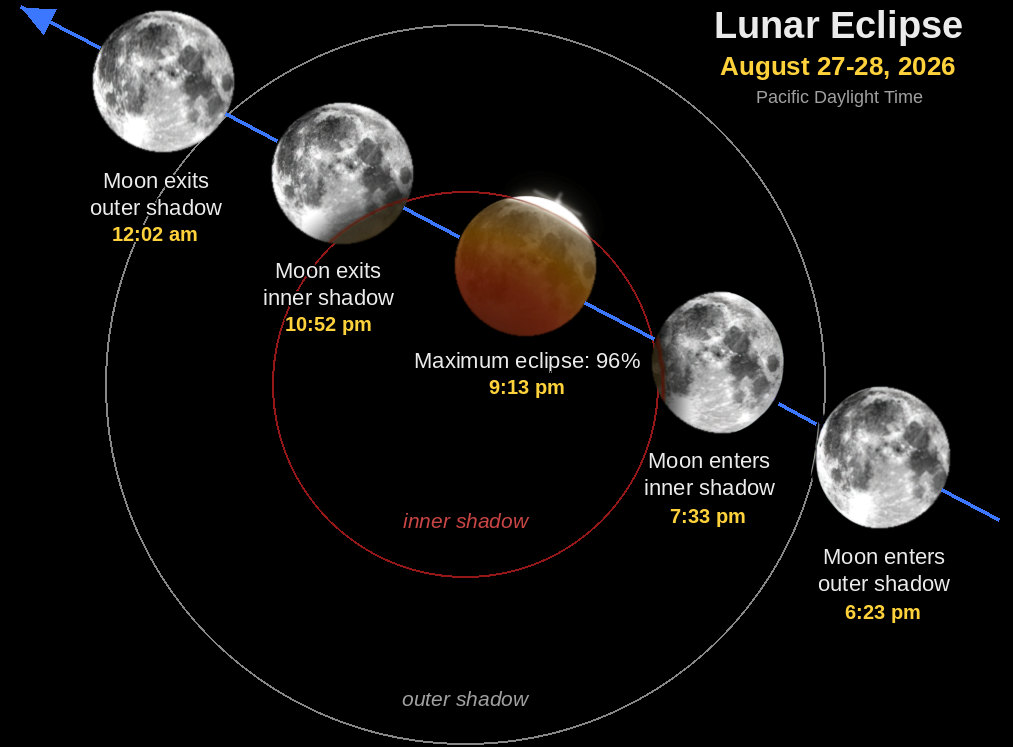
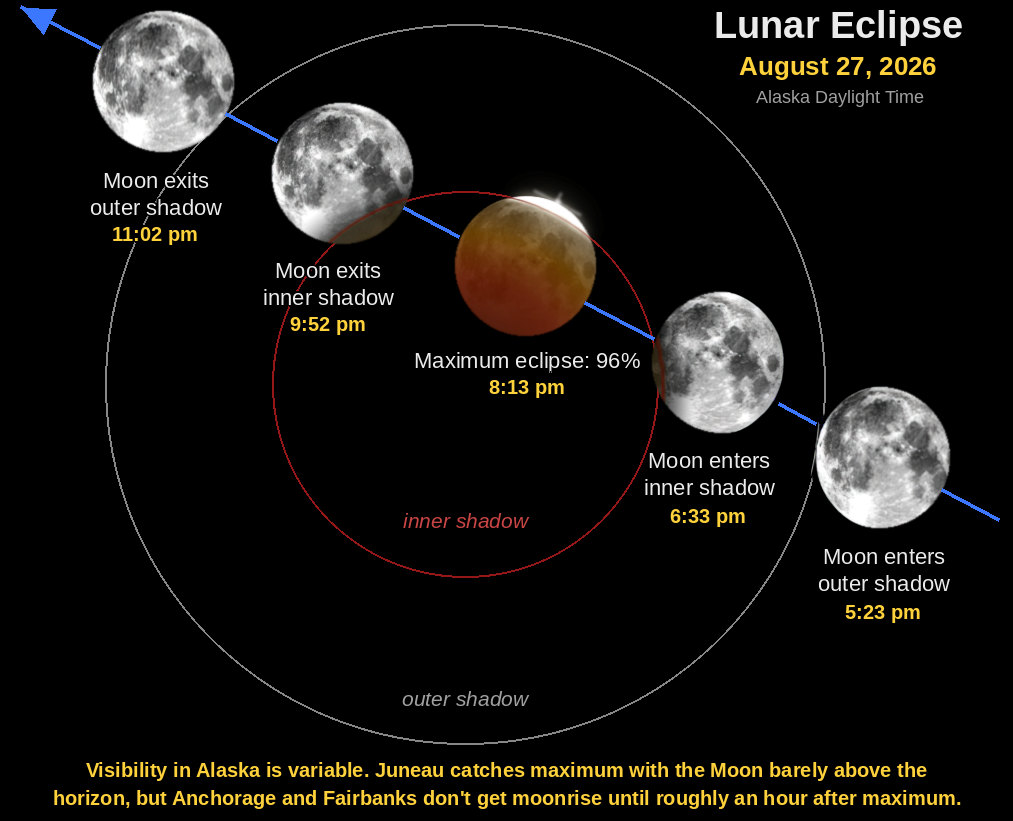
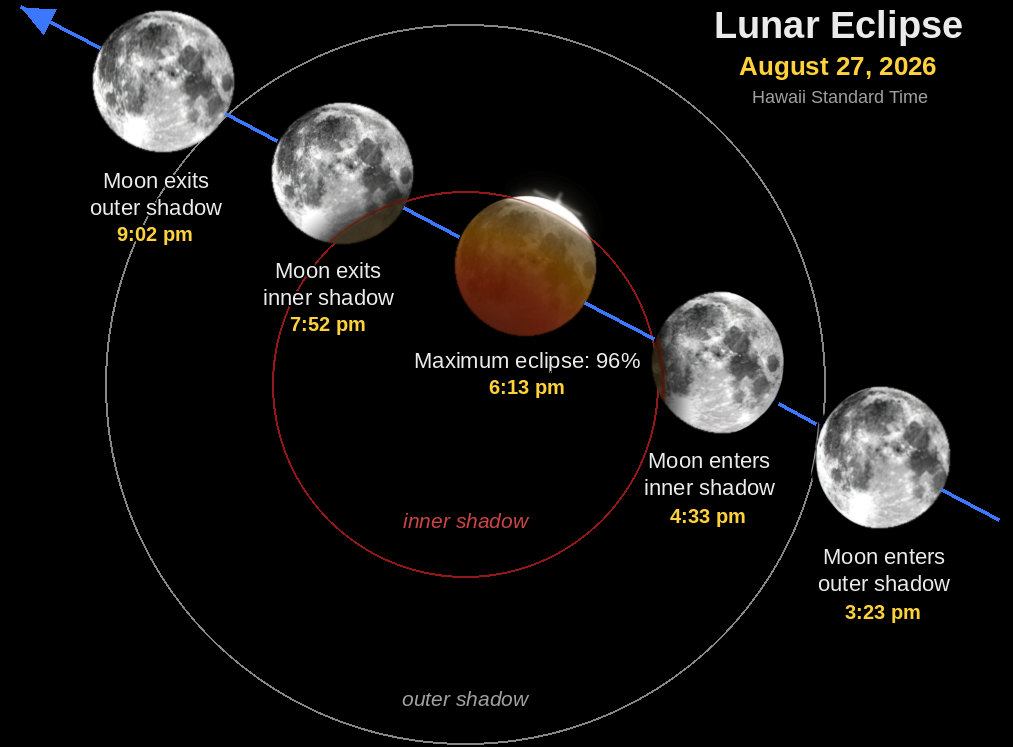
LUNAR ECLIPSE--TONIGHT! Everyone in the contiguous USA can see it. On the night of Aug. 27-28 (tonight!) the Moon will enter Earth's shadow for a 96% eclipse. These time zone graphics will help you figure out when to look: UT, EDT, CDT, MDT, PDT, Alaska, Hawaii. Or sign up for our Backyard Alert Service, and you'll receive a reminder text at the perfect time.
THE 4513 SMOKER: This week, sunspot 4513 produced seven M-class solar flares. David Wilson photographed the one that failed to launch. He calls it the "4513 Smoker."
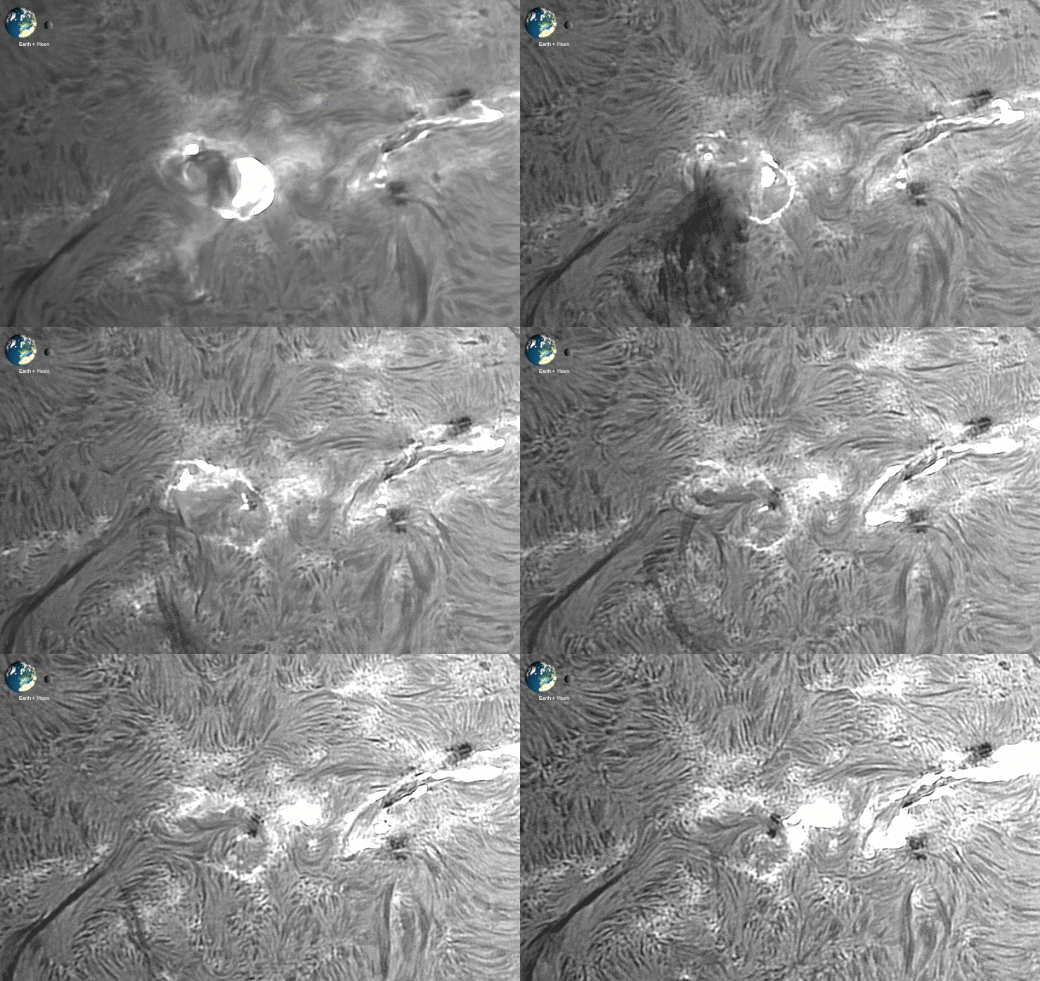
"I got this lucky capture just after I got out of bed," says Wilson, who monitors the sun using a backyard telescope in Inverness Scotland. "I saw a huge expulsion of cooler plasma swirls. They were expelled, swirled around for a bit and were then sucked back to where they started from."
Not every explosion from 4315 failed. At least one CME is heading for Earth. ETA: Aug. 28th. Stay tuned for auroras. CME Impact Alerts: SMS Text.
THE LAST JELLYFISH? Sunrise on Aug. 25th was a little different for sky watchers along the US East Coast. It was filled with jellyfish. "I have never seen one as bright as this. Spectacular, very bright and huge!" reports Ricky Johnson, who sends this photo from Brunswick, Georgia:
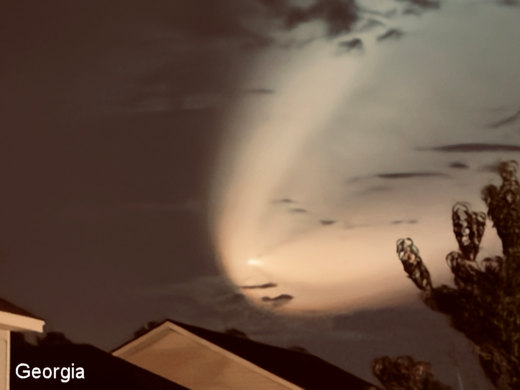
This is a "SpaceX jellyfish." It forms when a rocket climbs out of Earth's shadow into high-altitude sunlight. The sun beams through the exhaust, creating a glowing umbrella visible for hundreds of miles.
The jellyfish Johnson saw was created by a Falcon 9 lifting off from Cape Canaveral at 5:33 in the morning. It was seen and photographed all the way from Florida to New York City.
In recent years, SpaceX jellyfish have become a routine sight along both coasts of the USA. Twilight launches from Vandenberg Space Force Base in California and Cape Canaveral in Florida create jellyfish several times a month with sightings in dozens of states.
However, this may be the last East Coast jellyfish for a while. Hours after the Aug. 25th launch, SpaceX VP Kiko Dontchev announced that Falcon 9 rockets would no longer launch Starlink satellites from Florida. "From here on, Starlink missions out of Florida will fly on Starship," he said. No timeline was given for the transition.
"If this was the last jellyfish for the near future, it was the most dramatic one I have ever seen," says Jeremy Gilchrist, who sends this picture from Rayleigh, North Carolina:
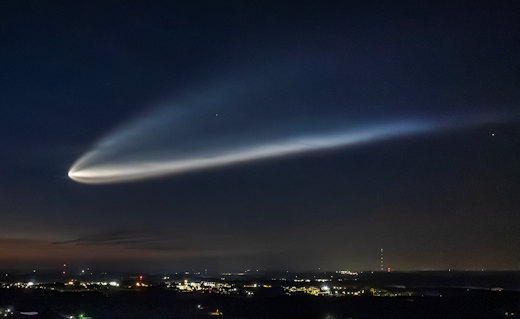
"Pictures did not do it justice!" he says.
Meanwhile, Vandenberg launches will continue unabated, producing Western jellyfish on a regular basis. When the Starship megarocket takes over in Florida, Eastern jellyfish will be even more spectacular than before. So, no, it was not the last.
Would you like to see a SpaceX jellyfish? Sign up for Backyard Astronomy Alerts. Our proprietary jellyfish-prediction software has been field tested and calibrated, and it will give you the best chance to see one from your own backyard.
Realtime Space Weather Photo Gallery
Free: Space Weather Newsletter
SOLAR SYSTEM CRYSTAL NIGHT LIGHT: Think of it as a combination optics experiment and fundraiser. The students of Earth to Sky Calculus launched this crystal ball to the stratosphere, and they're selling it to help pay their helium bill. It's the Solar System Crystal Night Light:
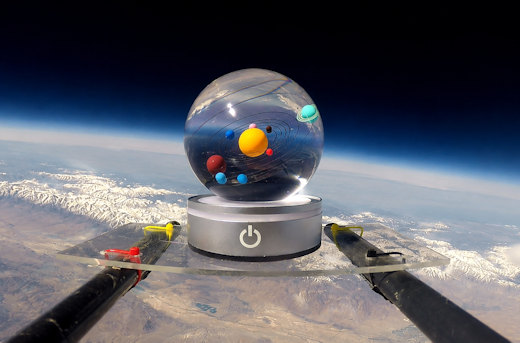
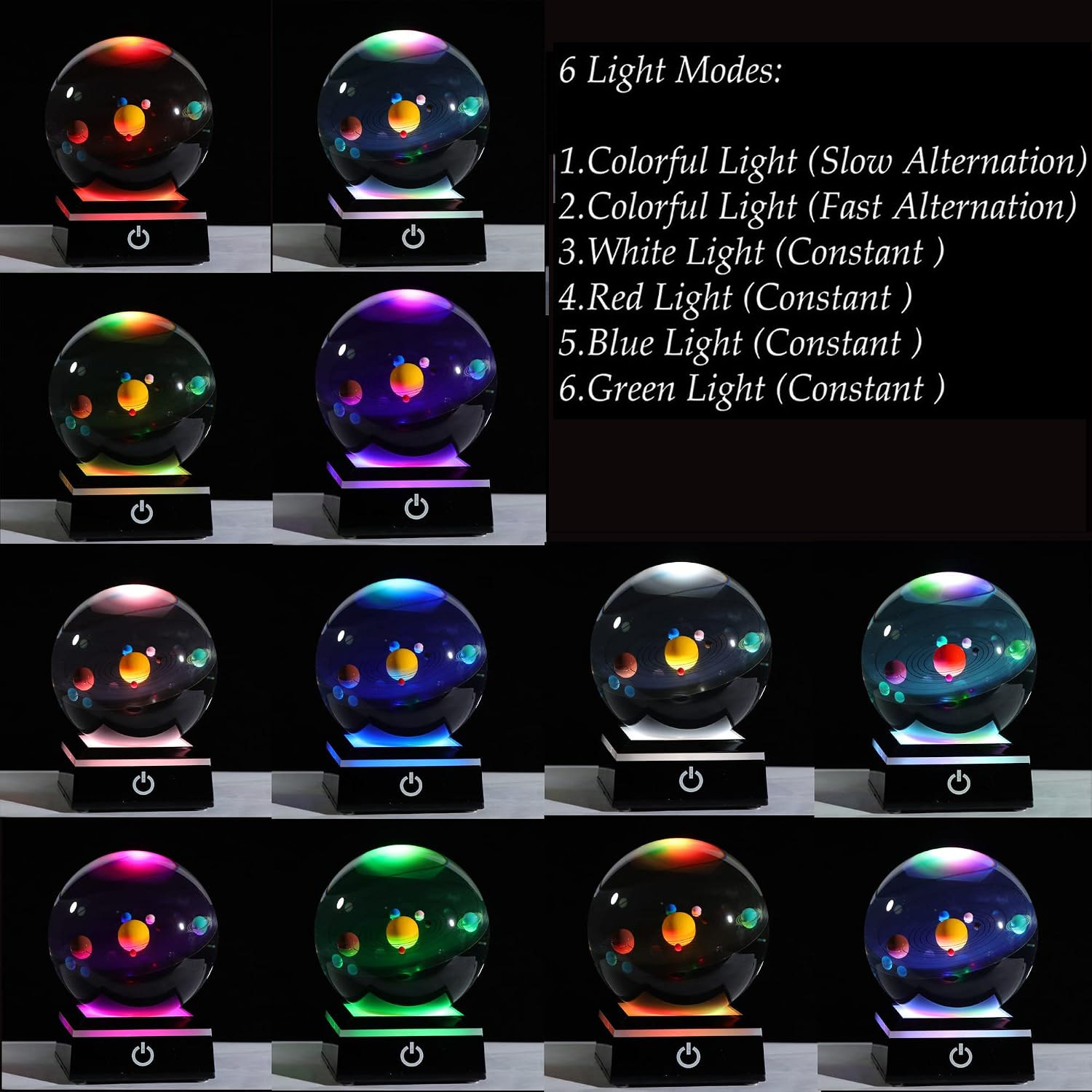
You can have it for $134.95. The premium K9 crystal ball contains the sun and eight planets--plus the most important moons. Best of all, it comes with an LED light stand that turns the orb red, green, yellow or blue in six different combinations. WIth your purchase, you will receive a full-color greeting card showing the crystal ball in flight--a truly far-out night light!
Far Out Gifts: Earth to Sky Store
All sales support hands-on STEM education
Realtime Aurora Photo Gallery
Free: Spaceweather.com Newsletter