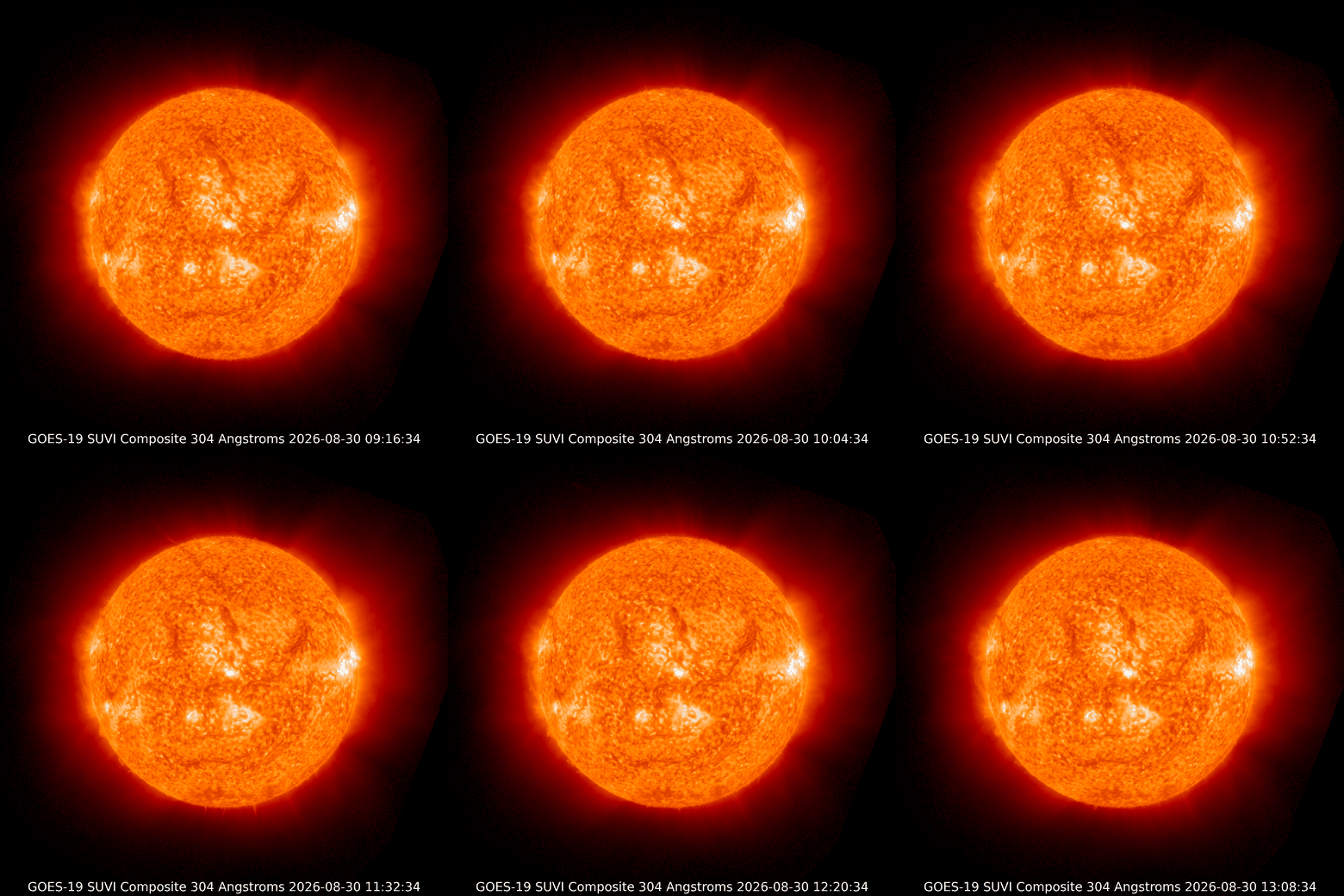
FILAMENT ERUPTION MISSES EARTH: A magnetic filament erupted from the sun on Aug. 30th (movie). The resulting CME will miss Earth. No geomagnetic storms are expected for the next 3 days. Solar flare alerts: SMS Text
THE SUN IS ABOUT TO LOSE ITS MEMORY: That's the surprising conclusion of a new study by researchers at the University of Oulu in Finland. The team examined 180 years of the aa index (a record of geomagnetic activity stretching back to 1844) and found that after odd-numbered solar cycles, the sun forgets what happened in the past.
We're approaching such a moment now, as Solar Cycle 25 descends from its peak.
Their research begins with the little-known "Gnevyshev-Ohl rule." Discovered in 1948, this rule says that solar cycles come in pairs, with the odd-numbered half stronger than the even. Take a look at this historical plot of sunspot numbers:
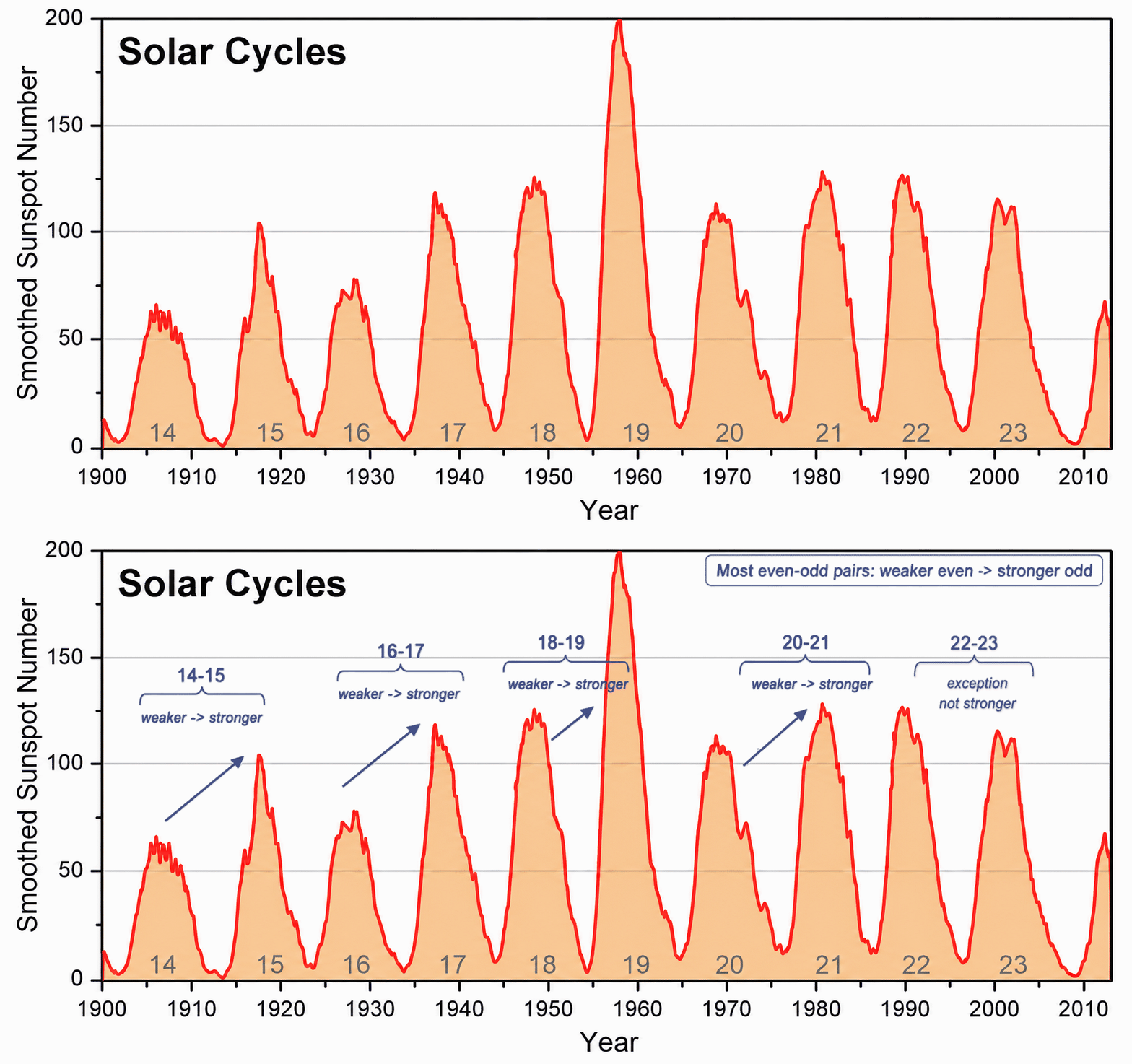
Once you notice the Gnevyshev-Ohl rule, you can't unsee it. With only one exception in the past 180 years (Solar Cycles 22-23), odd cycles are always stronger than evens. The current pair, Cycles 24-25, definitely follow the rule.
The study found that when an odd cycle ends, the memory is erased. Nothing in the aa record predicts how strong the next cycle will be. The sun simply starts over.
Solar Cycle 26 begins in ~2030. If this research is correct, it may begin as a blank slate. Forecasters won't get a meaningful read on the new cycle until it is already underway, when new sunspots and geomagnetic storms start writing a detailed forecast.
Note: The Centennial Gleissberg Cycle may have something to say. This is a 90-100-year swell that modulates the height of solar cycles. We reported on the phenomenon in 2025. The Gleissberg tide is currently rising, suggesting that the next pair of solar cycles will be stronger than the last.
What will Solar Cycle 26 bring? No one knows--maybe not even the sun.
Realtime Space Weather Photo Gallery
Free: Space Weather Newsletter
THE MARTIAN GEMSTONE PENDANT (PERIDOT): Five years ago, NASA's Perseverance rover found tiny green crystals on Mars. They exist on Earth, too, and are known as "peridot." The students of Earth to Sky Calculus just flew a collection to the stratosphere in the Martian Gemstone Pendant:
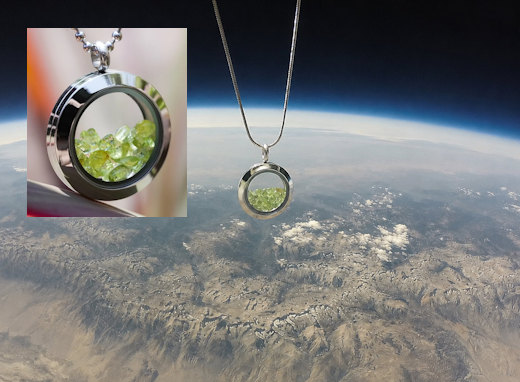
You can have it for $149.95. These pieces of natural peridot were launched onboard a cosmic ray research balloon. They have touched the edge of space--closer to Mars than any other peridot on Earth.
The unique 'window pendant' is milled from solid stainless steel with inset sapphire coated quartz glass lenses. The two halves screw together to form an airtight seal, preserving the gemstones inside.
The students are selling space pendants to pay the helium bill for their cosmic ray ballooning program. Each one comes with a greeting card showing the jewelry in flight and telling the story of its trip to the stratosphere and back again.
Far Out Gifts: Earth to Sky Store
All sales support hands-on STEM education
Realtime Aurora Photo Gallery
Free: Spaceweather.com Newsletter