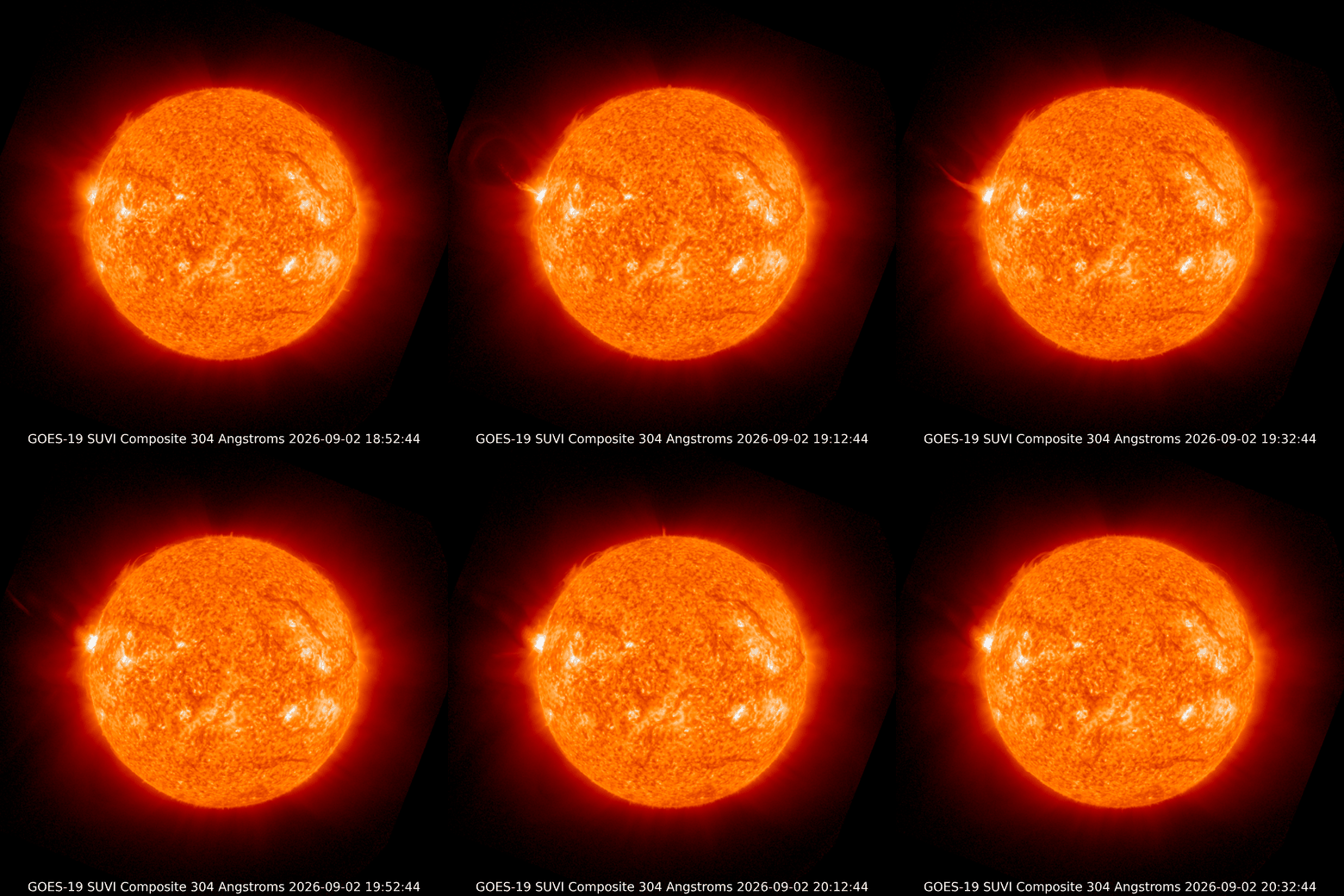
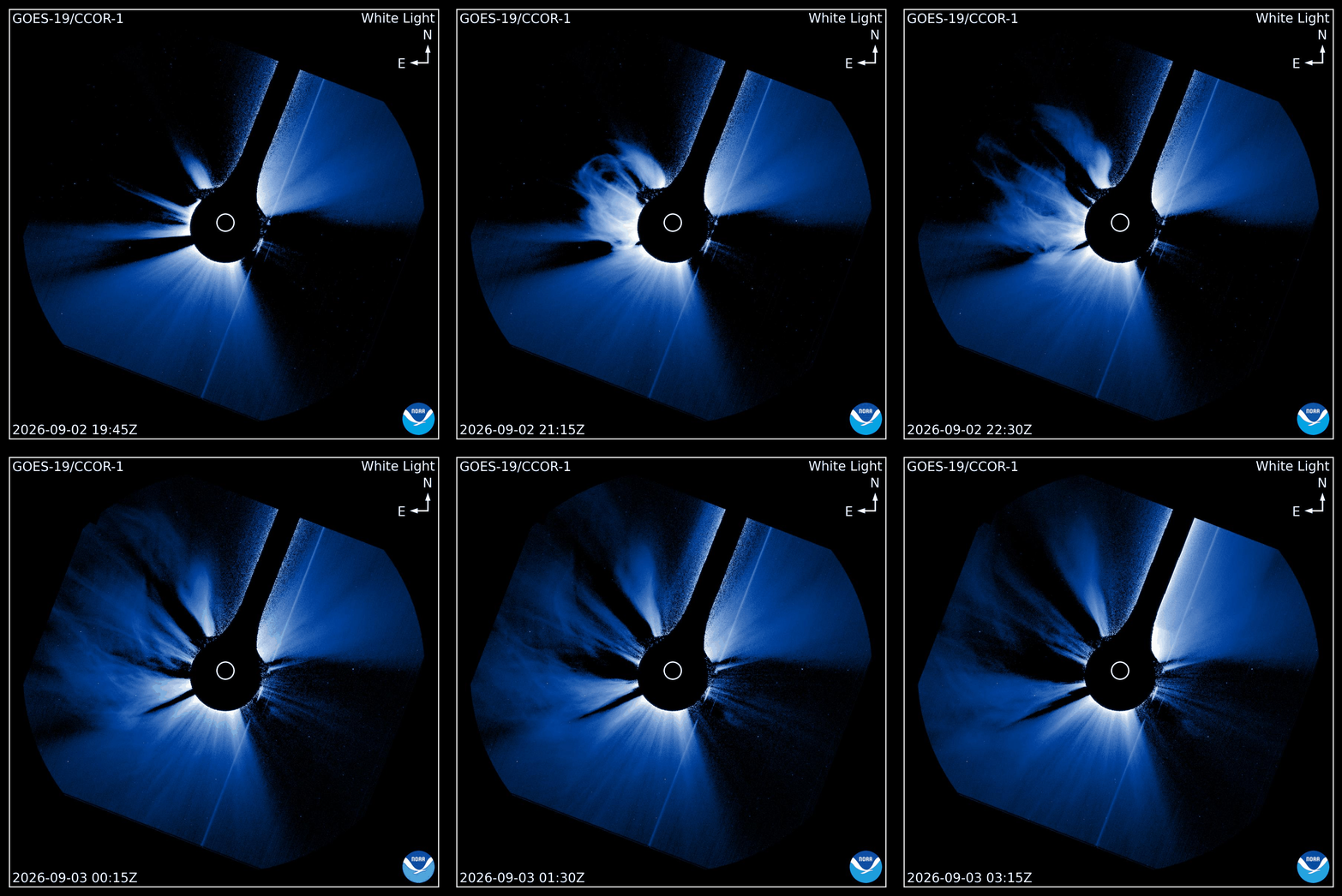
SOMETHING FLARE-Y THIS WAY COMES: Yesterday, a new sunspot exploded as it emerged over the sun's northeastern limb. The M3-class flare (movie) hurled a bright CME into space (movie). This CME will miss Earth, but future CMEs will be better aimed as we enter the sunspot's strike zone over the weekend. Solar flare alerts: SMS Text.
CHINA'S SPACE STATION IS GETTING A MINI-MOON: China's Tiangong space station is currently making a series of evening flybys over the USA. First-time observers are almost always surprised by how bright it is. Only a handful of stars outshine it.
Next year, it might resemble a double star.
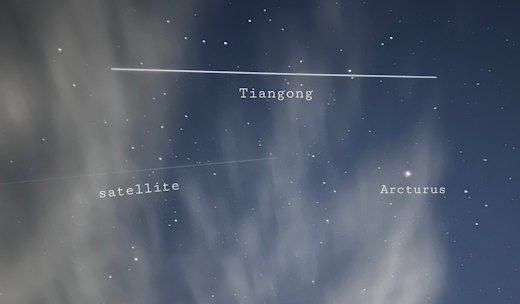
The Tiangong space station flying over Ballico, California. Credit: Richard Sears
The China Manned Space Agency has announced plans to launch a 2-meter space telescope named "Xuntian" in 2027 that will circle Earth alongside the station--a 15-ton 'mini-Moon' that can easily dock with Tiangong whenever it needs repairs or fuel. Hubble, which has been the target of complicated repair missions five times, never had this advantage.
Xuntian means "patrolling the heavens." The telescope will be smaller than Hubble, but its field of view is 300 times wider. Over a 10-year mission, it will map about 40% of the sky at Hubble-class resolution.
China also plans to expand the station with new modules and solar panels, turning the "T" into a "double-T" and doubling its mass to 180 tons. A spacewalk by two taikonauts on Aug. 28th did significant prep work: Repairs to solar panels and new debris shields stabilized the power grid for additional construction. When the ISS is deorbited in 2030-31, Tiangong will be the largest permanent outpost in orbit.
Tiangong is easy to see if you know when to look. Sign up for Backyard Astronomy Alerts to receive realtime text messages when the Chinese space station is flying overhead.
Realtime Space Weather Photo Gallery
Free: Space Weather Newsletter
THE POLAR LIGHTS PENDANT: This pendant has auroras on the front and a secret compartment inside. On Aug. 30th, the students of Earth to Sky Calculus launched it to the stratosphere onboard a cosmic ray research balloon:
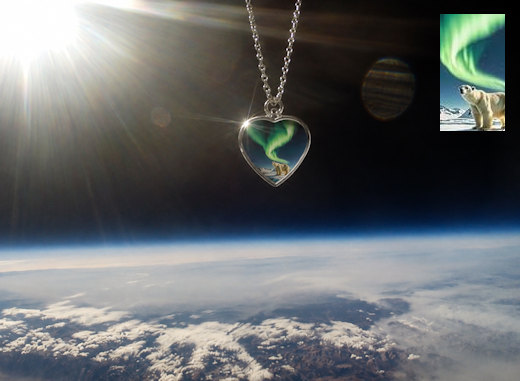
You can have it for $114.95. The heart-shaped stainless steel frame measures 0.9 x 1.6 inches. The inner chamber has space for ashes, dried flowers, essential oils, special messages -- or anything you wish to keep close to your heart.

The students are selling space pendants to pay the helium bill for their cosmic ray ballooning program. Each one comes with a greeting card showing the jewelry in flight and telling the story of its trip to the stratosphere and back again.
Far Out Gifts: Earth to Sky Store
All sales support hands-on STEM education
THE FAMOUS IBERIA 1473: Since the total solar eclipse on Aug. 12th, we have featured multiple images from Iberia 1473, a chartered flight that captured the Moon's shadow from the nose of the airplane and performed some rare astrometry. Meanwhile on the ground in Spain, Nicolas Lefaudeux captured the plane itself:
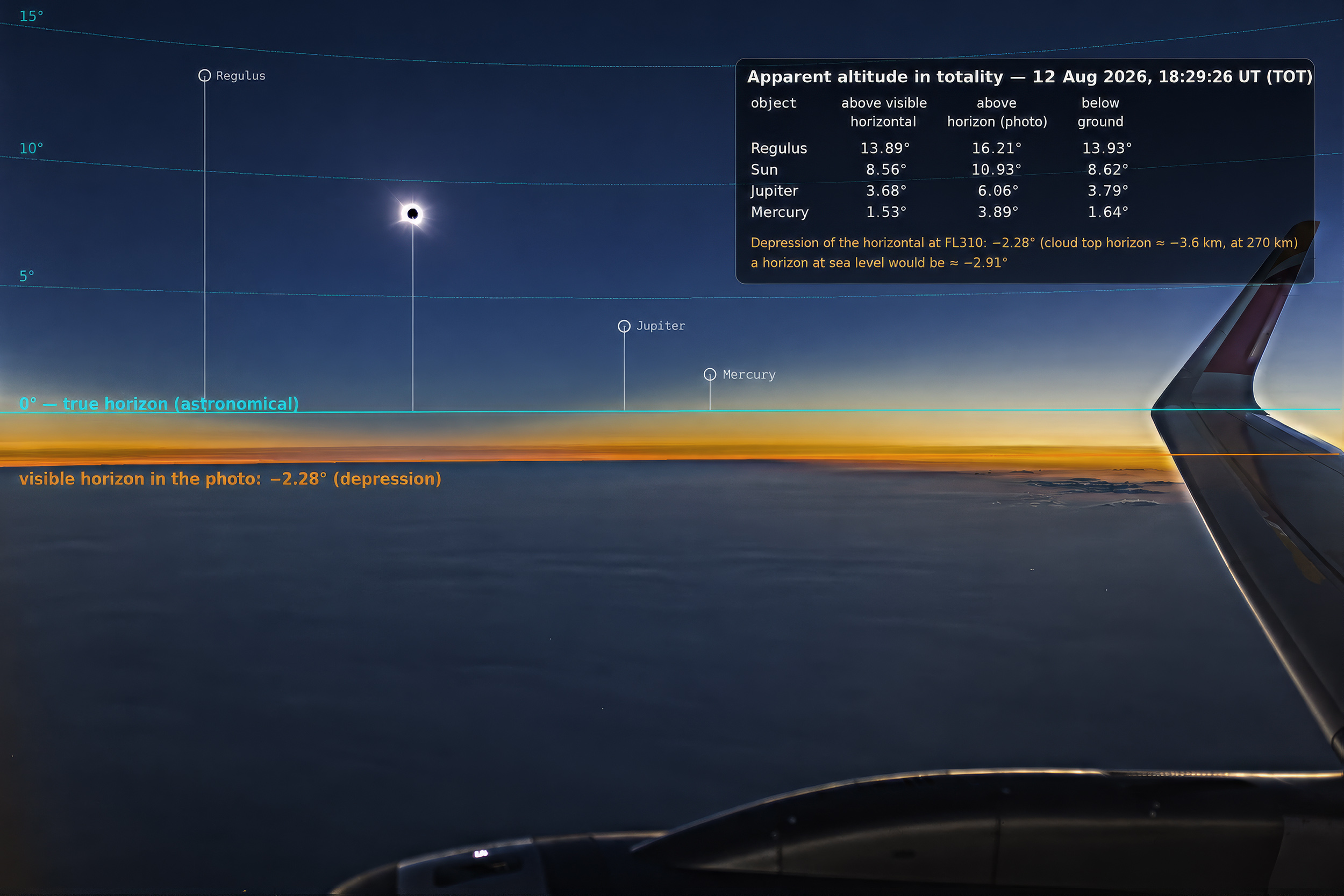
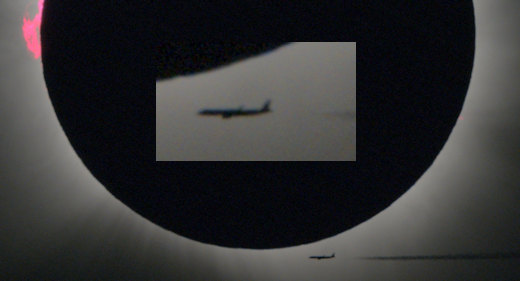
"Using 25x100 binoculars, I myself saw a plane transiting the solar corona," says Lefaudeux. "Only later did I realise that it was the famous Iberia 1473!"
Lefaudeux carefully checked that this was the correct plane. "Everything matched," he says. "The plane was about 60km away, and Airbus A321XLR is 45m long, resulting in 2.5 arcmin apparent size. At its altitude of 31,000 feet, it would have been at 8° elevation, just the same as the eclipse."
Realtime Solar Eclipse Photo Gallery
Free: Spaceweather.com Newsletter
Realtime Aurora Photo Gallery
Free: Spaceweather.com Newsletter