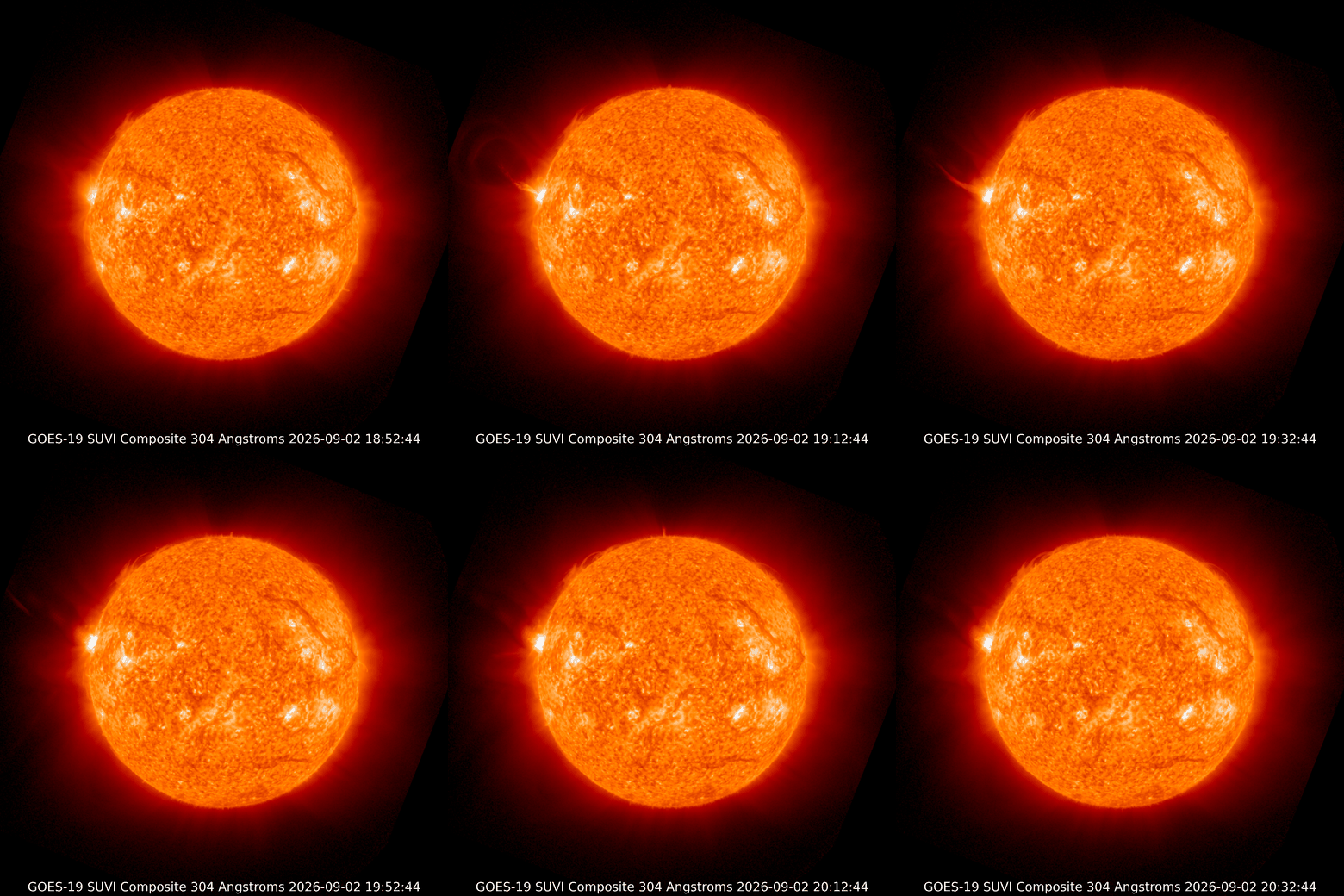
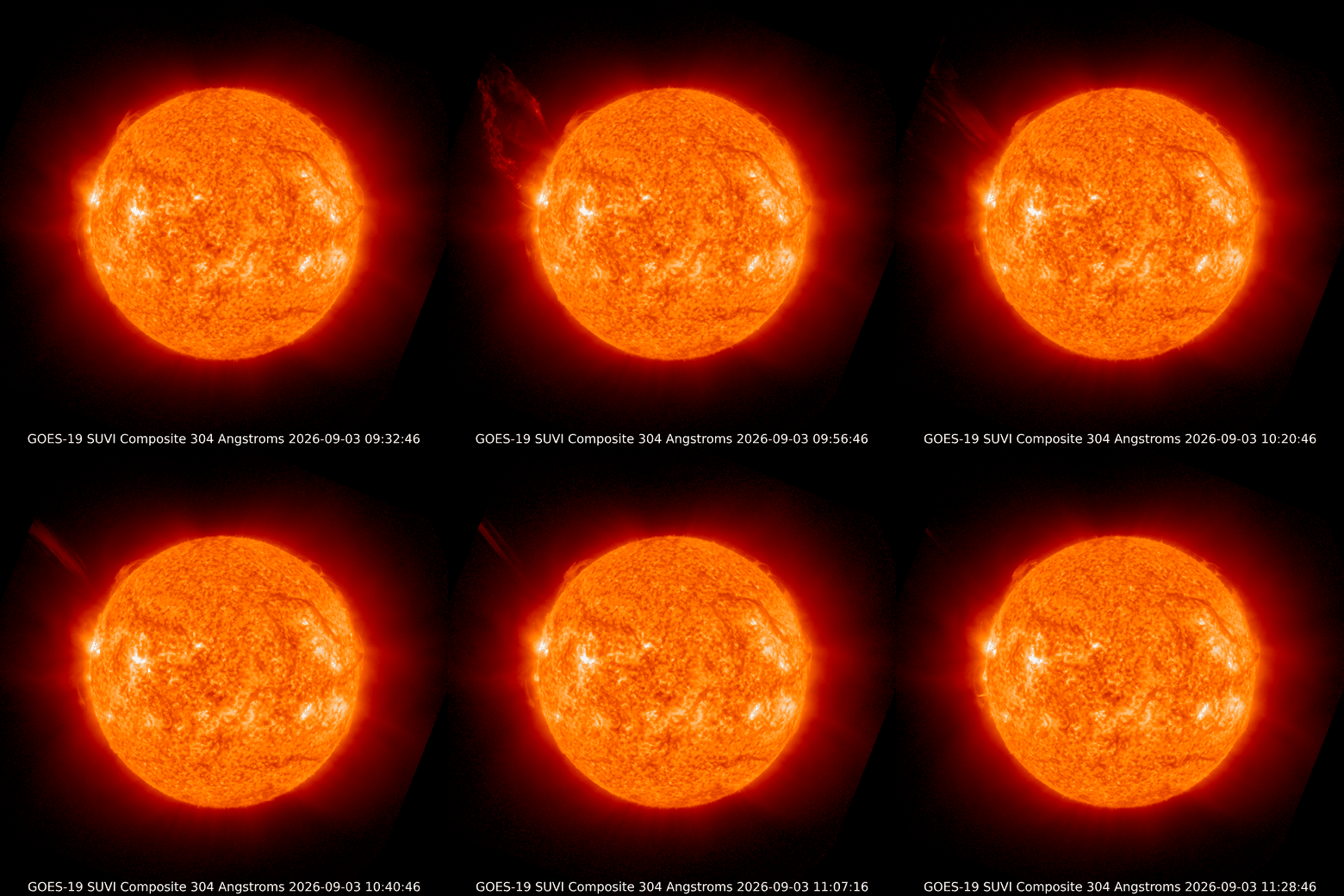
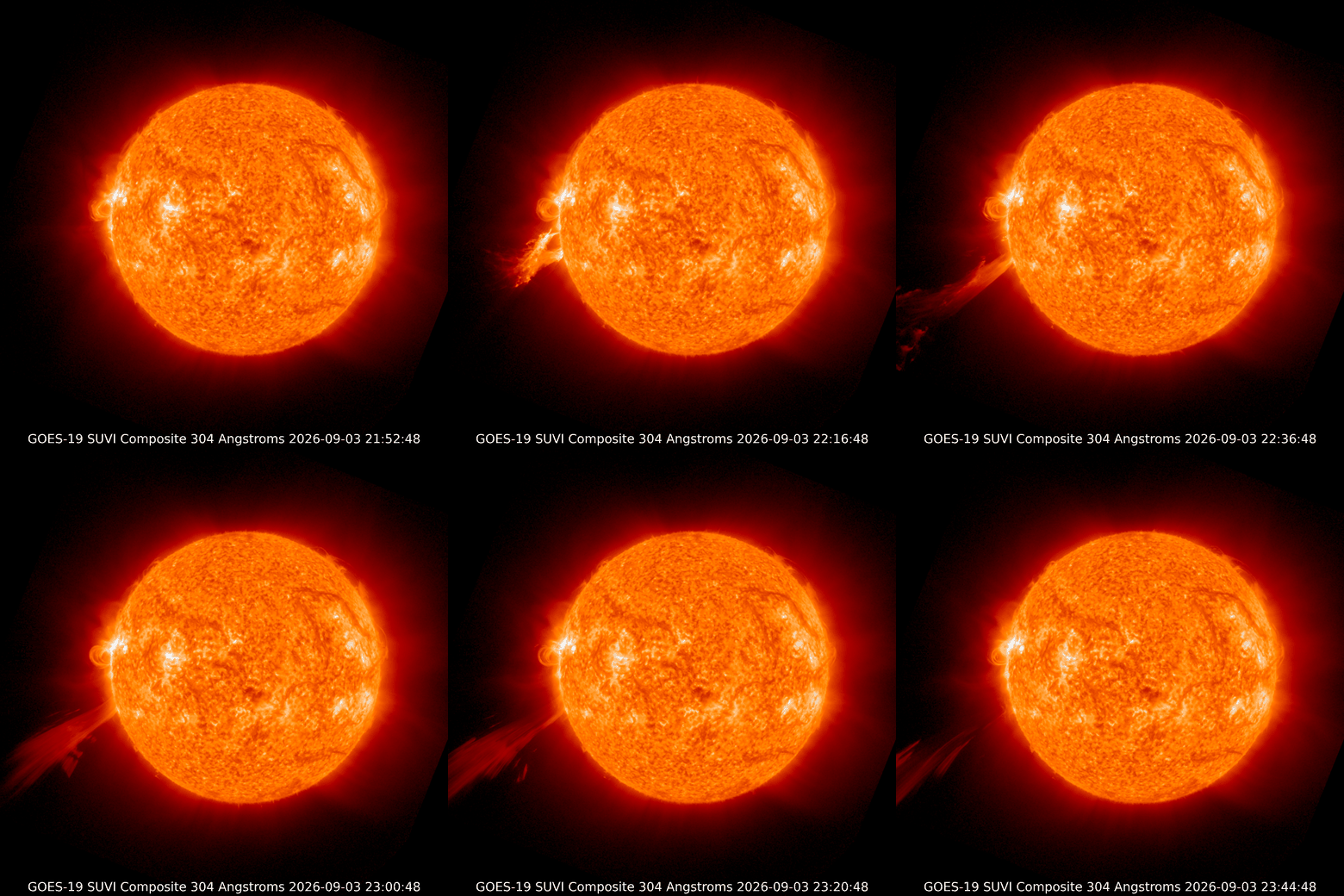
SIGNIFICANT SOLAR ACTIVITY: In the past 24 hours, three huge plumes of gas have flown away from the sun's eastern limb. This means that active regions hidden behind the limb are about to rotate onto the Earthside of the sun. ETA: This weekend. Stay tuned for significant solar activity. Watch the movies: #1, #2, #3.
AMATEUR ASTRONOMERS CAN SEE SATURN'S DECAGON: This week, NASA released new images from Hubble showing a 10-sided cloud surrounding Saturn's south pole. It's called "The Decagon." Amateur astronomers using backyard telescopes can not only see it, they actually discovered it.
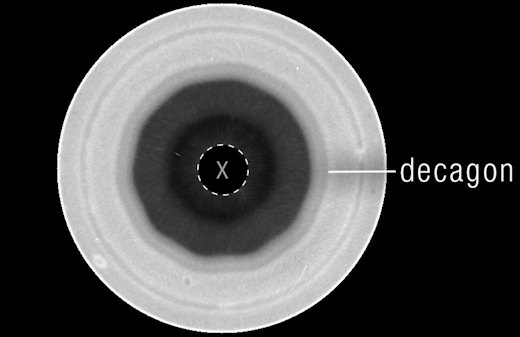
Hubble image of Saturn's South Pole Decagon
Saturn's south pole is not easy to see from Earth--indeed, it was almost completely hidden from 2012 to 2023 because of the planet's tilt. After the geometry started to improve in 2024, photos taken by amateurs Trevor Barry (Australia) and Jean-Paul Oger (France) revealed a faint wavy pattern. In the summer of 2025, Oger stitched his images into a map of Saturn's south pole and ten sides popped out.
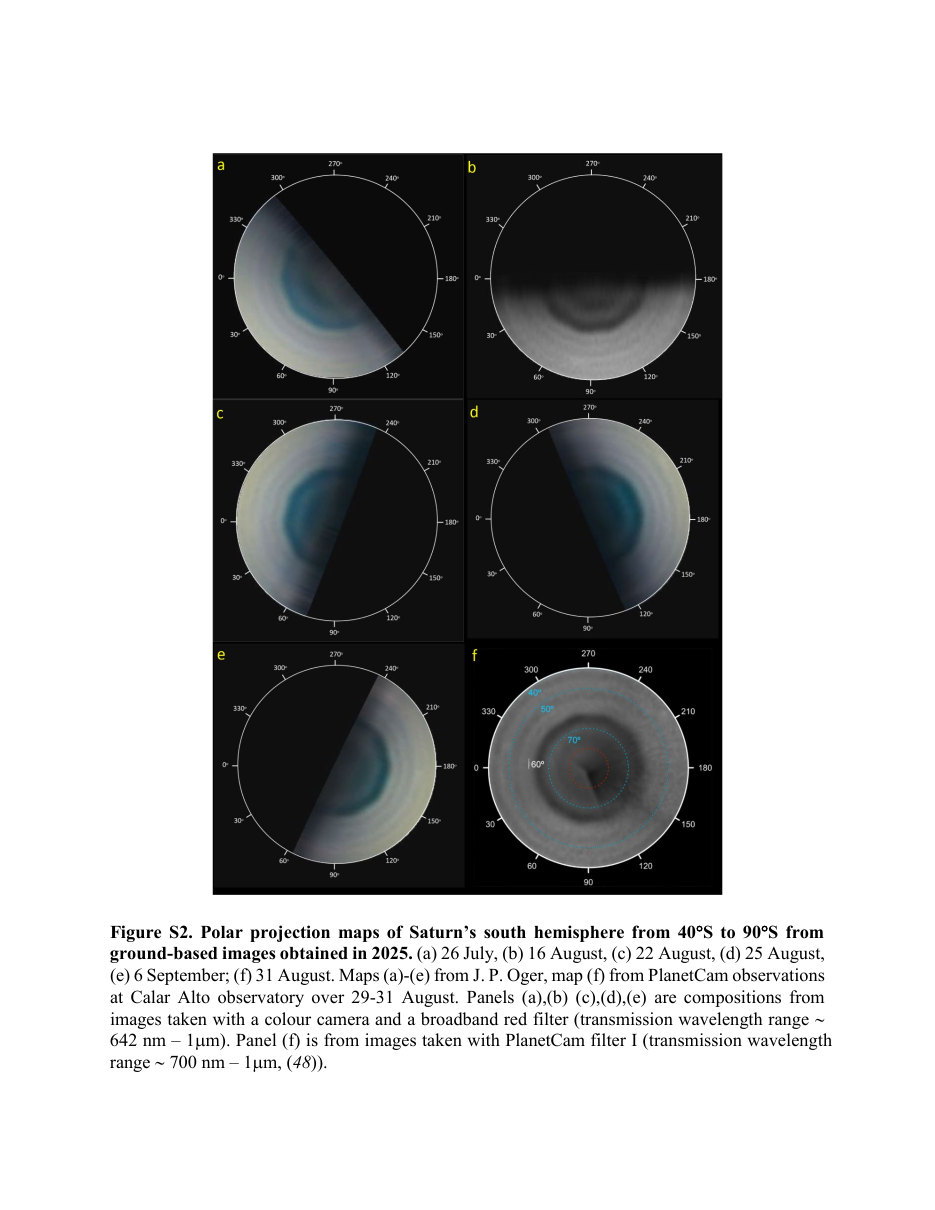
Hubble observations were the next step. The results were published Sept. 2nd in the journal Science Advances, with Barry and Oger as co-authors.
The discovery of the Decagon comes more than 40 years after NASA's Voyager probes found a Hexagon streaming around Saturn's north pole. That six-sided jet stream has been going strong for decades. The Decagon may be only a few years old and still strengthening.
The Decagon is located at 60°S with each of its ten sides measuring ~17,000 km. Because it is twice as wide as the Hexagon and farther from the pole, the Decagon is easier to see from Earth.
Now is the time to look. Saturn's south pole is tilting toward Earth a little more each year through 2032. A 14- to 16-inch backyard telescope with a red or infrared filter can catch the wavy edge especially around opposition (closest approach to Earth) on Oct. 4th. Submit your images here.
Realtime Space Weather Photo Gallery
Free: Space Weather Newsletter
MILLION-YEAR-OLD METEORITE PENDANT: About one million years ago, this meteorite landed in northern Sweden. On Aug. 25, 2026, we sent it back onboard a cosmic ray research balloon:
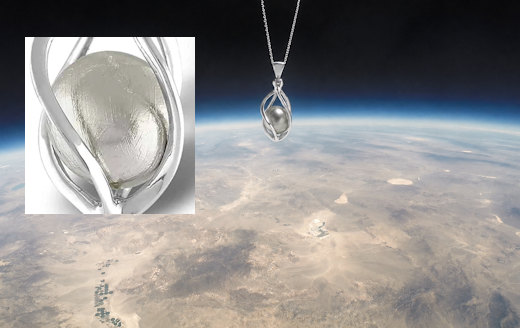
You can have it for $269.95. This is a spherical fragment of the Muonionalusta Meteorite found near the Muonio River in Sweden. It is contained within a sterling silver cage that hangs from a matching 18-inch chain.
The meteorite comes with a certificate of authenticity, but you can see that it's real using your own eyes. The sphere is crisscrossed by a faint pattern of geometric crystal lines formed by millions of years of slow cooling in space.
The students of Earth to Sky Calculus are selling space pendants to pay the helium bill for their cosmic ray ballooning program. Each one comes with a greeting card showing the jewelry in flight and telling the story of its trip to the stratosphere and back again.
Far Out Gifts: Earth to Sky Store
All sales support hands-on STEM education
Realtime Aurora Photo Gallery
Free: Spaceweather.com Newsletter