A HOLE IN THE SUN'S ATMOSPHERE: Make that two holes. A pair of coronal holes (one northern and one southern) are turning toward Earth and sending dual streams of solar wind in our direction. ETA: Sept. 14-16. Their arrival could trigger equinox auroras. Aurora alerts: SMS Text.

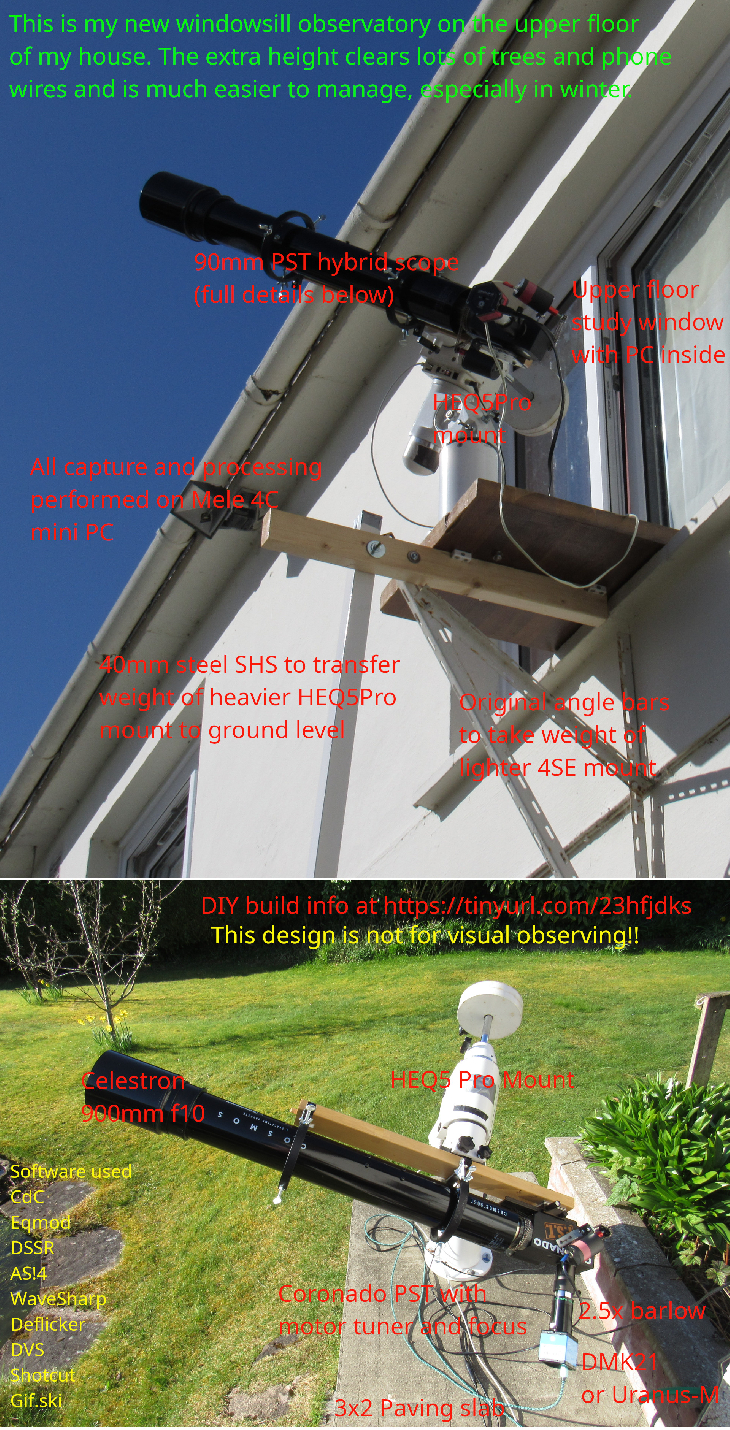
SUNSPOT WITH A TAIL: Earlier today, amateur astronomer Dave Wilson used his DIY solar telescope to look at sunspot 4528 and discovered that it has an enormous tail:
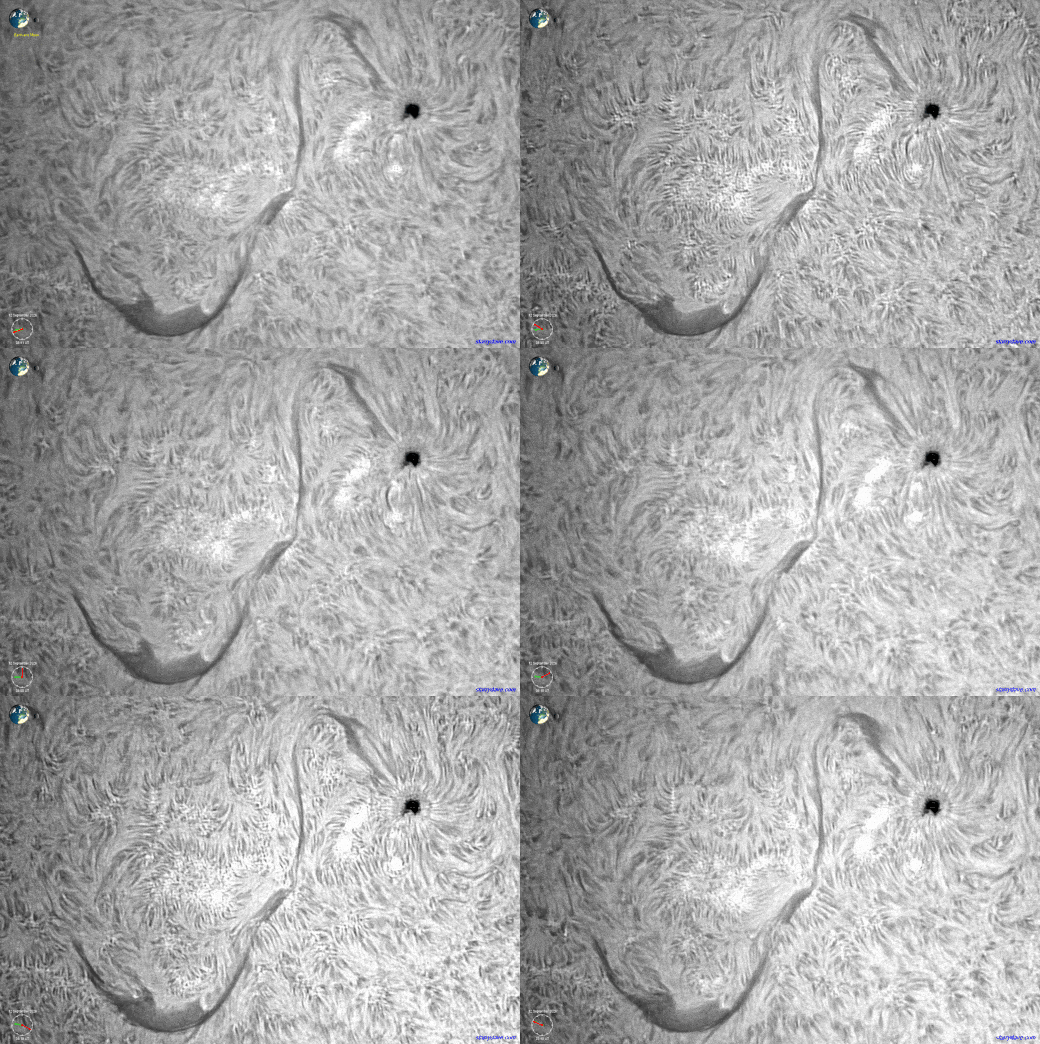
"There is a huge magnetic filament snaking behind AR4528," Wilson says. "It measures 400,000km which is just over the distance from Earth to the Moon"
Filaments like this are notoriously unstable. So, while the sunspot itself appears bland and quiet, the sunspot's tail could erupt this weekend. This region is facing Earth, so any eruption has a good chance of being geoeffective. Solar flare alerts: SMS Text.
COSMIC RAYS LINKED TO FLIGHT ATTENDANT CANCER: This summer, French courts decided an issue that scientists have struggled with for years: Aviation radiation is real, and it increases the risk of cancer in flight crews.

Sophie Lainault, 59, flew for Air France for 30 years, logging more than 12,600 hours in the air. In July, judges in Bayonne recognized her cancer as an occupational disease. A new Harvard study agrees, concluding that flight crews die of radiation-related cancers even more often than nuclear workers.
Writing in the Aug. 17th issue of JAMA Internal Medicine, researchers led by Vishal Patel of Brigham and Women's Hospital examined nearly 13 million US death certificates from 2020 to 2024. Out of 503 professions, flight attendants ranked #1 for deaths from radiation-related cancers, while pilots ranked #2.
 The reason is galactic cosmic rays. High-energy particles from supernova explosions and other violent events in the cosmos pepper Earth's atmosphere from all directions. This radiation percolates all the way down to aviation altitudes. Even a single cross-country flight can deliver as much radiation as five dental X-rays. International flights (especially over the poles) are worse.
Pilots and flight attendants accumulate 3 to 6 millisieverts per year, according to the CDC. This is the largest occupational dose of any workforce in the United States, and roughly ten times what a typical frequent flyer gets.
The study also looked at aircraft mechanics and assemblers--people who spend their careers around airplanes but rarely leave the ground. They were middle of the pack, with fewer radiation-related cancers than flight crews.
For years the link between aviation radiation and cancer was complicated by two other potential carcinogens: Working the graveyard shift and breathing secondhand smoke. Both were thought to cause cancer in flight crews. The new study shows that cosmic rays do play a role, and may be the biggest risk of all.
Realtime Space Weather Photo Gallery
Free: Space Weather Newsletter
COSMIC CAT WINE STOPPER: You can't buy this on Amazon. Only the Earth to Sky Store has the Cosmic Cat Wine Stopper. On Dec. 17, 2025, this far-out stopper flew to the stratosphere onboard an Earth to Sky Calculus cosmic ray research balloon:
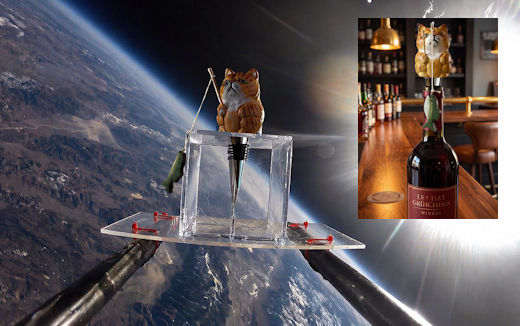
You can have it for $99.95. The wooden cat is hand carved and painted, and it has an airtight rubber seal that securely plugs bottles of wine or any other beverage. With your stopper, you'll receive a gift card showing the cat in flight and telling the story of its journey to the stratosphere (and back again).
Far Out Gifts: Earth to Sky Store
All sales support hands-on STEM education
Realtime Aurora Photo Gallery
Free: Spaceweather.com Newsletter