EQUINOX AURORAS: Last night was a great example of the Russell-McPherron Effect at work. There was no geomagnetic storm, yet many observers witnessed auroras anyway. John David McKinnon photographed this bright green curtain over Four Mile Lake, Alberta, Canada:
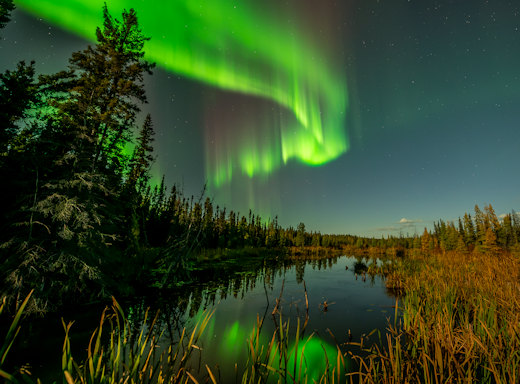
"Even a tinge of the red Aurora came out to play. Beauty, eh!" says McKinnon.
What happened? During the early hours of Sept. 24th, a minor solar wind stream brushed against Earth. The gentle contact was amplified by the Russell-McPherron Effect: At this time of year, equinox geometry connects the sun's magnetic field to Earth's magnetic field. Portals open and the solar wind flows through to fuel auroras.
Stay tuned for more. The Russell-McPherron Effect is active well into October. Aurora alerts: SMS Text

more images: from Shawn Malone of Marquette Michigan
WE'VE TURNED STARLINK INTO A PLANETARY BAROMETER: Starlink has many downsides: The megaconstellation interferes with astronomy, pollutes the atmosphere with metallic re-entry debris, and has pushed Low Earth Orbit to the brink of the Kessler Syndrome.
On the other hand, it makes a terrific barometer.
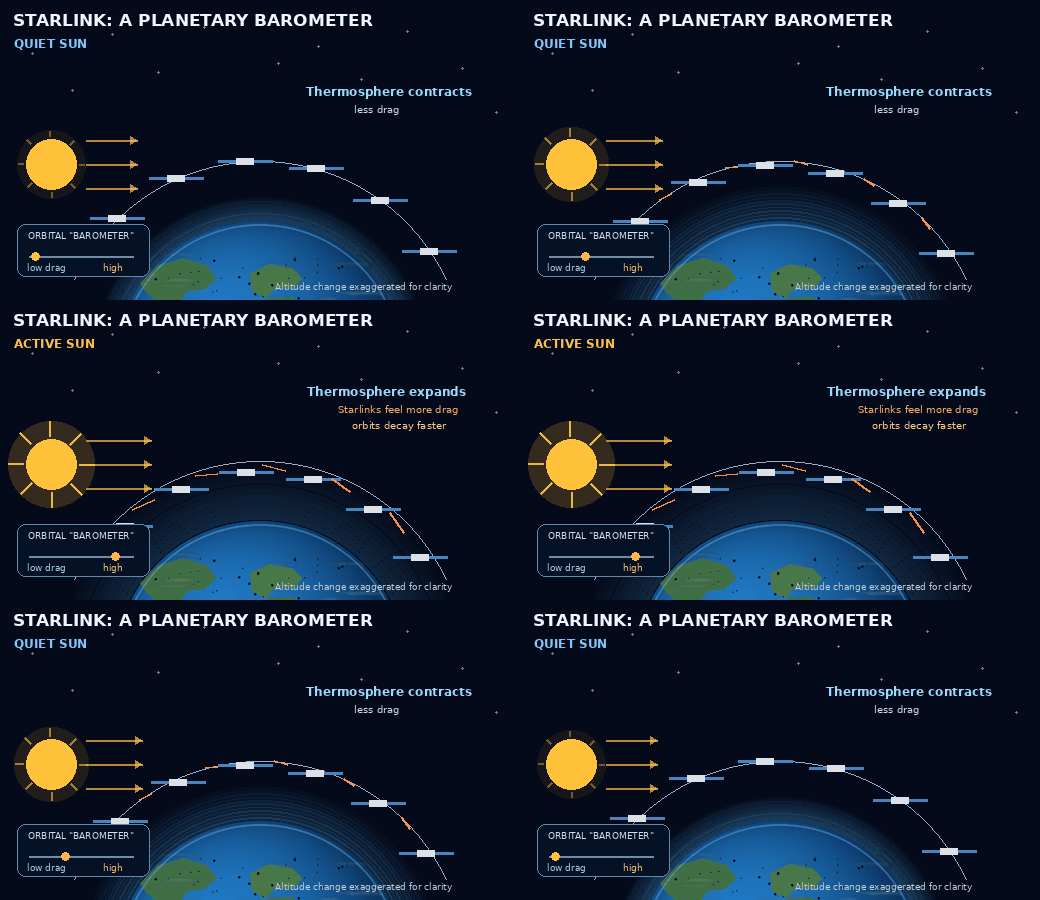
Earth is surrounded by more than 11,000 Starlink satellites. Without exception, they all skim the outermost layers of our atmosphere where air pressure and aerodynamic friction rob them of orbital energy. If they didn't occasionally boost themselves with thrusters, every single Starlink would fall back to Earth.
This means we can use the Starlink megaconstellation as a giant sensor for air pressure and drag. Here's how it works: Every day, the US Space Force publishes fresh orbital elements (also known as "TLEs") for every object in Earth orbit. Buried in each TLE is a drag term. We download those drag terms for 1000 Starlinks and convert them into one easy-to-understand number.
It's right here. From now on, we're going to publish the daily value for Starlink satellite drag. This number is a sensitive indicator of space weather. The envelope of air around our planet expands and contracts in response to solar activity. Big geomagnetic storms puff up the atmosphere, causing sharp spikes in drag.
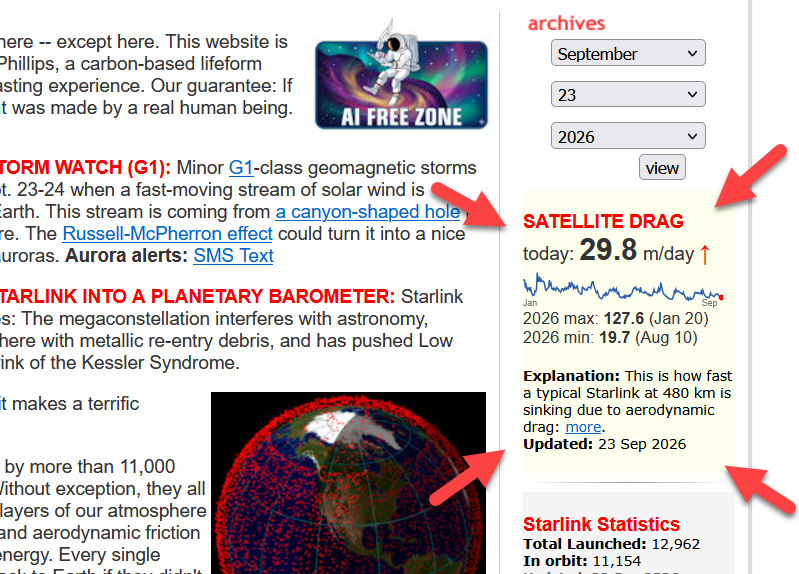
In this plot of drag for 2026, you can see the correlation with geomagnetic storms:
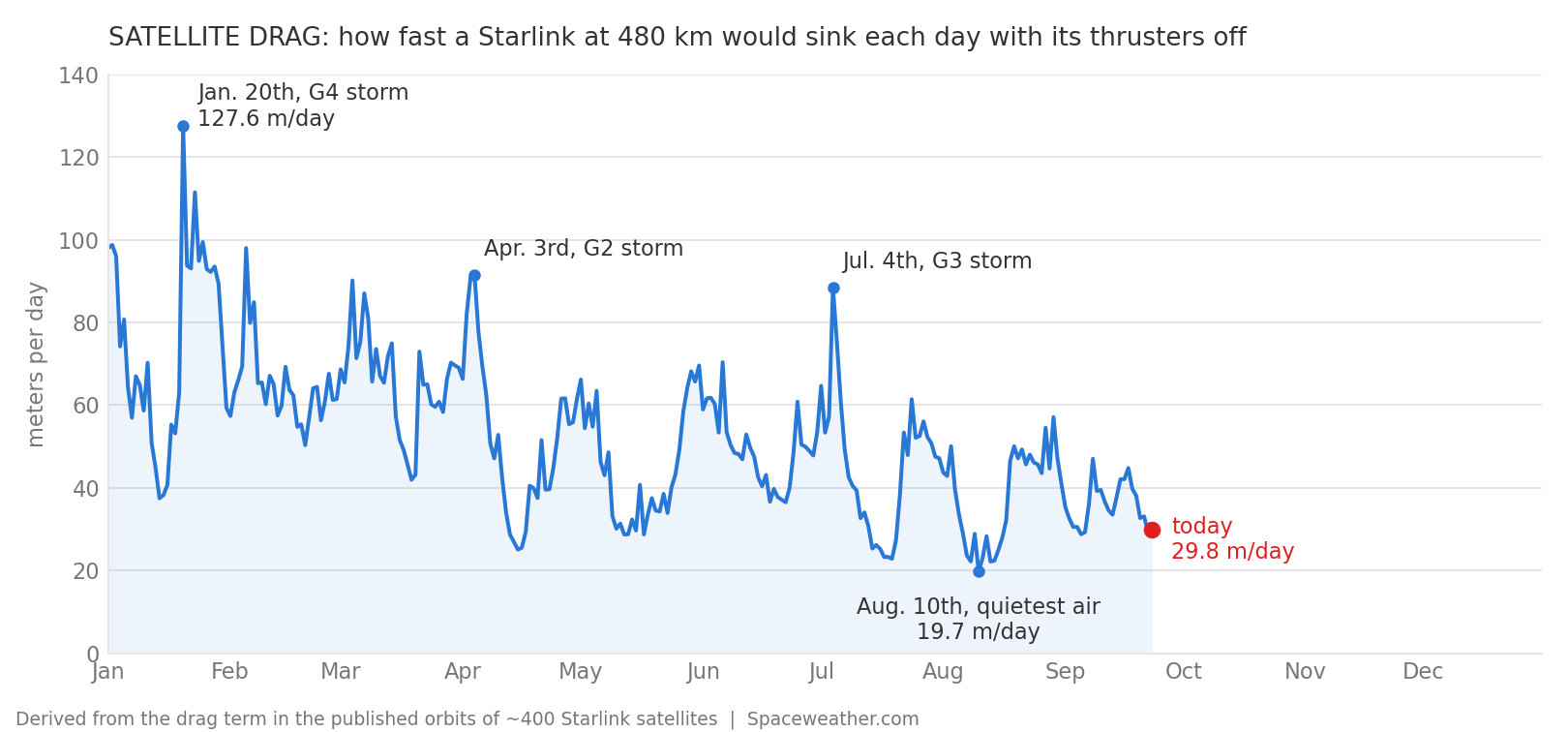
You can also think of this as a plot of air pressure at 480 km where most Starlinks orbit.
Starlinks aren't the only ones we're tracking. We monitor 3 other independent constellations: Planet Labs' SuperDoves (107), Amazon's Kuiper satellites (391), and Eutelsat's OneWeb satellites (651). These provide a check on the Starlink numbers. The SuperDoves are particularly valuable because they have no thrusters to combat drag, making them exquisitely sensitive.
Thank you, Starlink? Come back tomorrow for the latest drag.
Realtime Space Weather Photo Gallery
Free: Space Weather Newsletter
THE ALIEN MIND CRYSTAL BALL: The brains of octopuses are so different from ours, they're often called "alien minds." That makes the Alien Mind Crystal Ball more than a glass sculpture -- it’s a fascinating conversation piece inspired by one of nature’s strangest and smartest creatures. Bonus: It has been to space:
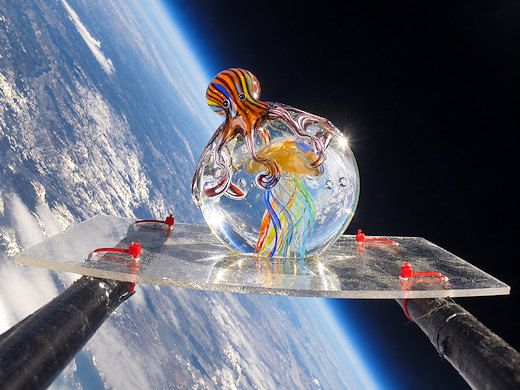
You can have it for $149.95. On July 30, 2026, the students of Earth to Sky Calculus launched this sculpture onboard a cosmic ray research balloon. For 3 hours, it floated more than 105,000 feet above the Sierra Nevada mountains of central California while cosmic ray sensors inside the payload gathered data for our radiation monitoring program.
It comes with a full-color gift card showing the octopus floating at the top of Earth's atmosphere. The interior of the card tells the story of the flight and where it landed.
Far Out Gifts: Earth to Sky Store
All sales support hands-on STEM education
Realtime Aurora Photo Gallery
Free: Spaceweather.com Newsletter
Realtime Aurora Photo Gallery
Free: Spaceweather.com Newsletter