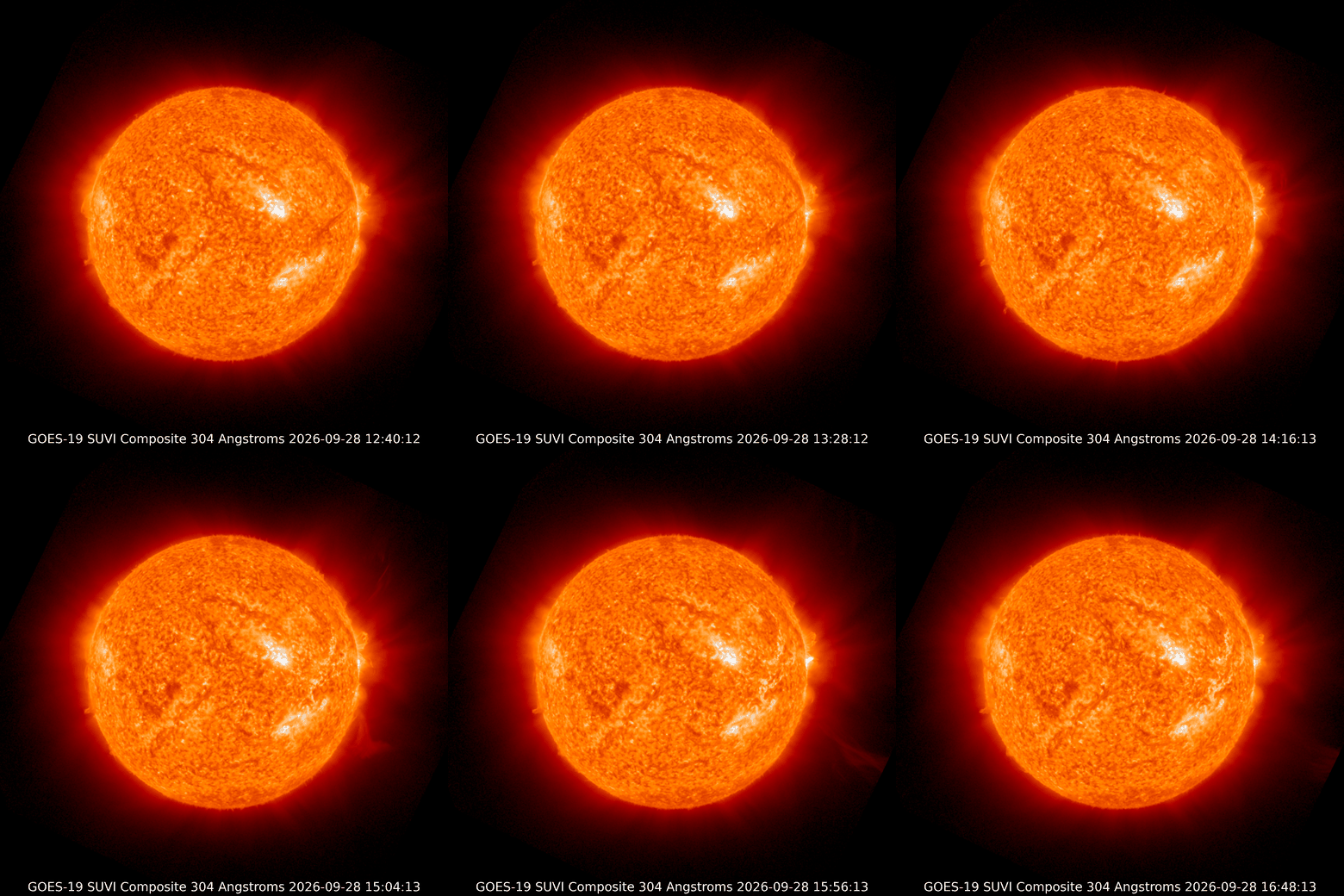
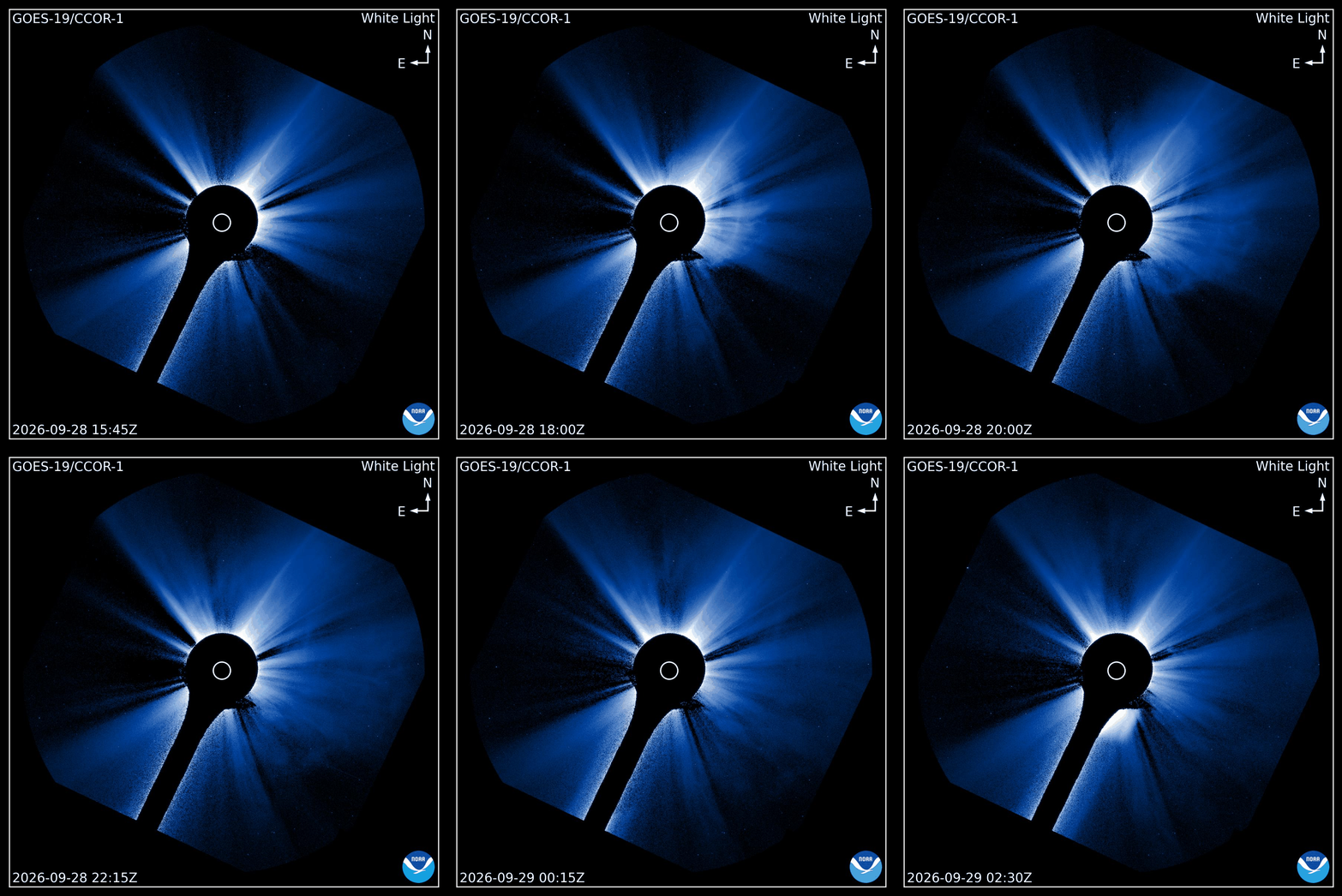
A CME IS COMING: Yesterday, Sept. 28th, a magnetic filament erupted from the sun and hurled a CME into space. A NASA model predicts it will reach Earth on Oct. 2nd with a glancing blow that could spark a G1-class geomagnetic storm. High-latitude auroras are likely. CME Impact Alerts: SMS Text

STARSHIP 14 REACHES ORBIT, DEPLOYS GIANT STARLINKS: SpaceX's Starship has finally orbited Earth. Starship 14 blasted off from Texas on Monday, Sept. 28th, at 7:48 a.m. CDT and reached orbit minutes later. This was a milestone in SpaceX's plans to travel to the Moon and Mars.

Before the first orbit was complete, the rocket deployed 26 V3 Starlink satellites. These two-ton Starlinks are giants, dwarfing their predecessors. They have roughly three times the mass of the V2 Minis that Falcon 9 rockets have been launching for years, with solar arrays that generate twice as much power.
There was one hiccup. One of the ship's engines failed during ascent, and SpaceX decided to bring it home early, splashing down in the northern Pacific about three hours after launch instead of ten.
Only Starship can launch these behemoths. Today's 26 satellites add about 26 terabits per second to the network--roughly ten times the capacity of a single Falcon 9 Starlink launch. Future Starships could carry as many as 60.
 Giant Starlinks are hardly good for astronomy. The little ones were already interfering with deep-sky astrophotography and professional research. The big ones could be much worse.
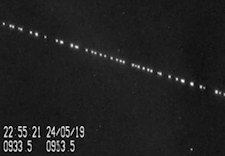
That said, we should be alert for the trains. These big Starlinks could produce spectacular "string of pearls" displays in the evening sky while they are still in low orbit. It will take weeks for these V3s to fade as they ascend to their working orbits.
Would you like a flyby alert? Sign up for Backyard Alerts. Our astronomy alert service tracks all Starlink trains and will send you a text message 5 minutes before the satellites fly over your hometown.
Realtime Space Weather Photo Gallery
Free: Space Weather Newsletter
THE ALIEN MIND SCULPTURE: The brains of octopuses are so different from ours, they're often called "alien minds." That makes the Alien Mind Sculpture more than a blown-glass paperweight -- it’s a fascinating conversation piece inspired by one of nature’s strangest and smartest creatures. Bonus: It has been to space:

You can have it for $149.95. On July 30, 2026, the students of Earth to Sky Calculus launched this sculpture onboard a cosmic ray research balloon. For 3 hours, it floated more than 105,000 feet above the Sierra Nevada mountains of central California while cosmic ray sensors inside the payload gathered data for our radiation monitoring program.
It comes with a full-color gift card showing the octopus floating at the top of Earth's atmosphere. The interior of the card tells the story of the flight and where it landed.
Far Out Gifts: Earth to Sky Store
All sales support hands-on STEM education
Realtime Aurora Photo Gallery
Free: Spaceweather.com Newsletter