WEEKEND AURORA OUTBURST: First, a CME hit Earth on Oct. 3rd. Then a solar wind stream struck on Oct. 4th. The double blow caused a two-day G1/G2-class geomagnetic storm with auroras photographed in the USA from New York to Iowa. The best display, however, was in New Zealand. The solar wind is still blowing around Earth, so more high-latitude auroras are possible on Oct. 5th. Aurora alerts: SMS Text


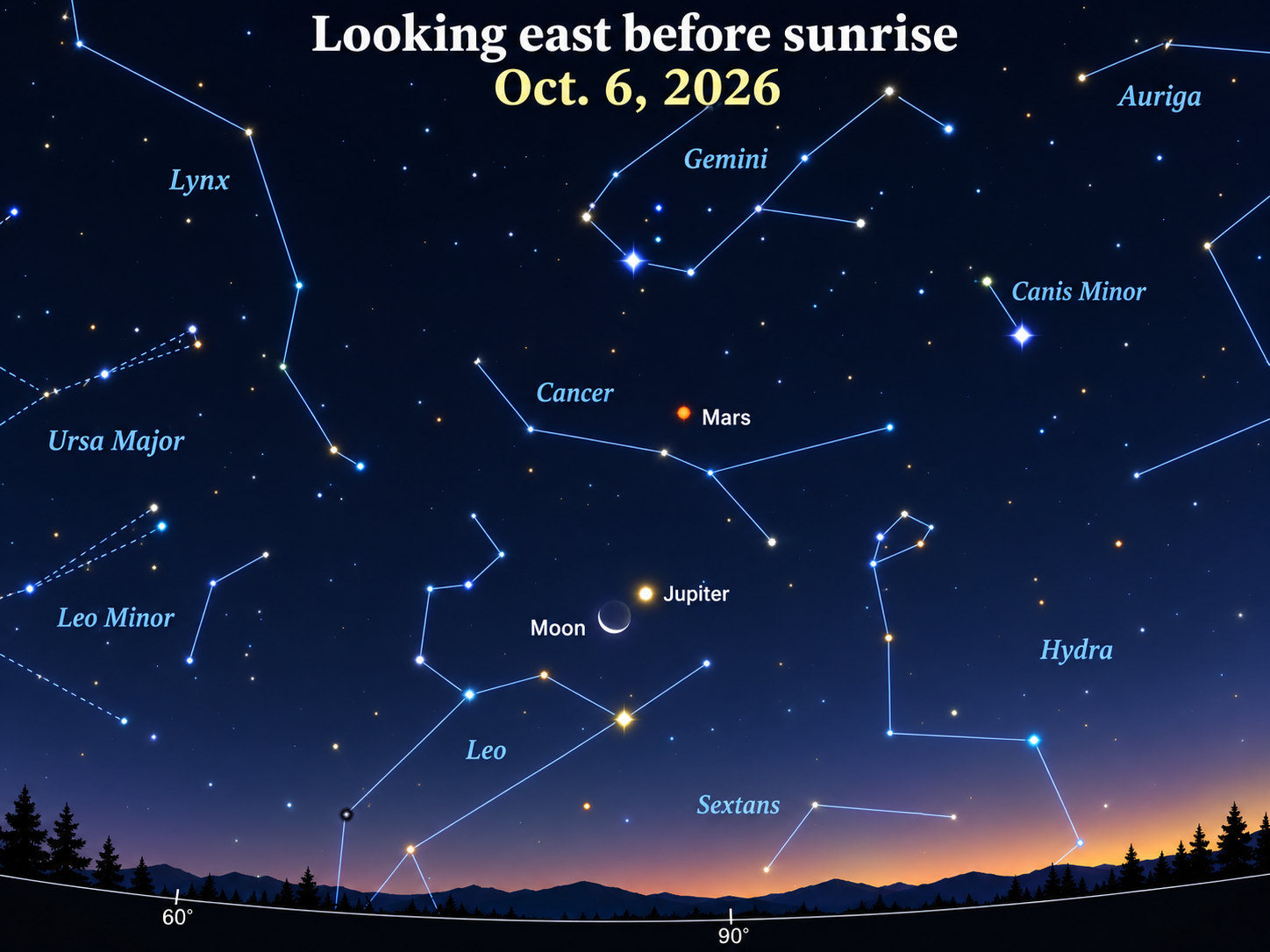
LUNAR OCCULTATION OF JUPITER: This is worth waking up for. On Tuesday morning before sunrise, Jupiter and the crescent Moon will have a spectacular close encounter. In parts of the USA and Canada, it will become a rare occultation.
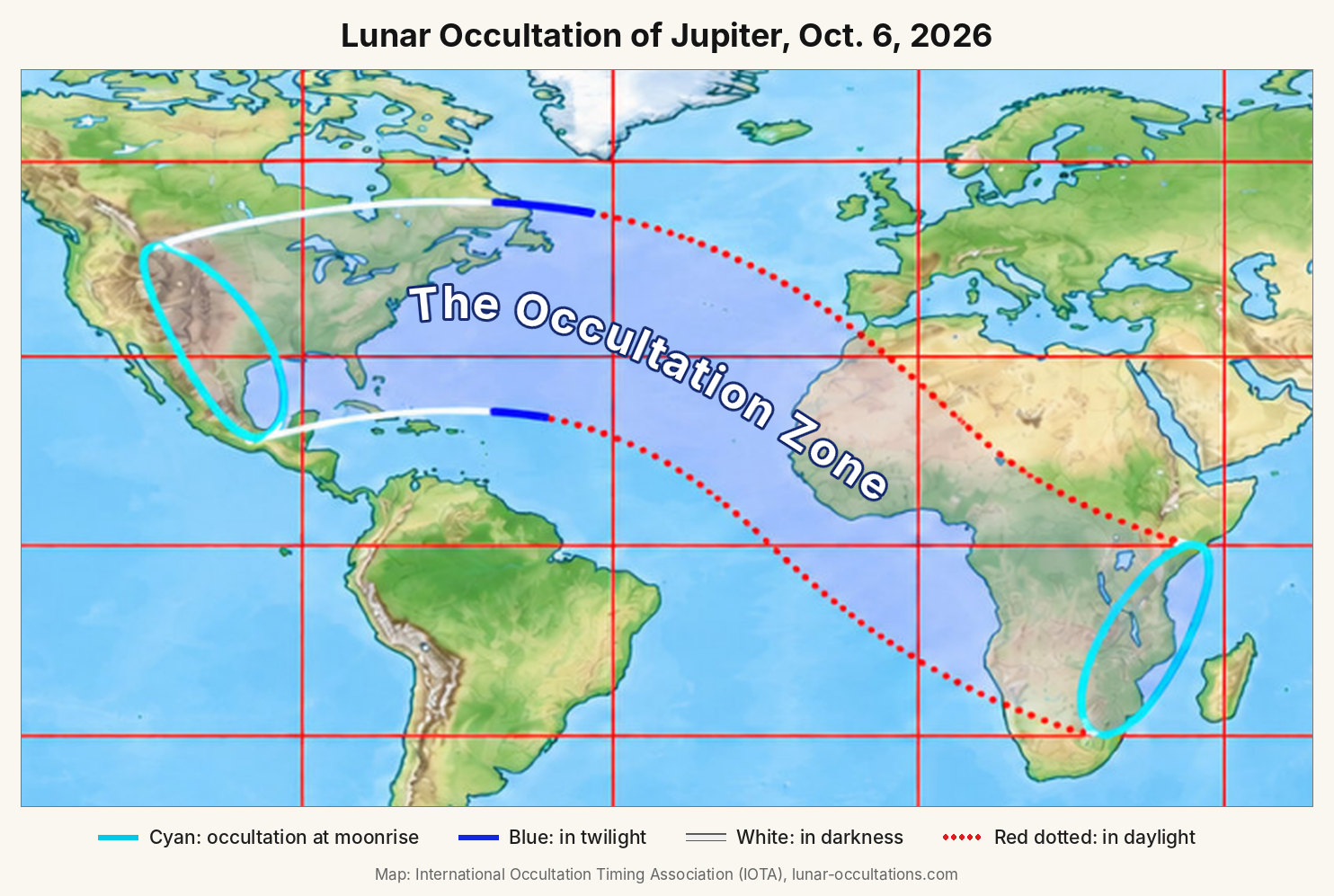
The Oct. 6th lunar occultation of Jupiter is one of the best astronomy events of 2026. Observers across a wide swath of the USA will have a ringside seat as Jupiter vanishes behind the edge of the Moon, then reappears again later. Jupiter is very bright, so this is a naked-eye event.
If you have a telescope, take a closer look: Galilean satellites Europa, Callisto and Io slip behind the Moon minutes before Jupiter does. Ganymede disappears last. Even small telescopes will show this procession.
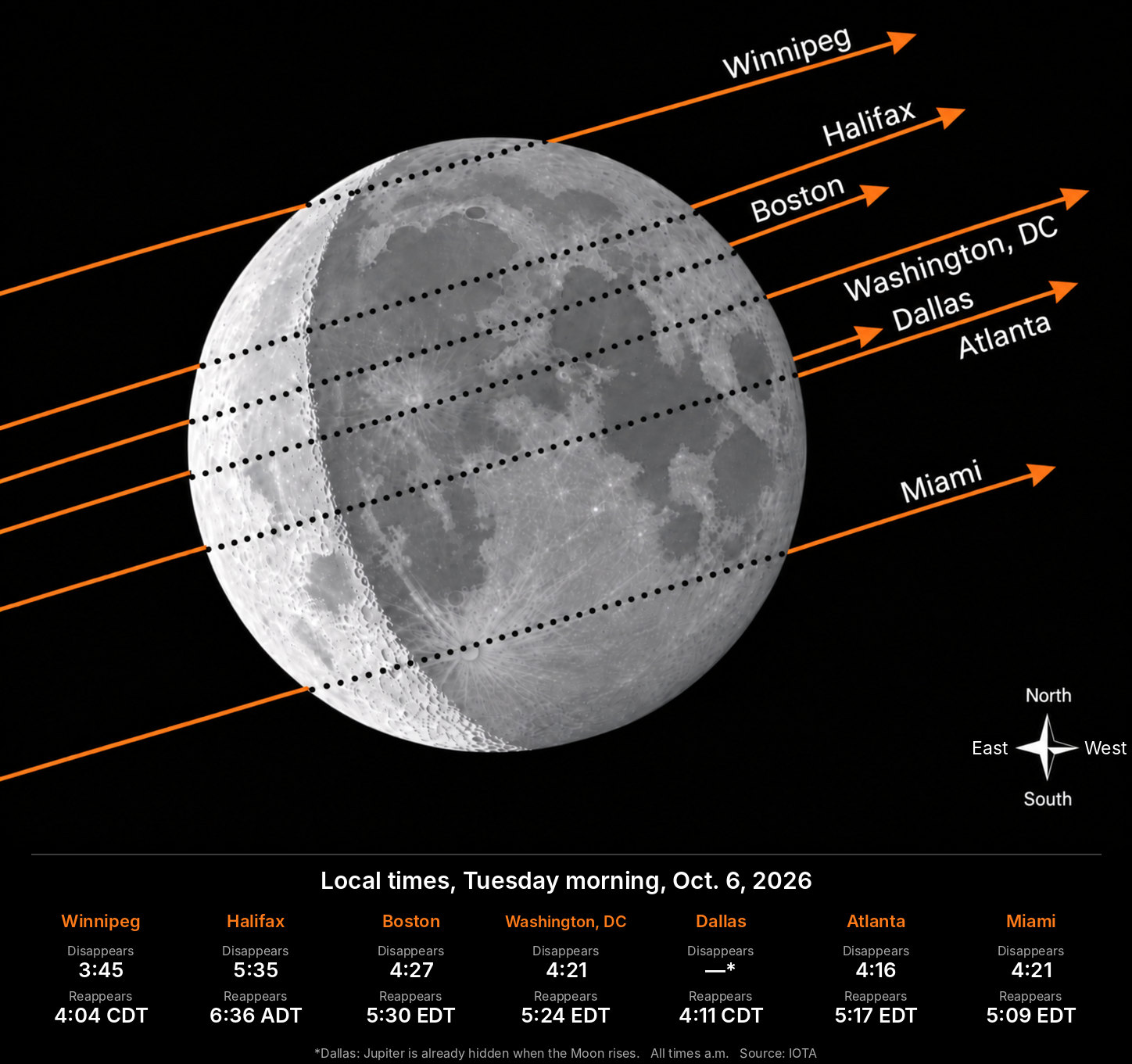 Different cities have different occultation times. For instance, in New York, Jupiter disappears at 4:24 a.m. EDT and reappears at 5:27 a.m. In Chicago, it is 3:22 to 4:17 a.m. CDT. West Coast cities will see only a close encounter--no occultation--but the near miss will be beautiful. Along the Pacific coast, the best time to look is between 3:00 and 5:00 am PDT.
If you're in the occultation zone, watch the whole thing. The end is especially good. Jupiter is a disk, not a point, so takes nearly a minute to reappear over the Moon's mountainous dark limb. The Galilean satellites will pop into view one after another, abruptly like stars.
Take pictures! And submit them here.
More resources: Timetable for 154 Cities, Sky Map, Backyard Astronomy Alerts
Realtime Aurora Photo Gallery
Free: Spaceweather.com Newsletter
SHATTERED PLANETESIMAL METEORITE PENDANT: When meteorites land on Earth, they usually stay on Earth. This one went back to space. On Sept. 16, 2026, we flew this genuine iron meteorite pendant to the stratosphere onboard a cosmic ray research balloon:
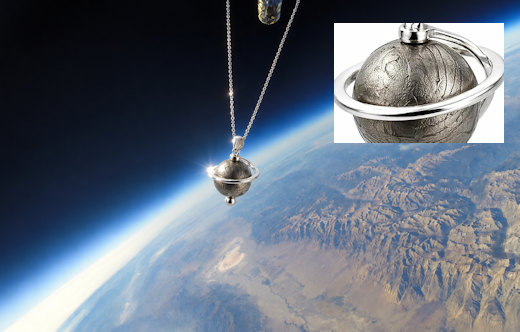
You can have it for $278.95. Thought to be the remnant of a shattered planetesimal, the original meteorite crashed to Earth in northern Sweden where it was preserved in glacial ice. This polished spherical fragment is mounted in a sterling silver "planetary rings" frame, and comes with a full-color gift card showing the pendant in flight.
You can tell it's real just by looking. The surface of the sphere is covered with Widmanstätten patterns--interlocking crystals of iron-nickel alloy that grew inside the core of an ancient planetesimal as it cooled over millions of years.
Far Out Gifts: Earth to Sky Store
All sales support hands-on STEM education
Realtime Space Weather Photo Gallery
Free: Space Weather Newsletter