UPDATE: TWO CMES ARE COMING: Active sunspot 4549 puffed another CME toward Earth on Oct 7th; it joins an earlier CME already en route. The latest NOAA forecast model shows two CMEs hitting Earth, the first on Oct. 9th, the second on Oct. 11th. This sets the stage for G1/G2-class geomagnetic storms and auroras over the weekend. CME impact alerts: SMS Text


THE DRACONID METEOR SHOWER PEAKS TONIGHT: There's something different about the Draconid meteor shower. You don't have to wake up at 3 a.m. to see it.
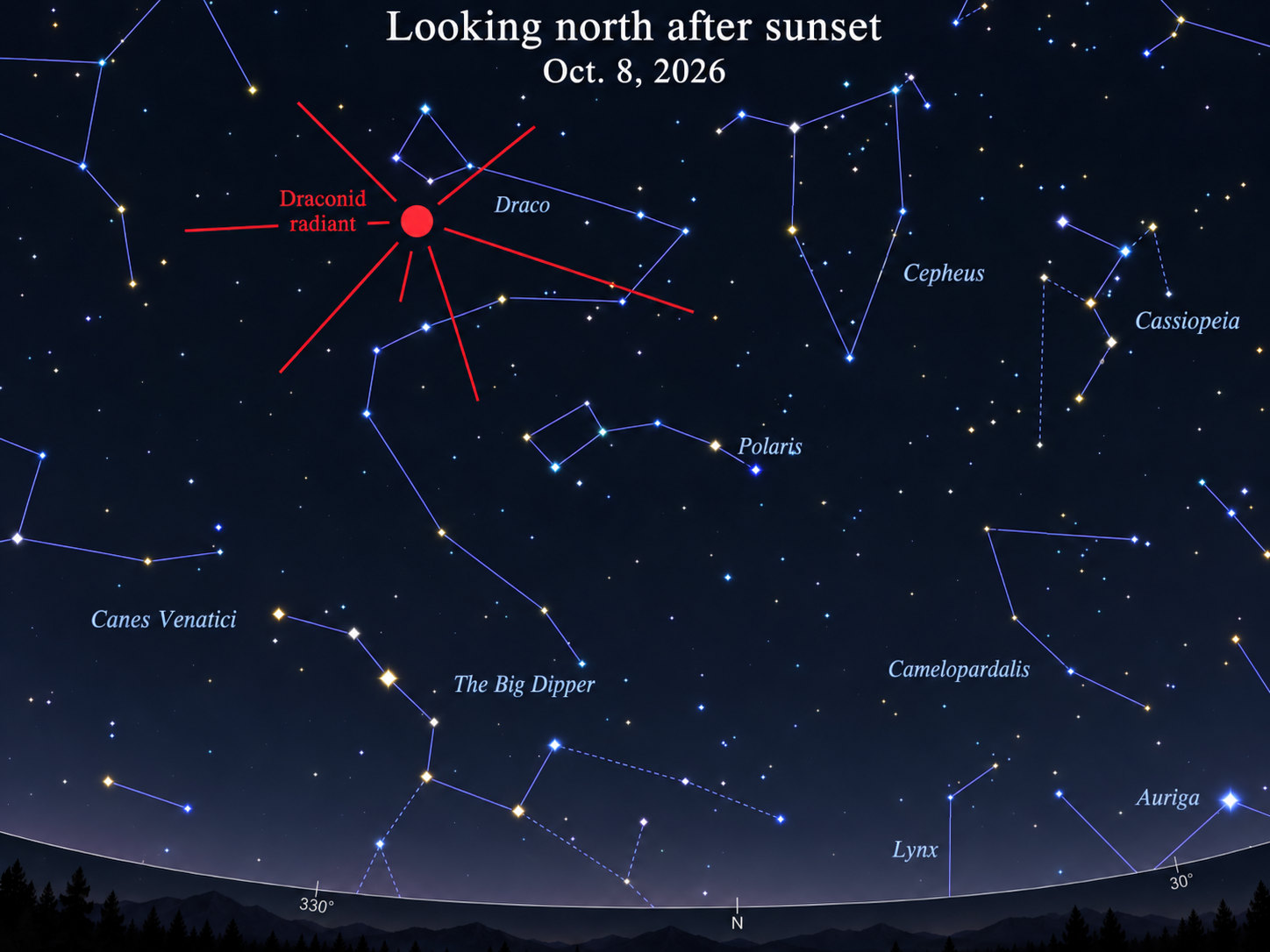
Most meteor showers are best before dawn. The Draconids are an evening shower--and this is the evening. Forecasters expect maximum activity around 9 p.m. EDT on Thursday, Oct. 8th (0100 UT on Oct. 9th). No matter where you live, you should look during the few hours after the sky grows fully dark.
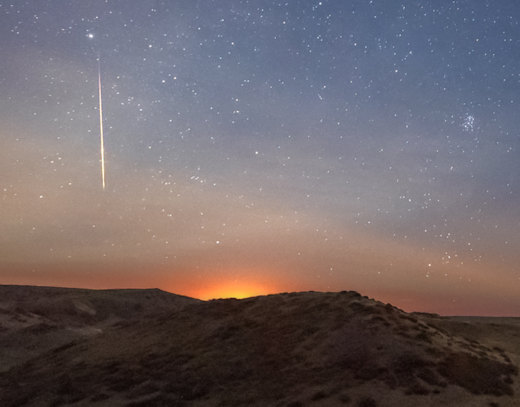
Above: A Draconid meteor over Sheridan, Wyoming. Credit: Kevin Palmer
A typical Draconid display produces only 5 to 10 meteors per hour. Numerically, it is a minor shower, but it has a special quality: Draconid meteors are unusually slow. They hit Earth's atmosphere at about 20 km/s--a third the speed of the Perseids. Some linger long enough for you to point them out to a friend.
Draconids come from Comet 21P/Giacobini-Zinner, which swoops through the inner solar system every 6.6 years, laying down fresh streams of dust. When Earth hits a stream head-on, there can be an outburst. In 1933 and 1946, the Draconids erupted into storms with thousands of meteors per hour.
 No storm is predicted for 2026, but the Draconids are notoriously unpredictable. In 2012, for example, meteor radars unexpectedly counted ~1000 Draconids per hour. Another outburst in 2018 produced more than 100 visible meteors per hour.
Whatever happens, this year's shower is perfectly timed. The sky will be inky-dark because the Moon is almost New during the shower's peak.
Go outside after dark, face north, lie back and look up. You might see only a handful of meteors, but you'll be in bed by midnight.
Realtime Draconid Photo Gallery
Free: Spaceweather.com Newsletter
SHATTERED PLANETESIMAL METEORITE PENDANT: When meteorites land on Earth, they usually stay on Earth. This one went back to space. On Sept. 16, 2026, we flew this genuine iron meteorite pendant to the stratosphere onboard a cosmic ray research balloon:
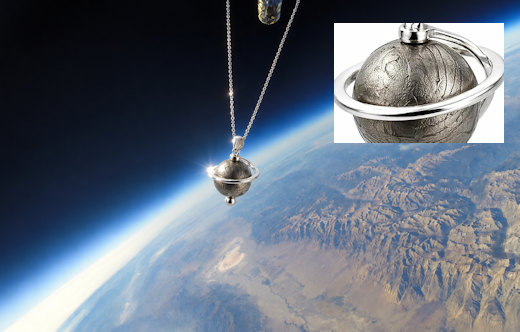
You can have it for $278.95. Thought to be the remnant of a shattered planetesimal, the original meteorite crashed to Earth in northern Sweden where it was preserved in glacial ice. Jewelers mounted this polished spherical fragment in a sterling silver "planetary rings" frame.
You can tell it's real just by looking. The surface of the sphere is covered with Widmanstätten patterns--interlocking crystals of iron-nickel alloy that grew inside the core of an ancient planetesimal as it cooled over millions of years.
The students of Earth to Sky Calculus are selling space pendants to pay the helium bill for their high-altitude balloon program. Each one comes with a full-color greeting card showing the jewelry in flight.
Far Out Gifts: Earth to Sky Store
All sales support hands-on STEM education
Realtime Space Weather Photo Gallery
Free: Space Weather Newsletter
Realtime Aurora Photo Gallery
Free: Spaceweather.com Newsletter