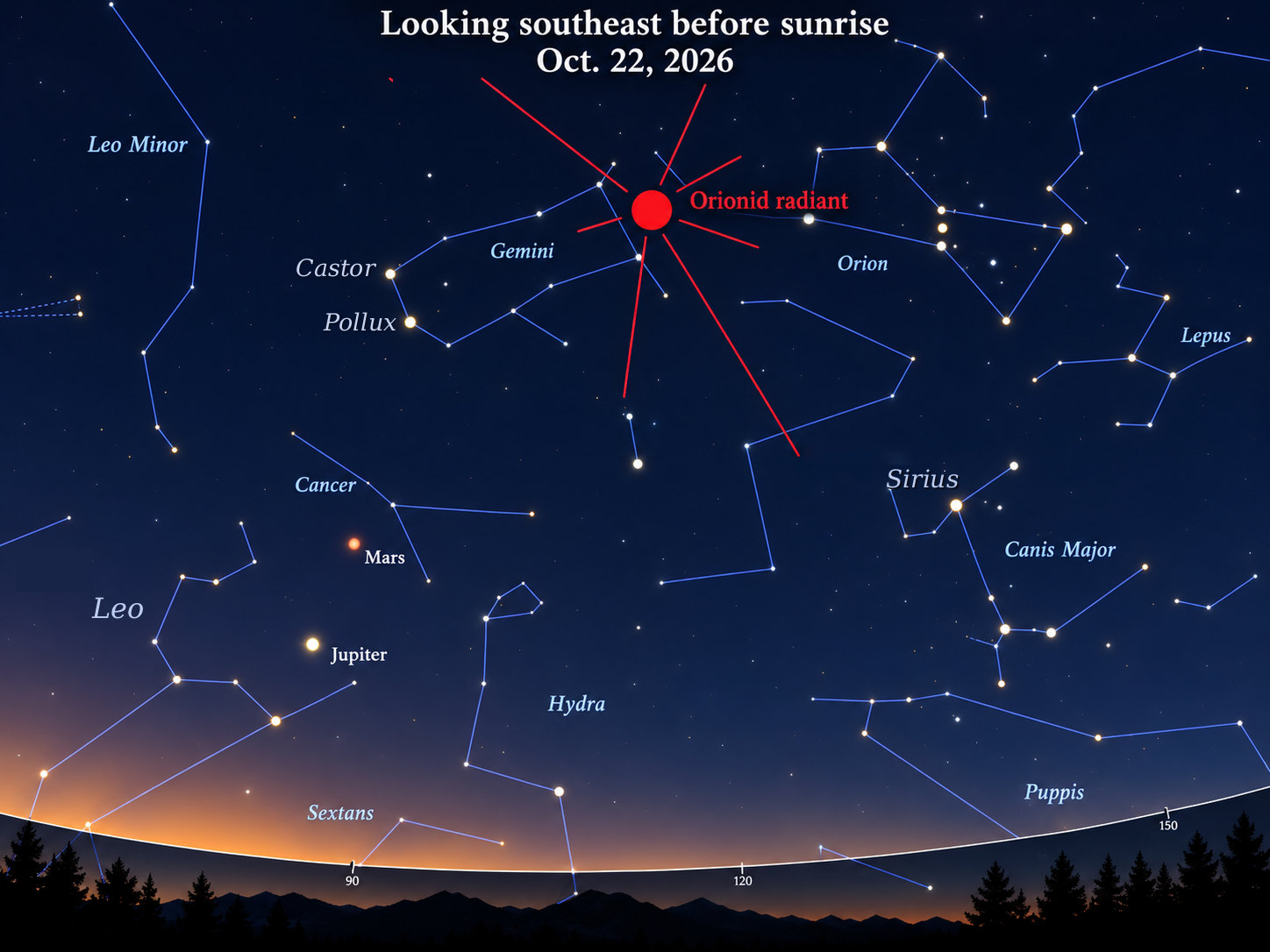
ORIONID UPDATE: Last night, NASA's all sky fireball network detected only 7 Orionid meteors--little more than half the background rate of random meteors. This suggests one of two possibilities: #1, either the 2026 Orionids are unusually weak or #2, the peak hasn't happened yet. If you wake up early on Friday, Oct. 23th, check the predawn sky in case the answer is #2. [sky map] [meteor alerts]
SPACE WARFARE VISIBLE IN BACKYARD TELESCOPES: On Monday, we asked the question "Can you see space warfare in your own eyepiece?" On Tuesday, we learned the answer: "Yes." Using 14-inch optics, a Swiss company named "s2a systems" has successfully recorded a military encounter in low-Earth orbit.
This Oct 18th movie shows Russia's Cosmos 2612 just after it flew extremely close to ICEYE-X36, a surveillance satellite supplying images to Ukraine:
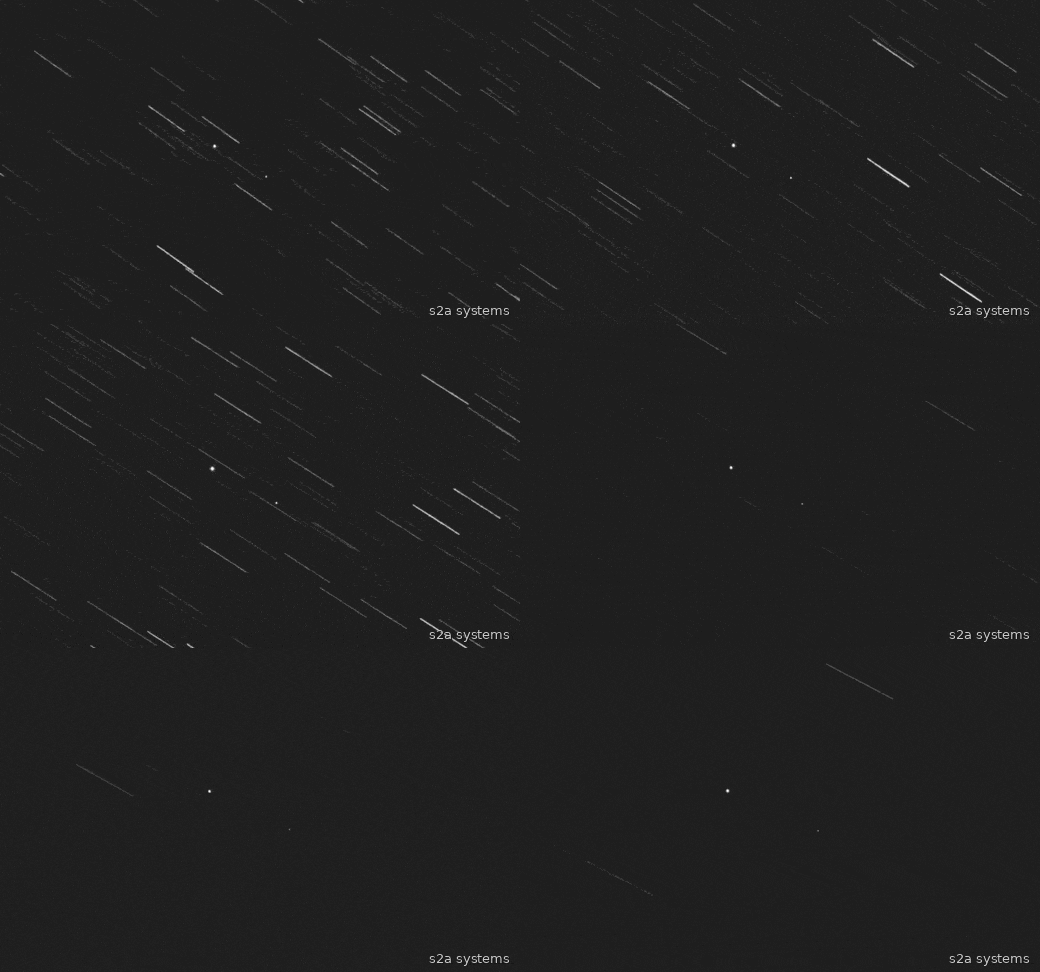
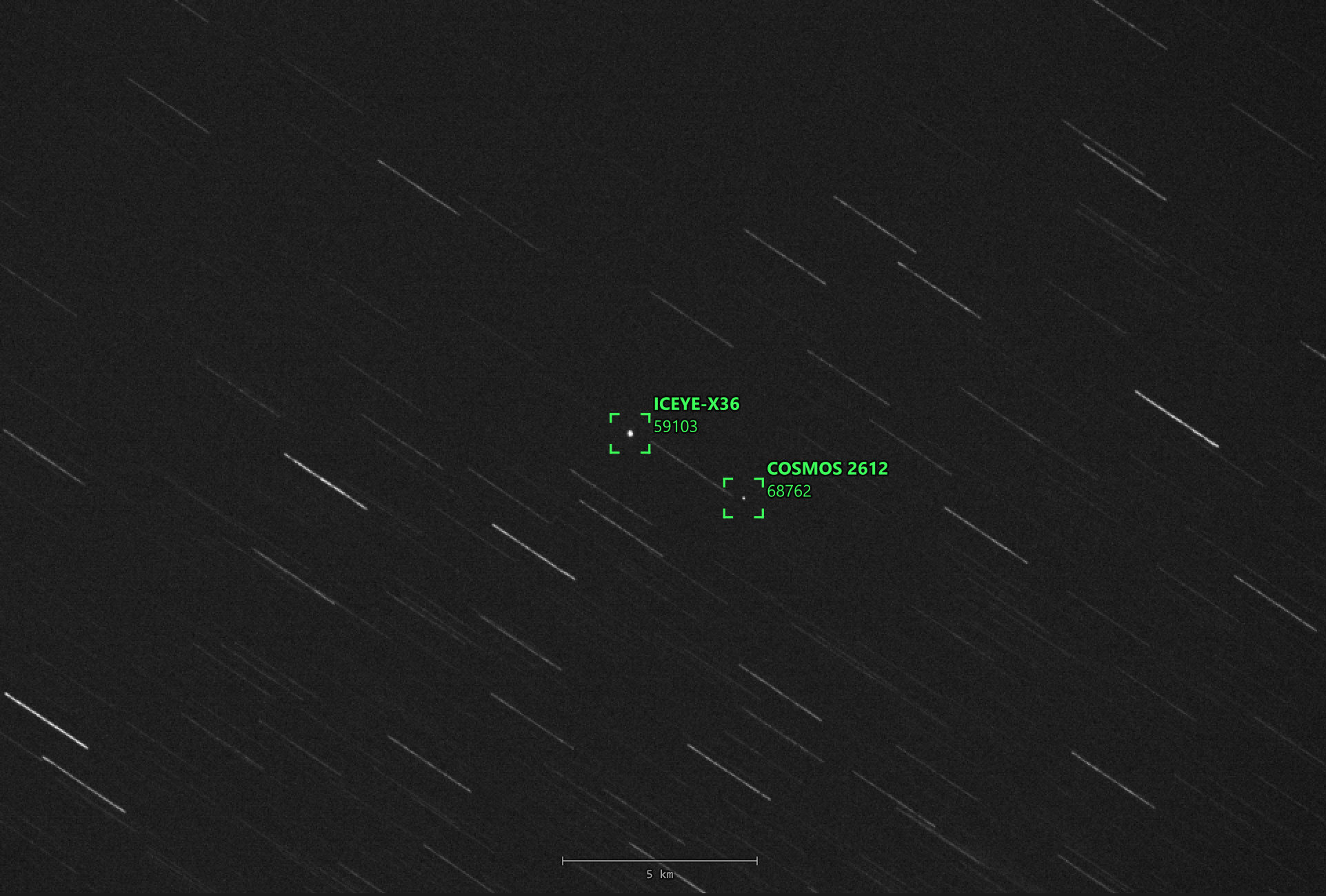
ICEYE-X36 is the brighter of the two dots. It belongs to a Finnish-American company, and uses synthetic aperture radar to form intelligence-grade images of the Earth below. Cosmos 2612 is the dimmer object. We know only that it is a Russian military satellite. Its mission has never been announced and its specs have never been published.
On Oct. 18th, Cosmos 2612 approached ICEYE-X36 within a few hundred meters. s2a systems caught them a few hours later when the distance had increased to 4.9 km.
Satellite analyst Jonathan McDowell, recently retired from Harvard, said: “To my knowledge, this is the first LEO (low Earth orbit) rendezvous of two active satellites."
 Only Russia knows what Cosmos 2612 was doing. It may have been a harmless inspection--or a dry run for something else. In 2020, another Russian satellite, Cosmos 2543, released a high-speed object that looked a lot like an anti-satellite weapon.
"[The two satellites] are currently 480 km apart, but Cosmos 2612 is still maneuvering," reports Marco Langbroek, Lecturer in optical Space Situational Awareness at Delft University of Technology. "This might suggest it is not done with ICEYE-X36 yet."
Amateur astronomers can monitor developments. ICEYE-X36 shines like a 7th-magnitude star, while its Russian stalker is ~4 magnitudes dimmer. Right now, the two satellites are making a series of pre-dawn passes over South America, Australia and New Zealand. If you see them, submit your images here.
Realtime Space Weather Photo Gallery
Free: Space Weather Newsletter
WORLD SERIES SPACE BASEBALL: The Milwaukee Brewers are in the World series. Here's a great gift for a fan: The Brewers World Series Space Baseball. It flew to the edge of space on Oct. 16, 2026, the day after they swept the L.A. Dodgers:
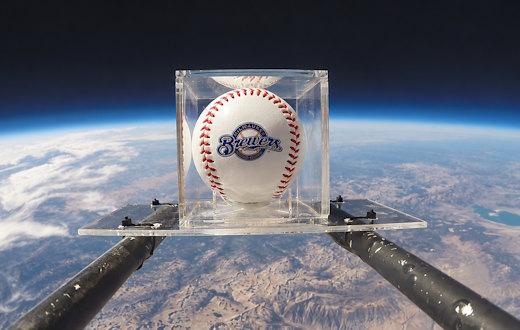
You can have it for $109.95. Launched onboard a cosmic ray research balloon, it flew 115,344 feet high--a real home run. It comes in the same acrylic cube that protected it during three hours at the top of Earth's atmosphere. You will also receive a greeting card showing the baseball in flight.
The students of Earth to Sky Calculus are selling space baseballs to pay the helium bill for their cosmic ray ballooning program. And don't worry -- Tampa's baseball is coming soon!
Far Out Gifts: Earth to Sky Store
All sales support hands-on STEM education
Realtime Aurora Photo Gallery
Free: Spaceweather.com Newsletter